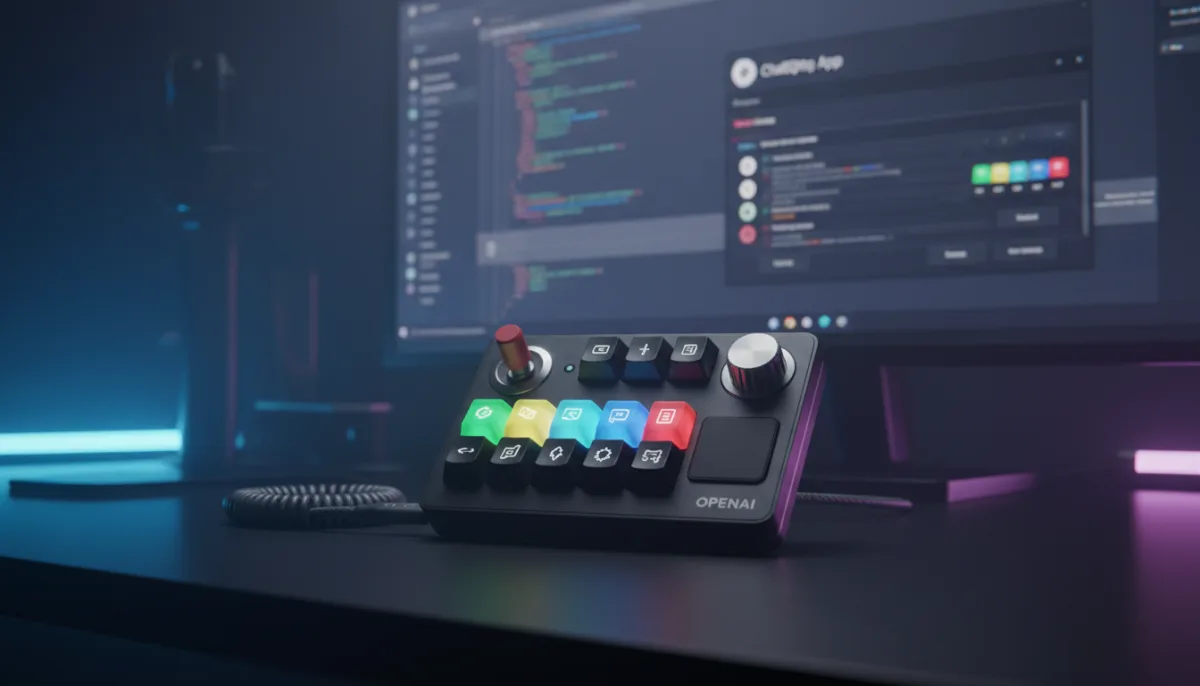
OpenAI has officially entered the hardware space, but not with the highly anticipated smart device developed alongside former Apple designer Jony Ive. Instead, the company has partnered with keyboard maker Work Louder to release the Codex Micro, a $230 mechanical pad designed specifically for its coding platform. This limited-run device is aimed squarely at developers and power users who need physical controls to monitor and manage their AI agents.
The square-shaped block closely resembles Work Louder’s Creator Micro 2 and a previous collaboration the hardware maker did with Figma in 2023. OpenAI confirmed that the Codex Micro will be available on Supply Co while supplies last, though the exact production run size remains undisclosed.
Physical Controls for AI Agents
The Codex Micro features an array of 13 mechanical switches, alongside a joystick, a dial, and a touch sensor. According to Work Louder cofounder Mike Di Genova, the pad includes six frosted keys that provide a live view of active Codex threads. These keys use different color codes to indicate the exact status of a task, such as whether it is complete, needs feedback, is currently running, or has encountered an error.
Beyond monitoring, the device is built for active workflow management. It includes dedicated command keys that can be assigned to common actions like push-to-talk, accepting or rejecting code changes, and sending prompts. The joystick and dial allow users to trigger common workflows and adjust reasoning levels on the fly.
To customize the experience, the pad comes with 32 additional keycaps featuring specific Codex icons. OpenAI noted that all hardware controls are fully configurable directly through the ChatGPT desktop app.
The Shadow of the Jony Ive Project
This developer-focused macropad is entirely separate from OpenAI’s primary consumer hardware project. Details on that flagship device remain scarce, but industry reports suggest it will be a smart speaker designed for native voice interactions with ChatGPT, tentatively slated for launch next year.
However, that broader hardware ambition is currently facing significant legal hurdles. The Jony Ive collaboration came under renewed scrutiny this week after Apple filed a lawsuit accusing OpenAI of stealing hardware secrets. OpenAI has publicly dismissed the allegations, stating they are without merit.
A Low-Risk Test Run Before the Main Event
Releasing a $230 macropad is a calculated, low-risk entry into physical products for OpenAI. By targeting developers - their most engaged and technically proficient user base - the company can test how physical hardware integrates with its software ecosystem without the immense pressure of a mass-market consumer launch.
While the flagship Jony Ive device navigates complex legal battles with Apple and developmental delays, the Codex Micro proves that OpenAI is actively working to pull AI out of the browser and into the physical workspace. If developers embrace tactile controls for AI agents, it could set a new standard for how professionals interact with generative models, paving the way for more complex, task-specific AI hardware in the future.
This article was written by AI from reporting by theverge.com.