

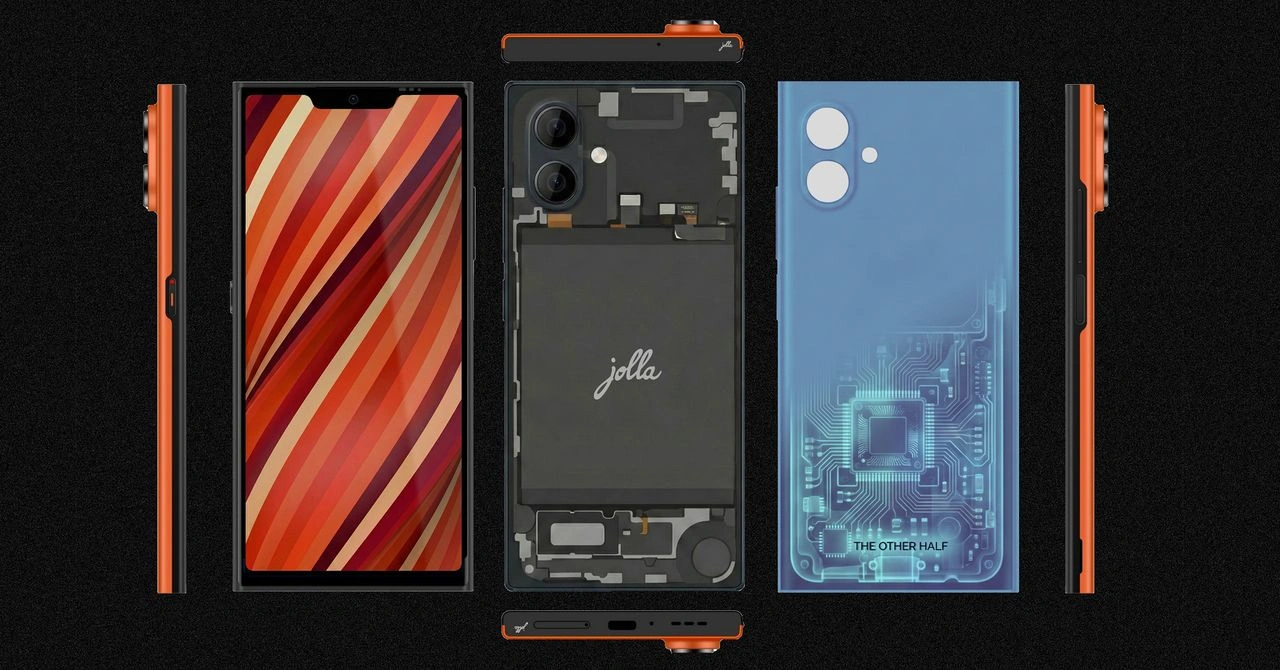
The Finnish technology company Jolla has officially returned to the hardware market with the new Jolla Phone, a Linux-powered device positioned as a direct antidote to the US-dominated smartphone duopoly of Android and iOS. Priced at €649, the handset is being marketed as the “European phone,” capitalizing on a growing sentiment for digital sovereignty and distrust in US platforms following recent geopolitical shifts involving the second Trump administration. The device, which has already secured over 10,000 preorders since its preview in December 2025, is scheduled to begin shipping at the end of June.
This launch marks a significant comeback for Jolla, a company with a turbulent history that includes a restructuring under a new entity called Jollyboys and a strategic pivot away from Russian licensing after the invasion of Ukraine. Unlike its predecessor or the recent Jolla C2 Community Phone, this new flagship is completely assembled in Salo, Finlandthe historic manufacturing home of Nokia. CEO Sami Pienimäki emphasizes that while components are sourced globally, including a MediaTek Dimensity 7100 5G chip from Taiwan and memory from SK Hynix in South Korea, the software compilation and final assembly in Finland ensure the product's integrity against external interference.
Hardware Specifications and "The Other Half"
The Jolla Phone features a 6.36-inch 1080p AMOLED display and is powered by the midrange MediaTek Dimensity 7100 5G chipset paired with 8 GB of RAM and 256 GB of storage. It includes a microSD card slot and a dual-SIM tray, catering to power users who value expandable storage. The device houses a substantial 5,500-mAh battery, although its connectivity standards are slightly older, supporting Wi-Fi 6 and Bluetooth 5.4 rather than the latest iterations.
For photography, the phone utilizes sensors from Sony, specifically a 50-megapixel main camera and a 13-megapixel ultrawide lens, along with a 32-megapixel selfie camera. A standout feature is the return of “The Other Half,” a functional rear cover system originally seen on the first Jolla device. These swappable backs use pogo pins to interface with the phone, allowing for hardware expansions such as a physical keyboard or a secondary display, fostering an ecosystem for hardware innovation.
Sailfish OS: A Linux Alternative
The core differentiator of the Jolla Phone is Sailfish OS, a Linux-based operating system that is not derived from the Android Open Source Project (AOSP). This distinction means the software has no underlying code ties to Google, offering a higher degree of independence compared to privacy-focused Android forks like GrapheneOS. However, to ensure usability, the phone supports Android applications. The startup wizard explicitly offers the option to install MicroG, an open-source implementation of Google services, to help users run essential apps without a Google account.
Frequently Asked Questions
When will the new Jolla Phone be released?
Preorders are currently open, and the company expects to begin shipping the devices at the end of June 2026.
Can the Jolla Phone run Android apps?
Yes, Sailfish OS includes an Android compatibility layer. Users can also install MicroG to enable apps that rely on Google Play Services, although compatibility may not be 100% perfect for all applications.
My Take
The return of the Jolla Phone represents more than just a nostalgia trip; it is a strategic play on the concept of "sovereign tech." With over 10,000 preorders already secured, there is clearly a niche market of European consumers and privacy advocates willing to pay a premium (€649) for a device that explicitly rejects the US Big Tech ecosystem. While the MediaTek Dimensity 7100 chip places it firmly in the midrange category performance-wise, the value proposition here is not raw speed but independence. If Jolla can maintain software support as long as it did for its original phone (which received updates until 2020), it offers a compelling, albeit niche, alternative to the disposable nature of modern consumer electronics.
