The Amazon Globalstar acquisition marks a massive $11.6 billion escalation in the global satellite internet race, directly challenging Elon Musk’s Starlink network. This strategic buyout not only bolsters Amazon's connectivity ambitions but also gives the tech giant control over the infrastructure that currently powers Apple's emergency satellite features. For enterprise leaders and telecom strategists, this consolidation signals that low-Earth orbit (LEO) broadband is rapidly maturing into a high-stakes duopoly.
Beyond the satellite wars, the technology sector is experiencing a massive pivot toward "agentic AI" - systems designed to execute complex workflows autonomously. From major cloud infrastructure alliances to breakthroughs in quantum computing and a flurry of high-value tech IPOs, the landscape of enterprise computing is undergoing a fundamental rewiring in 2026.
Amazon vs. Starlink: The Satellite Internet Battle
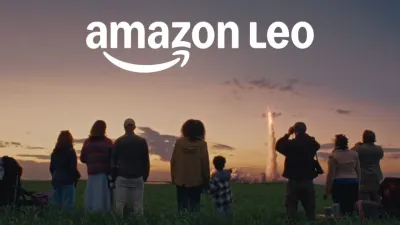
Amazon has officially doubled down on its satellite internet dreams by acquiring the satellite operator Globalstar for nearly $12 billion. This acquisition provides Amazon with critical spectrum and operational infrastructure, giving it a significantly stronger hand against the market-leading Starlink. The move secures a vital asset in the space-based internet sector, especially considering Globalstar's existing relationship with Apple.
In tandem with the acquisition, Amazon debuted a new high-speed satellite internet antenna specifically designed for commercial aircraft. Meanwhile, the broader space-tech ecosystem continues to attract heavy investment, with the AI satellite constellation startup Orbital securing funding from a16z to verify its space-based data center concept.
Cloud Alliances and Quantum Computing Milestones
In a surprising shift in cloud dynamics, onetime rivals Oracle and AWS have united. The companies announced a plan to establish dedicated, private, high-speed connectivity between Oracle Cloud Infrastructure and the AWS cloud, bridging the gap for enterprise customers utilizing both ecosystems. This interoperability marks a significant departure from the historically walled-garden approach of major cloud providers.
Simultaneously, quantum computing is gaining commercial momentum. Nvidia unveiled new Ising AI models specifically designed for quantum error correction and calibration. The push toward practical quantum applications is further evidenced by Sygaldry, which raised $139 million to build quantum computers tailored for artificial intelligence workloads.
The Global AI Race and Agentic Workflows
The geopolitical landscape of artificial intelligence is shifting, with Stanford's HAI 2026 AI index revealing that China has erased the U.S. lead in AI development. This is underscored by Alibaba's release of its highly competitive Qwen model. In response, U.S. developers are rapidly advancing "agentic" capabilities, moving beyond simple chatbots to AI agents that perform automated tasks.
Anthropic launched Claude Opus 4.7, featuring significant improvements in coding and visual reasoning, alongside Claude Design to accelerate graphic design projects. The company also gave Claude Code automated "routines" and a desktop makeover. Not to be outdone, OpenAI ratcheted up the agentic capabilities of Codex to rival Claude Code and launched the GPT-5.4-Cyber model for vetted security professionals.
Google expanded its ecosystem by adding reusable prompts to Gemini in Chrome and introducing new agentic AI-ready tools for Android developers. DeepMind also launched Gemini Robotics-ER 1.6 to meet precise physical AI demands, while Chrome's new AI Mode added a split-screen view to enhance web search experiences.
Tech IPOs and Major Investments
The IPO market is heating up, led by the AI chip developer Cerebras Systems, which officially filed to go public amid rapid revenue growth. This sets the stage for a potentially massive year for public offerings, with OpenAI, Anthropic, and SpaceX all expected to follow suit. In the semiconductor space, TSMC reported strong earnings boosted by data center and consumer device chips, while ASML raised its 2026 guidance due to sustained AI semiconductor demand.
Massive capital continues to flow into AI infrastructure. Jane Street invested $1 billion in CoreWeave, and Credo announced plans to acquire the Israeli silicon photonics startup DustPhotonics for up to $1.3 billion. Additionally, NEye.ai secured an $80 million Series C round to scale optical circuit switching for AI infrastructure.
Other Notable Updates
The tech industry saw a massive wave of funding rounds, executive shifts, and product launches over the last 48 hours. Here are the critical developments:
- Executive Moves & Layoffs: Snap cut 1,000 employees, representing 16% of its workforce. Kevin Weil and Bill Peebles exited OpenAI, while Aparna Ramani left her role as Meta's VP of engineering for AI infrastructure. Duane O'Brien was appointed executive director of the Open Source Initiative, and Rob Steffens joined Other World Computing as CFO.
- Enterprise AI Funding: Factory raised $150M ($1.5B valuation) for enterprise AI coding. Slash raised $100M ($1.4B valuation) for AI banking. Loop secured $95M for supply chain AI. Expo nabbed $45M for developer tooling, and Mintlify raised $45M ($500M valuation) for AI knowledge infrastructure.
- Agentic AI Startups: Bluefish raised $43M for agentic marketing. Resolve AI secured $40M ($1.5B valuation) to optimize production environments. Synera landed $40M to automate engineering workflows. Parasail raised $32M for its pay-per-token inference cloud, and Hilbert nabbed $28M for consumer analytics.
- Niche AI Investments: Solidroad landed $25M for AI customer support. Helical raised $10M for drug discovery foundation models. Gitar emerged from stealth with $9M to secure code via agents. Antioch raised $8.5M for autonomous robot testing. Prefix secured $7.5M for facility management, Capsule Security launched with $7M to secure AI agents, Lua landed $5.8M for AI agent workforces, and Stendr snags $5.4M for AI drone-tracking.
- Security & Software: Zscaler and OpenAI partnered to turn zero-trust security into an AI accelerator. SolarWinds launched SW1, an agentic AI teammate for IT firefighting. Oligo Security introduced real-time application-layer exploit blocking, and Artemis reeled in $70M for AI breach remediation.
- Hardware & Auto: Electric pickup startup Slate Auto raised $650M. AMD, Qualcomm, and Arm backed driverless car startup Wayve. HYFIX announced a $15M seed round for American-made drone chips, and Meta doubled down on its Broadcom partnership for custom AI processors.
The Consolidation of Infrastructure and AI Agents
The Amazon Globalstar acquisition is a definitive signal that the experimental phase of space-based internet is over. By absorbing a $11.6 billion asset that already services Apple's ecosystem, Amazon is ensuring that the future of global connectivity will not be a Starlink monopoly. This infrastructure consolidation mirrors the massive capital expenditures we are seeing in AI hardware, where companies like Jane Street are pouring billions into compute providers like CoreWeave to secure the physical backbone of the next internet era.
Simultaneously, the software layer is undergoing a radical transformation from generative outputs to autonomous execution. The sheer volume of funding pouring into "agentic AI" startups - coupled with major updates to Anthropic's Claude Code and OpenAI's Codex - proves that the industry is moving past chatbots. Enterprise value in 2026 is being driven by AI agents that can independently validate code, manage facility operations, and execute multi-step marketing campaigns, fundamentally altering how digital labor is deployed.
This article was written by AI from reporting by siliconangle.com.