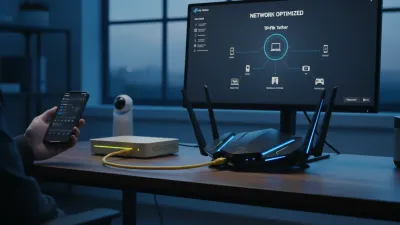
Migrating to Thread smart home devices is the ultimate fix if your Wi-Fi router keeps crashing from network congestion. Overloading a standard home network with dozens of smart bulbs, plugs, and sensors creates massive bottlenecks, leading to dropped connections and weekly router reboots. By moving your smart home ecosystem off Wi-Fi and onto a dedicated low-power mesh network, you can instantly eliminate bandwidth strain and restore your internet stability.
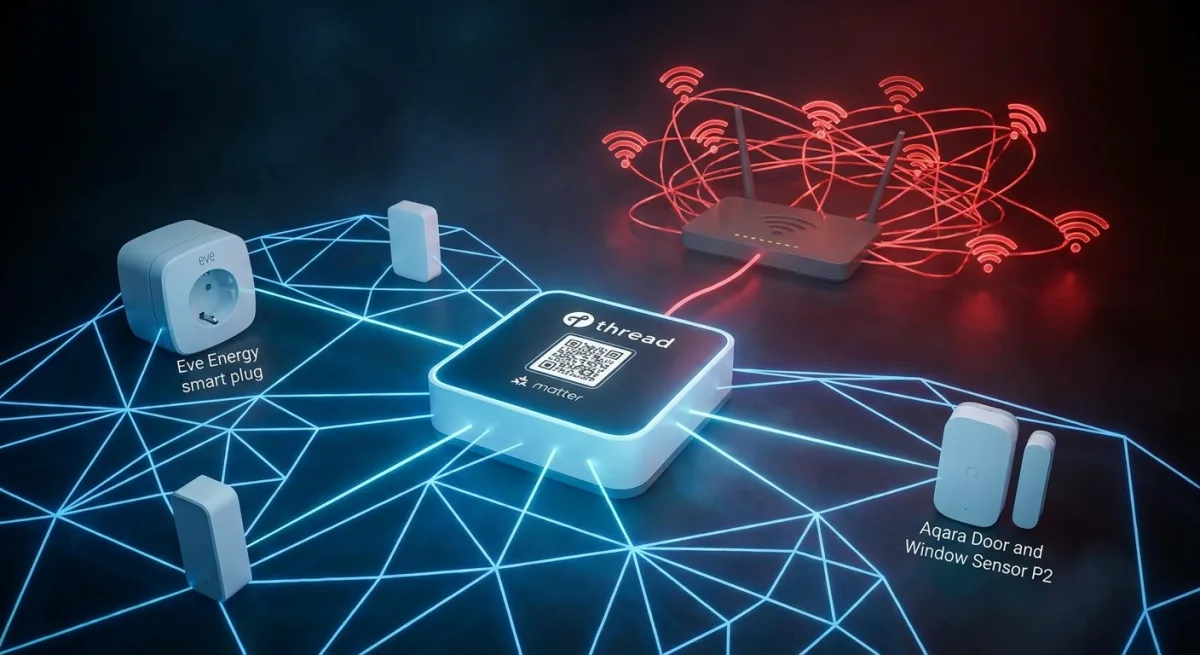
Many users unknowingly cripple their home internet by connecting up to 30 Wi-Fi smart devices - including motion sensors, leak detectors, and door sensors - directly to their primary router. This constant demand for open connections forces the router to freeze once or twice a week. The solution lies in Thread, a low-power wireless mesh network designed specifically for smart home devices that runs completely separate from your Wi-Fi bandwidth. Thanks to the Matter standard, which is universally supported by Google, Apple, Amazon, and Samsung, integrating these devices is now entirely frictionless.
How to Transition Your Setup to Thread
- Identify a compatible Thread border router in your home. This ensures your new mesh network can bridge to your main internet connection, using devices like the Nest Hub (2nd Gen), Nest Hub Max, the Google TV Streamer, or the Nest Wifi Pro (currently discounted to $127.97 from $200).
- Purchase Matter-over-Thread compatible accessories. This enables seamless integration without third-party apps; reliable options include the Eve Energy smart plug, the Eve Door and Window sensor (currently $33.94, down from $43.95), or the Aqara Door and Window Sensor P2.
- Scan the Matter QR code directly inside the Google Home app. This initiates a Bluetooth connection that securely passes your device onto the Thread mesh in about 30 seconds, bypassing your Wi-Fi entirely.
- Migrate your existing smart home ecosystem in small batches. This allows you to troubleshoot individual connections and monitor mesh stability before committing to a full network swap.
Performance Gains and Current Limitations
After moving 14 devices off the primary Wi-Fi network, router crashes completely stopped over a three-month period. Response times saw a massive improvement, with the Eve door sensor triggering Google Home automations in under a second, compared to the two or three seconds required by older Wi-Fi sensors. Furthermore, battery-powered devices like the Aqara P2 maintained near-full charges, aligning perfectly with its advertised two-year battery life because Thread was built specifically for low-power consumption.
However, the ecosystem still faces growing pains. Google Home handles basic Matter controls flawlessly but lags behind platforms like Samsung SmartThings in supporting advanced features. Additionally, older Google hardware struggles with network merging; devices like the Nest Hub and Google TV Streamer may create separate Thread networks until the Thread 1.4 update brings automatic credential sharing. Buyers must also remain vigilant, as early adopters like Nanoleaf have surprisingly reverted some newer products back to Wi-Fi-only connections, making it crucial to check specifications before purchasing.
The Hidden Cost of Wi-Fi Smart Homes
The era of connecting every single lightbulb directly to your primary router is rapidly coming to an end. When a standard home network is forced to juggle 30 separate smart devices alongside high-bandwidth laptops and 4K TVs, the resulting congestion inevitably leads to hardware freezes. Thread solves this fundamental architectural flaw by offloading low-power IoT traffic onto a self-sustaining mesh, proving that the solution to smart home instability isn't buying a more expensive router, but changing the protocol entirely.
Google's integration of Matter and Thread is a massive step forward, but the fragmented rollout of Thread 1.4 shows that the industry is still wrestling with interoperability. For consumers, the strategy is clear: stop buying Wi-Fi-dependent sensors and plugs. Transitioning to Thread devices - even gradually - not only extends the lifespan of your current networking hardware but also creates a significantly faster, more responsive local automation environment.