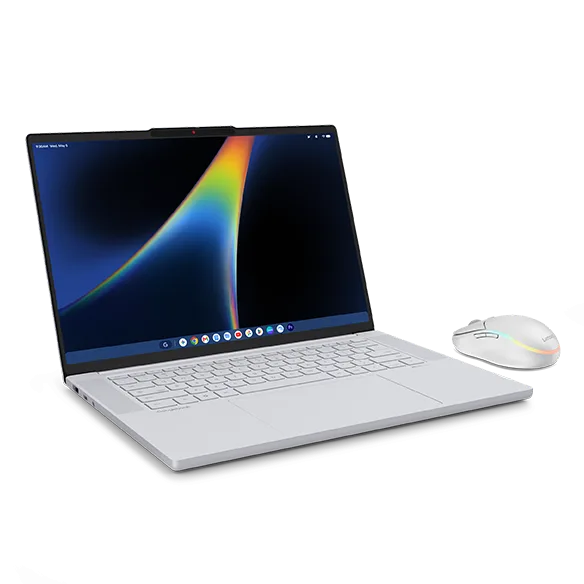
Google is officially distancing its next generation of laptops from the budget-friendly Chromebook legacy with the introduction of the Googlebook, a new premium tier starting at $899. Designed to compete directly with the MacBook Air, these devices integrate local storage, high-end materials, and deep Gemini AI integration. The hardware shift includes a significantly upgraded shell, a premium touchpad, and a higher-quality display compared to standard ChromeOS devices.
For professionals and students who have outgrown standard cloud-dependent laptops, the Googlebook offers a significant leap in processing power and native AI capabilities. By partnering with manufacturers like Dell, HP, Lenovo, Acer, and Asus, Alphabet is attempting to capture the premium ultraportable market. However, a fully specced model pushing past $1,300 faces fierce competition from established Apple silicon.
How to Navigate the New Googlebook Ecosystem
With the shift from basic web browsing to local AI processing, users will need to adapt to the new hardware capabilities. Here is what you need to know to maximize the new premium features.
- A budget of at least $899 for the base model.
- An active Google account to utilize the integrated Gemini AI features.
- Choose between the Intel Core Ultra 5 or the Qualcomm Snapdragon X Elite processor. This determines whether your system prioritizes x86 compatibility or ARM-based battery efficiency.
- Utilize the base 512 GB of internal storage for local files. This enables offline productivity, a major departure from traditional cloud-dependent Chromebooks.
- Activate the new Magic Pointer feature by wiggling your cursor. This summons Gemini AI to locate your lost mouse pointer and assist with on-screen tasks.
- Evaluate the 16 GB of base RAM for heavy multitasking. This ensures smooth performance when running local AI models and multiple web applications simultaneously.
The $1,300 Identity Crisis
While the base $899 Googlebook offers a compelling alternative to the Apple Neo, pushing the configuration past $1,300 places it in dangerous territory. At that price point, it risks becoming a poor shadow of the MacBook Air, which boasts a superior native app ecosystem and proven efficiency. The inclusion of real internal storage is a necessary step, but it also strips away the lightweight simplicity that made ChromeOS popular in the first place.
If Dell, HP, and Lenovo want this new category to survive, they must prove that Gemini's Magic Pointer and the premium chassis materials offer enough real-world value to justify the steep price tag. Without a clear software advantage, the Googlebook may struggle to convince buyers to abandon established premium laptops for a rebranded, high-end Google experience.