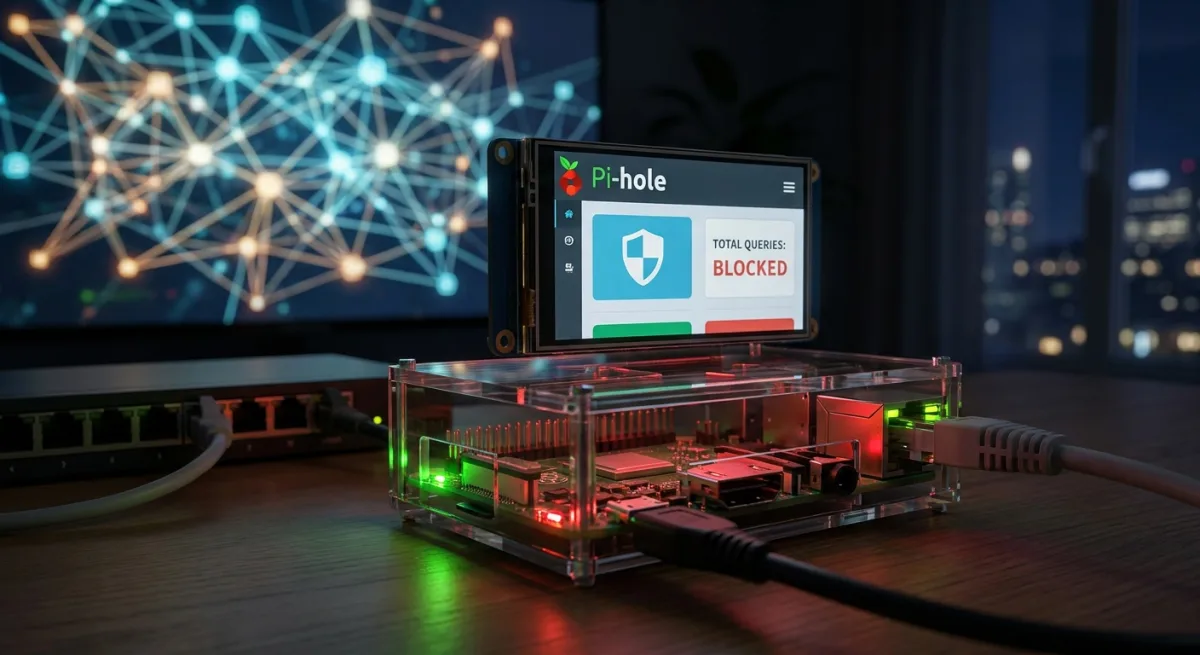
Many privacy-conscious users rely on Cloudflare DNS to escape their ISP's default resolver, but this still hands over your entire digital footprint to a single centralized company. Running your own local DNS server on a Raspberry Pi or NAS has never been more accessible, offering unparalleled control over your network.
While Cloudflare claims to delete query logs within 25 hours, an independent 2020 KPMG audit revealed the company retained up to 0.05% of all data packets, including IP addresses. Furthermore, relying on a single provider introduces significant reliability risks, as demonstrated by multiple major outages that took down thousands of online services.
5 Ways a Local DNS Server Upgrades Your Network
- Protect your privacy by eliminating third-party query logs.
This ensures your DNS queries - which act as a timestamped map of your digital life - remain entirely on your own hardware rather than being subject to changing corporate privacy policies. - Prevent network-wide downtime caused by centralized provider failures.
This ensures your internet access remains stable even when global BGP configuration errors (like the 62-minute outage in July 2025), database permission changes (which took down ChatGPT, Spotify, Discord, and X for four hours in November 2025), or internal changes (causing a six-hour degradation in February 2026) disrupt public resolvers. - Block ads, trackers, and malware at the network level using tools like Pi-hole, AdGuard Home, or NextDNS.
This ensures every device on your network, including smart TVs and IoT gadgets that cannot run browser extensions like uBlock Origin, is protected before requests even leave your router. - Assign custom local domain names to your homelab services.
This enables you to use clean, memorable URLs (like nas.local or media.server) instead of messy IP addresses, utilizing the DNS rewrite features built into self-hosted resolvers. - Monitor your exact network traffic through a dedicated dashboard.
This enables you to see exactly which devices are phoning home in the background, allowing you to block tracking domains from Google or Microsoft directly at the router level.
The Shift Toward Decentralized Home Networks
The transition from public resolvers like Cloudflare to self-hosted solutions like Pi-hole represents a growing awareness of the vulnerabilities inherent in centralized internet infrastructure. When a single database permission error in November 2025 can disrupt thousands of major platforms, the "good enough" standard of public DNS is no longer sufficient for power users.
By taking responsibility for your own DNS resolution, you trade the convenience of a "set it and forget it" public IP for absolute sovereignty over your network data. While maintaining a local server requires power and network redundancy, the measurable benefits in privacy, ad-blocking, and network visibility far outweigh the minimal ongoing maintenance.
This article was written by AI from reporting by makeuseof.com.