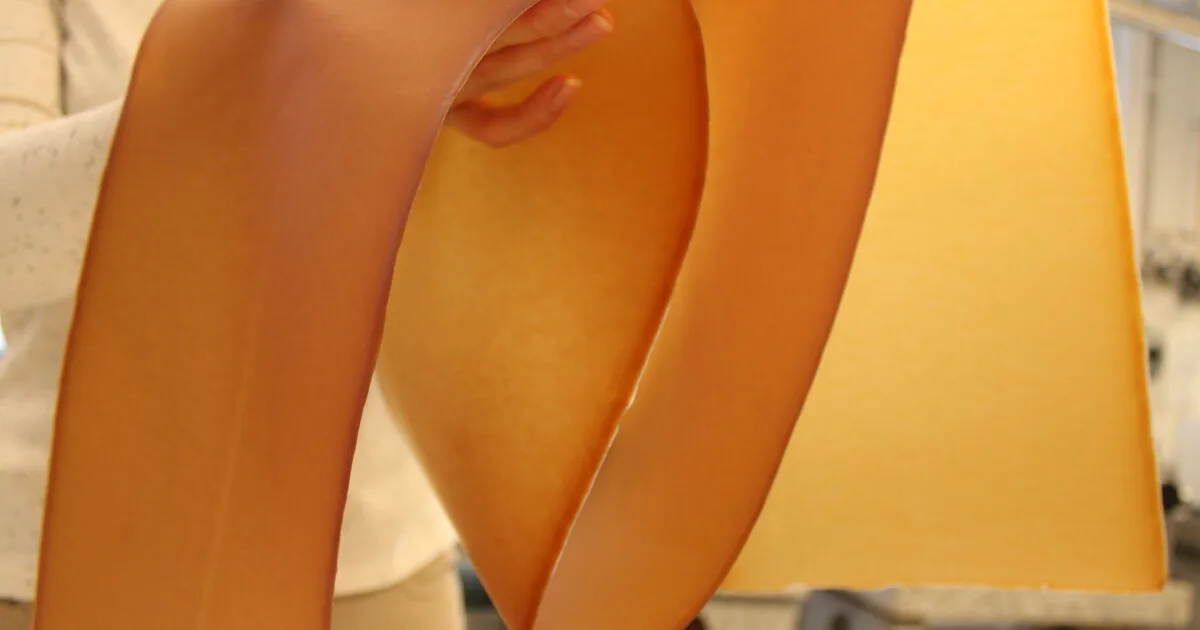
The fashion industry has long struggled with a toxic dilemma: animal leather carries heavy environmental and ethical costs, while synthetic vegan alternatives are largely made of unrecyclable plastics. Now, researchers at the VTT Technical Research Centre of Finland have achieved a major breakthrough in producing plastic-free, mushroom-based leather at an industrial scale. By rethinking the chemical formula and the manufacturing process, the team has created a sustainable material that finally rivals the durability of traditional leather.
While the concept of growing mycelium into leather-like sheets is not entirely new, previous methods were notoriously difficult to scale for mass production. Early attempts involved growing fungi in trays to form solid films, which proved too slow and fragile. A few years ago, the VTT team achieved a continuous production rate of 1 meter (3.3 feet) per minute, but the material's overall quality remained insufficient for practical, mass-market goods.
To overcome this quality barrier, the scientists completely re-engineered the material formula. Instead of growing solid sheets directly, they processed the fungal biomass into a thick pulp within a nutrient-rich liquid. This harvested pulp is then washed and mixed with sorbitol to reduce brittleness, alongside cellulose to enhance structural strength. The resulting mixture is spread into a thin layer and dried, achieving a crucial balance of flexibility and durability.
Scaling Up with Paper Manufacturing Tech
The true innovation lies in the production method itself. By adapting a roller system traditionally used in paper manufacturing, the researchers successfully produced continuous mycelium sheets measuring 20 centimeters (8 inches) wide and 8 meters (26 feet) long. Because this technique utilizes standard equipment already prevalent in the biotechnology and printing sectors, it drastically lowers the financial barriers for commercial adoption.
In laboratory tests, the material demonstrated strength comparable to traditional leather, culminating in the creation of a prototype handbag. Furthermore, the material is highly sustainable and easy to recycle. When submerged in water, it breaks down after 28 days, and it completely disintegrates under industrial composting conditions within just six weeks.
The Manufacturing Bridge the Fashion Industry Needs
The most significant aspect of VTT’s research, recently published in the journal ACS Applied Bio Materials, isn't just the material itself - it's the manufacturing bridge. By proving that mycelium leather can be produced using existing paper-rolling infrastructure, the researchers have eliminated the need for fashion brands to build entirely new, proprietary supply chains. This plug-and-play approach to manufacturing is exactly what sustainable materials need to survive the transition from the lab to the factory floor.
However, the material still faces a critical hurdle before mass-market adoption: improving tear resistance. If the team can refine the cellulose-to-sorbitol ratio to withstand the daily wear and tear of footwear and heavy apparel, mushroom leather could rapidly transition from a laboratory novelty to a mainstream staple. Until that tear-resistance threshold is met, its initial applications will likely remain limited to light accessories and luxury prototypes.