Vivo has officially unveiled the Vivo X300 Ultra at Mobile World Congress 2026, targeting professional video creators and cinematographers. Building upon the foundation of last year's Pro model, this new flagship smartphone introduces advanced video recording capabilities, including 4K resolution at 120 frames per second across all its lenses, and support for massive detachable telephoto lenses up to an 800mm equivalent focal length.
Designed specifically for mobile filmmakers, YouTube creators, and wildlife photographers, the Vivo X300 Ultra bridges the gap between traditional cinema cameras and smartphone portability. By integrating professional-grade color grading tools directly into the device, creators can achieve cinematic dynamic range without relying on heavy, traditional camera rigs, fundamentally changing how mobile production sets operate.
Professional Video and Color Science
The core appeal of the Vivo X300 Ultra lies in its robust video credentials. The device supports shooting in 10-bit Log and Dolby Vision, which preserves a wide dynamic range in the video files and allows for highly flexible color grading in post-production. To further assist cinematographers, Vivo has integrated the ability to load custom LUTs (Look-Up Tables) directly onto the phone. This allows users to preview their final color grade in real-time while shooting, a sophisticated feature typically reserved for dedicated pro-level video monitors.
In its official press release, Vivo emphasized its advanced color science, specifically highlighting the phone's ability to seamlessly color balance its footage with that of regular cinema cameras. This addresses a common pain point for creators who mix mobile footage with professional cinema setups, a challenge often encountered even with high-end competitors like the iPhone 17 Pro.
Hardware Ecosystem and Accessories
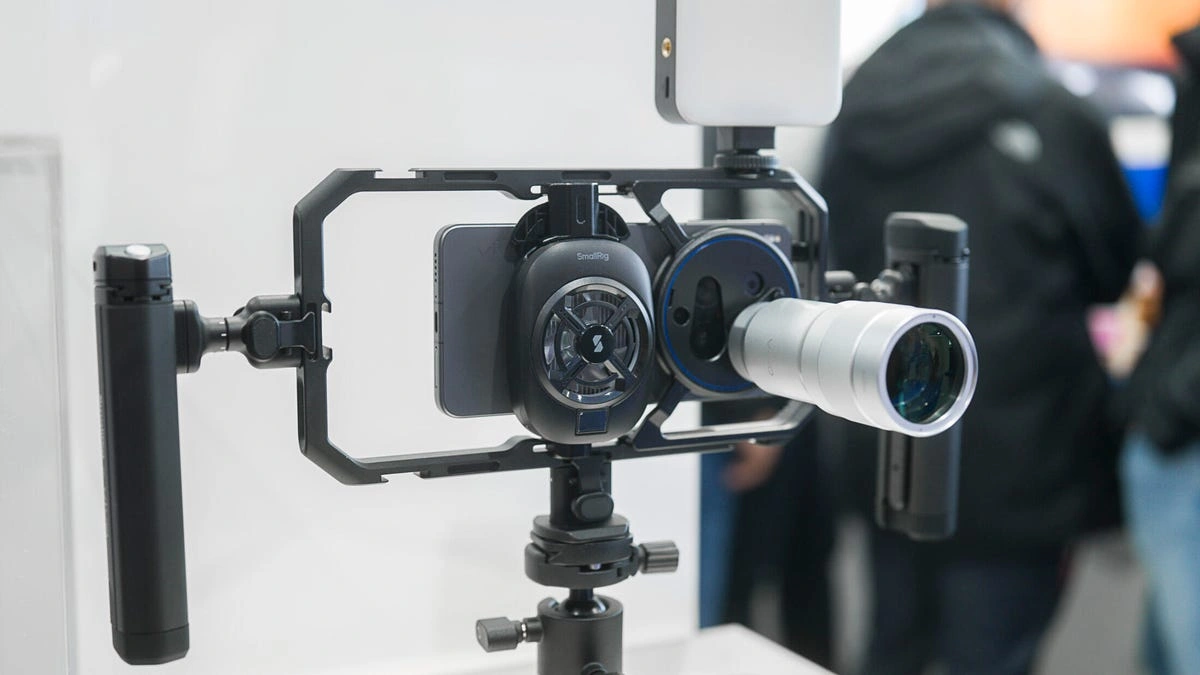
Beyond the internal software, the physical hardware is designed for modularity. The smartphone features a trio of cameras similar to the previous Pro model but introduces compatibility with an even larger detachable lens offering up to an 800mm equivalent focal length. This makes the device exceptionally capable for sports and wildlife photography where maintaining distance from the subject is crucial.
To support proper production environments, Vivo showcased the phone alongside a dedicated ecosystem of accessories from SmallRig. This includes a specialized camera cage designed for mounting essential filmmaking accessories such as ergonomic handles, external lighting, and high-quality microphones. While the phone features advanced internal stabilization and improved built-in microphones, the inclusion of SmallRig cages acknowledges that true cinematic quality often requires external gimbals, tripods, and dedicated audio equipment.
Frequently Asked Questions
What is the release date and price of the Vivo X300 Ultra?
Vivo has not yet disclosed the official pricing or availability details for the X300 Ultra.
Can the Vivo X300 Ultra shoot in 4K at 120fps?
Yes, the device supports 4K video recording at 120 frames per second across all of its cameras, not just the primary sensor.
Does the phone support external accessories?
Yes, Vivo has partnered with SmallRig to offer a cage system that allows users to mount external microphones, lights, and handles for professional rigging.
My Take
Vivo is aggressively targeting Apple's dominance in the smartphone videography sector. By offering built-in LUT previews and 10-bit Log alongside a massive 800mm equivalent lens option, Vivo is catering to a niche but highly influential demographic of prosumers and indie filmmakers. The strategic reliance on SmallRig cages is particularly telling; it indicates a practical understanding that true cinematic production requires external rigging. Instead of merely marketing a point-and-shoot camera, Vivo is positioning the X300 Ultra as a modular cinema brain, which could make it a formidable secondary camera on professional film sets.
This article was written by AI from reporting by cnet.com.