The Hot Fuel Examination Facility (HFEF) at Idaho National Laboratory has officially been designated as the American Nuclear Society’s 10th Nuclear Historic Landmark. This recognition arrives as the facility completes a massive logistical hurdle, clearing over 10,000 pounds of legacy equipment to pave the way for next-generation nuclear research. For energy researchers and policymakers, this milestone highlights the critical role of retrofitting legacy infrastructure to accelerate the deployment of modern clean energy solutions.
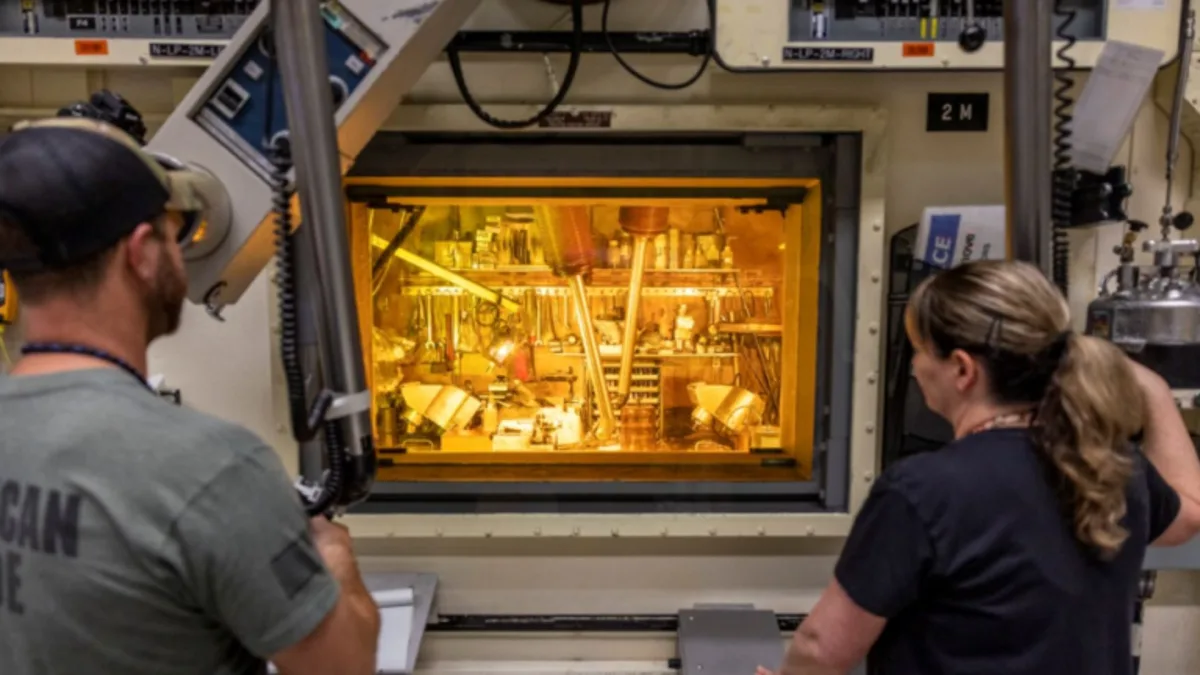
Established in 1975 at the Materials and Fuels Complex, the HFEF remains a premier post-irradiation examination hub. The facility houses the largest argon-filled hot cell in the United States, measuring 30 feet wide, 70 feet long, and 25 feet high. Inside this impenetrable vault, the air is completely replaced with inert argon gas and surrounded by four-foot-thick concrete walls and heavy leaded glass windows. This allows technicians to safely manipulate mechanical arms across 15 specialized workstations to slice, measure, and analyze heavily irradiated fuel rods.
HFEF proved to be an extremely versatile facility capable of examining the effects of irradiation on large components as well as reducing samples for microscopic evaluation.
- Leon Walters, Retired Director of Engineering, Argonne National Laboratory
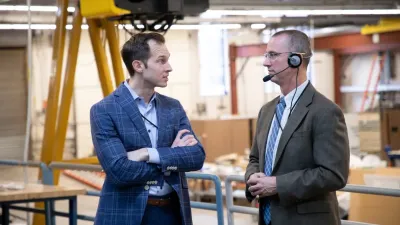
Over its five decades of operation, the facility has evolved from studying radiation-induced void swelling for early reactors to researching molten salt processing and particle fuel. "HFEF’s flexibility and continued adaptation to changing needs over 50 years is remarkable," said Doug Crawford, MFC reactors chief technologist.
Directly beneath this massive structure operates the Neutron Radiography Reactor (NRAD). On February 18, 2026, the 250-kilowatt TRIGA reactor marked its 5,000th run by testing a cutting-edge digital neutron imaging system. Operating since 1977, the reactor shoots neutrons straight through solid metal to capture high-resolution imagery of internal fuel structures.
To meet the surging demand for modern experiments, expanding usable space within the HFEF became a top priority. During the summer of 2024, engineering teams executed a painstaking cleanup project behind the cell's famous 9M window. They successfully untangled mountains of radioactive cables and jack plates, removing 10,000 pounds of legacy hardware. This newly cleared space is now set to support new sodium test loop work at the Transient Reactor Test Facility (TREAT).
The Hidden Bottleneck in Nuclear Innovation
The massive cleanup effort at the HFEF exposes a critical reality about the future of clean energy: the primary bottleneck for nuclear advancement is not just theoretical physics, but physical, heavily shielded space. Building a new argon-filled hot cell from scratch today would require billions of dollars and face decades of regulatory hurdles and environmental impact studies.
By successfully extracting 10,000 pounds of radioactive legacy equipment from the 9M window, Idaho National Laboratory has proven that retrofitting existing secure facilities is the most viable path forward. This strategic reclamation allows the HFEF to pivot immediately from historical light water reactor studies to conducting zero-power criticality tests on modern micro-reactors. As global demand for advanced nuclear solutions surges, maximizing the footprint of established landmarks like HFEF and TREAT will be the deciding factor in how quickly next-generation reactors can reach the commercial grid.
This article was written by AI from reporting by interestingengineering.com.