First American Nuclear (FANCO) has officially entered the pre-licensing phase with the US Nuclear Regulatory Commission (NRC) for a new Category II nuclear facility designed to process High-Assay Low-Enriched Uranium (HALEU). The NRC has formally docketed the company's Regulatory Engagement Plan, establishing structured technical meetings ahead of a complete formal license application planned for the fourth quarter of 2027. This milestone brings the company closer to deploying its next-generation small modular reactors (SMRs).
This development is critical for energy developers and policymakers looking to secure a domestic supply chain for advanced nuclear fuel. By establishing local processing capabilities, the facility aims to reduce reliance on international sources and accelerate the deployment of emerging reactor designs across the grid.
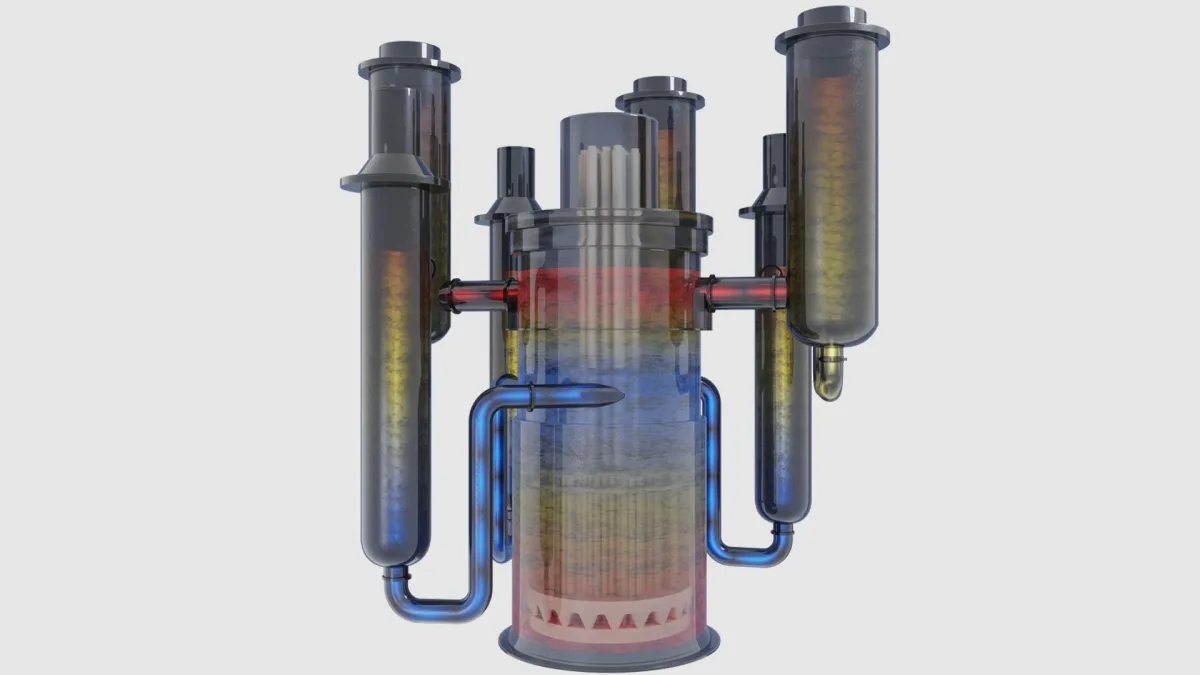
The primary consumer of the processed fuel will be FANCO's own EAGL-1 reactor, a 240-megawatt small modular reactor. Unlike conventional commercial reactors that rely on thermal neutrons and water cooling, the EAGL-1 uses a fast neutron spectrum to sustain nuclear fission. To cool the core, the design utilizes a liquid lead-bismuth eutectic alloy, which operates at high temperatures to efficiently transfer heat away from the reactor core.
Because fast-spectrum neutrons interact differently with atomic nuclei compared to thermal neutrons, the system can extract energy highly efficiently from ceramic fuel. "Our objective is to ensure that the regulatory path is informed by early, substantive technical dialogue and is supported by a comprehensive understanding of the facility’s design and operating plan," explained Michelle Catts, executive vice president at FANCO.
It reflects the deliberate way we are advancing FANCO’s integrated commercial strategy: pairing disciplined regulatory execution with a fuel-cycle platform designed to support our EAGL-1 program and, over time, other advanced-reactor developers.
- Mike Reinboth, Chief Executive Officer, FANCO
Inside the Category II Manufacturing Process
Operating a plant that handles Category II special nuclear material requires a strict federal license under Title 10 of the Code of Federal Regulations, Part 70. The planned manufacturing plant will handle both chemical processing and mechanical assembly through a multi-step approach:
- Chemical Deconversion: The process begins with HALEU in the form of uranium hexafluoride gas, which chemical systems inside the facility will deconvert into solid uranium compounds.
- Ceramic Fuel Production: The plant will initially focus on producing ceramic uranium dioxide fuel, though the assembly lines are engineered with the flexibility to manufacture other ceramic fuel forms as testing evolves.
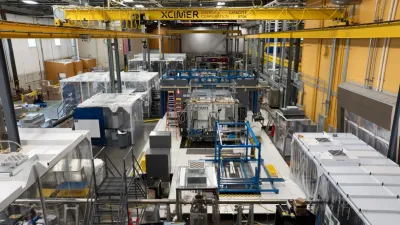
- Centralized Assembly: Technicians will build the core components inside the central manufacturing facility before shipping the completed units to operating sites.
- Third-Party Supply: Beyond supplying the EAGL-1 fleet, the facility will manufacture fuel elements for other advanced reactor developers, serving as a broader domestic fuel source.
The Strategic Race for Domestic HALEU
The NRC's docketing of FANCO's plan highlights a critical bottleneck in the advanced nuclear sector: fuel availability. Most next-generation reactors require HALEU, a specialized material whose global supply chain has historically been dominated by Russian state-owned entities. By establishing a Category II facility capable of both chemical deconversion and mechanical assembly on US soil, FANCO is positioning itself as more than just a reactor vendor.
This dual-purpose strategy transforms the company into a foundational fuel supplier for the broader nuclear industry. If the Q4 2027 licensing target is met, this facility could significantly de-risk the deployment of fast-spectrum SMRs. Providing a reliable, domestic source of finished nuclear fuel will likely accelerate the commercial viability of advanced reactors, making them a more stable investment for utility companies transitioning away from fossil fuels.
This article was written by AI from reporting by interestingengineering.com.