Buyers looking to upgrade their laptops in 2026 face a difficult market. Today’s spiking cost of memory, driven by the rush for AI data centers, has caused a cascade of price hikes across the PC industry. Consumers must now navigate rampant inflation to find a device that fits their needs and budget.
The current landscape is dominated by a fierce processor battle. Qualcomm’s ARM-based Snapdragon X2 platform is competing directly with Intel’s Panther Lake for lightweight dominance, while Apple continues to crush benchmarks with its M-series chips. Although ARM-based Windows PCs previously struggled with legacy software, app compatibility has significantly improved, making them a viable option for most users.
Top Laptop Picks for 2026
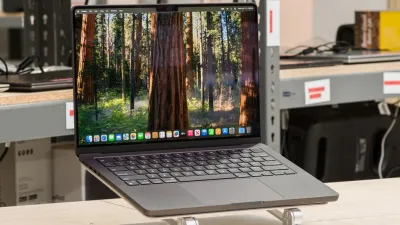
- Apple M5 Max MacBook Pro 14: The ultimate premium choice offers obscene power in a relatively thin frame. Its integrated graphics processing unit (iGPU) rivals discrete laptop GPUs, paired with Apple's signature bright screen and excellent trackpad.
- Razer Blade 16 (2026): Priced near $5,000, this behemoth is the best overall PC. It features an Intel Panther Lake chip, a strong selection of ports, and better-than-average battery life for a performance-first device.
- Apple MacBook Neo: At $700, this is the best affordable laptop available. It delivers a bright screen and a mobile-first chip capable of daily browsing and light editing, feeling reminiscent of older MacBook Air models.
- Dell XPS 13: A premium ultra-slim Windows alternative featuring a 120Hz refresh rate screen. However, buyers must spend at least $900 to secure the 16GB of RAM necessary for Windows 11.
- Asus Zenbook Duo: The top pick for flexible workstations features two screens separated by super-slim bezels. An Intel Panther Lake chip ensures strong multitasking performance alongside surprisingly good battery life.
- Asus ROG Zephyrus Duo: A gamer-focused dual-screen alternative equipped with two 16-inch OLED displays. It offers more graphics power and a distinct gamer aesthetic.
- HP Omnibook Ultra: The best ultrathin laptop measures just 0.42 inches thick when closed. It packs an Intel Core Ultra X9 388H chip and a glossy OLED display with a wide color gamut.
- M5 MacBook Air: Apple’s thinnest laptop now includes enhanced GPU and ray-tracing capabilities. It comes standard with 16GB of RAM and 512GB of storage in either 13-inch or 15-inch sizes.
- Asus ProArt PX13: The ultimate creator's laptop is a tentable 2-in-1 with stylus support and a 3K OLED display. Powered by an AMD Ryzen AI Max+ 395 chip, it offers unmatched iGPU performance and up to 128GB of RAM.
- MSI Crosshair 16 HX: A semi-affordable gaming option featuring a bright 240Hz IPS LCD panel. It relies on a last-gen Intel CPU and an Nvidia RTX 5060, though it is limited to 16GB of RAM and a 512GB SSD.
- Alienware 16 Area-51 (2026): This high-end desktop replacement sports an Intel Arrow Lake chip and an OLED display. Its standout feature is a clacky mechanical keyboard that enhances the gaming experience.
- Acer Chromebook Plus Spin 514: The best Chromebook option uses a MediaTek Kompanio Ultra 910 processor for fast browsing. This 2-in-1 device offers strong build quality and long battery life.
- Framework Laptop 13 Pro: The best customizable laptop allows users to swap keyboards and screen bezels. It serves as an excellent workstation and can be purchased pre-installed with the Ubuntu Linux distribution.
The Hidden Cost of the AI Boom
The 2026 laptop market clearly illustrates how enterprise tech trends directly penalize everyday consumers. The fact that a $700 MacBook Neo is now celebrated as the baseline for affordability, while flagship gaming rigs like the Razer Blade 16 push the $5,000 mark, highlights a widening hardware wealth gap. Consumers are effectively paying an AI tax on memory components, regardless of whether they actually use local AI features.
This dynamic forces buyers into uncomfortable compromises, particularly in the mid-range segment. As manufacturers prioritize high-margin premium devices to offset component costs, the sub-$1,000 Windows market is becoming increasingly difficult to navigate. Until the global memory supply chain catches up with data center demand, buyers must prioritize RAM upgrades over aesthetic features to ensure their devices remain functional.