Finding the best laptops of 2026 requires navigating a market heavily distorted by the booming artificial intelligence sector. The surging demand for AI data centers has triggered a massive spike in memory costs, causing rampant inflation across the PC industry and pushing the prices of high-end machines hundreds of dollars higher than last year.
Buyers must now carefully evaluate their processor and RAM configurations to avoid overspending. The processor landscape is currently dominated by a fierce rivalry between Qualcomm’s ARM-based Snapdragon X2 platform and Intel’s Panther Lake chips for lightweight devices, alongside Apple’s benchmark-crushing M-series. While Qualcomm has vastly improved legacy app compatibility, Intel still holds an edge in integrated graphics tasks. Crucially, consumers should actively avoid any Windows 11 system equipped with only 8GB of RAM, as the operating system's demands have outgrown that baseline.
Premium Powerhouses: MacBook Pro and Razer Blade 16
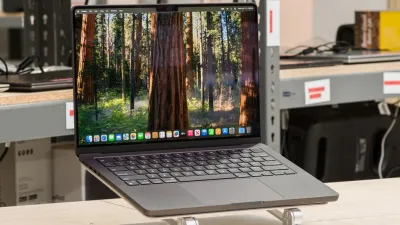
For users where budget is no object, the Apple M5 Max MacBook Pro 14 stands as the ultimate macOS machine. Despite its premium price tag, it delivers unprecedented power in a compact frame, featuring an integrated graphics processing unit (iGPU) that rivals discrete laptop GPUs. It pairs this raw performance with Apple's signature bright display, excellent trackpad, and robust sound stage.
On the Windows side, the 2026 Razer Blade 16 claims the top spot for uncompromising performance. Priced near $5,000, this gaming behemoth leverages an Intel Panther Lake chip to offer exceptional CPU and GPU performance, a robust port selection, and surprisingly above-average battery life. Despite its massive power, it remains housed within a backpack-friendly, thin chassis.
Budget and Ultra-Thin Contenders
Apple continues to dominate the entry-level space with the $700 MacBook Neo. Serving as the spiritual successor to older Air models, it features a bright screen, solid audio, and a highly capable mobile-first chip that handles daily browsing and light editing with ease. An upgraded version with 512GB of storage and a Touch ID button is available for an additional $100. For Windows users, the Dell XPS 13 offers comparable ultra-slim build quality and a 120Hz refresh rate display, though buyers must spend at least $900 to secure the mandatory 16GB of RAM.
In the ultra-thin category, the HP Omnibook Ultra proves that size does not require a performance compromise. Measuring just 0.42 inches thick, it packs an Intel Core Ultra X9 388H processor and a glossy, wide-color-gamut OLED display. Meanwhile, Apple’s M5 MacBook Air remains a top contender, now featuring enhanced ray-tracing capabilities and shipping with a baseline of 16GB of RAM and 512GB of storage across both its 13-inch and 15-inch variants.
Dual-Screen and Creator Workstations
For flexible multitasking, the Asus Zenbook Duo leads the pack by replacing the traditional keyboard deck with a second screen. Separated by ultra-slim bezels, the dual displays offer a seamless reading experience, while the Intel Panther Lake chip ensures strong performance and surprisingly robust battery life. Users needing more graphical power can opt for the Asus ROG Zephyrus Duo, which features two 16-inch OLED displays and a distinct gamer aesthetic.
Creative professionals should look toward the Asus ProArt PX13. This tentable 2-in-1 laptop features a 3K OLED display, stylus support, and an AMD Ryzen AI Max+ 395 chip. Its integrated GPU power currently outpaces competing Intel and Qualcomm mobile chips. The specialized GoPro Edition even includes a staggering 128GB of RAM, though standard configurations will easily suffice for most workflows.
Gaming Heavyweights: MSI and Alienware
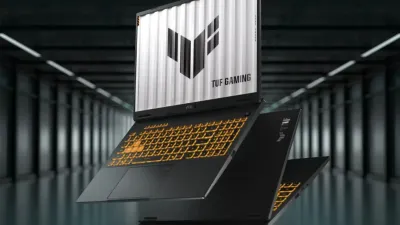
Finding a genuine deal on a gaming laptop is nearly impossible in 2026 due to memory costs, but the MSI Crosshair 16 HX offers a strong middle ground. It pairs a bright 240Hz IPS LCD panel with an Nvidia RTX 5060 GPU and a last-generation Intel CPU. To keep costs down, it ships with just 16GB of RAM and a 512GB SSD, both of which are user-upgradable for future-proofing.
For high-end desktop replacement, the Alienware 16 Area-51 (2026) reigns supreme. Upgraded with an Intel Arrow Lake processor and an OLED display, it delivers top-tier gaming performance. However, its standout feature remains the tactile mechanical keyboard that elevates the overall gaming experience far beyond standard laptop decks.
ChromeOS and Modular Alternatives
For users seeking affordable clamshells, the Acer Chromebook Plus Spin 514 delivers excellent value. This 2-in-1 device utilizes a MediaTek Kompanio Ultra 910 processor for rapid browsing, offering strong build quality and long battery life. Alternatively, the Framework Laptop 13 Pro continues to champion repairability and customization.
Beyond its swappable screen bezels and keyboards, the Framework functions as a highly capable workstation with all-day battery life. It is also available with Ubuntu pre-installed, providing a seamless Linux alternative for users looking to avoid Windows 11 entirely.
The Hidden Cost of the AI Hardware Boom
The defining narrative of the 2026 laptop market is not just the leap in processor efficiency, but the severe economic toll of the AI industry's hardware demands. With server farms consuming the global supply of high-speed memory, the traditional budget laptop is being artificially squeezed out of existence. The fact that a baseline Dell XPS 13 now requires a $900 investment just to reach a usable 16GB of RAM highlights how the floor for entry-level computing has been permanently raised.
If memory manufacturers maintain these inflated prices into 2027, we will likely see a fundamental shift in how consumers buy PCs. The market will increasingly bifurcate: users will either be forced into ultra-efficient, unified-memory ARM architectures like the MacBook Neo and Snapdragon-powered devices, or they will have to rely on cloud computing to offset local hardware limitations. The era of the cheap, easily upgradable Windows powerhouse is effectively on pause, making strategic, long-term purchasing decisions more critical than ever.
This article was written by AI from reporting by earther.gizmodo.com.