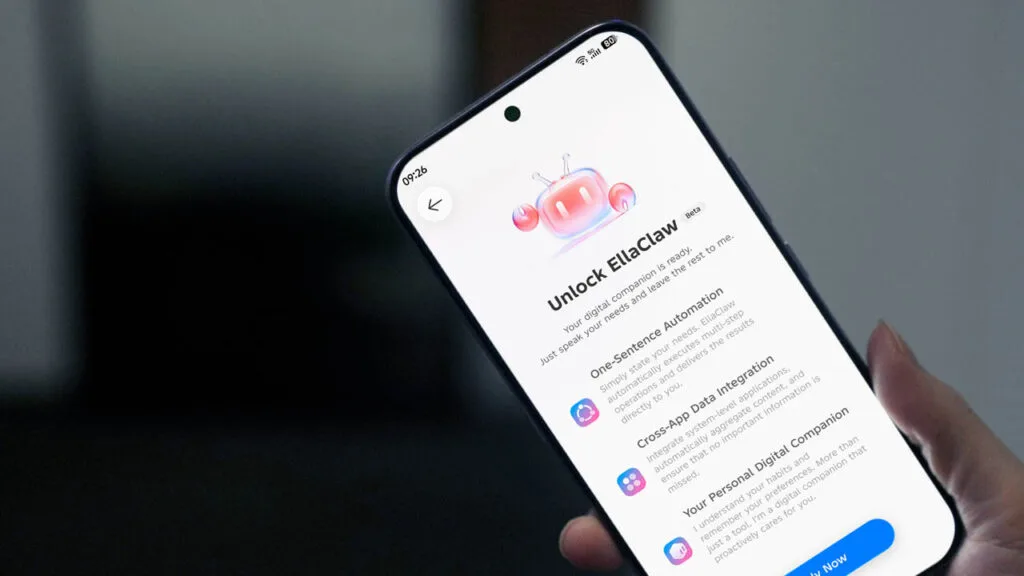
The upcoming TECNO OpenClaw integration is set to transform the brand's smartphones into autonomous AI agents, directly challenging Google and Samsung. By merging the powerful OpenClaw platform with its native Ella assistant, TECNO aims to deliver advanced task automation without requiring dedicated external hardware. This move signals a major shift in how budget and mid-range Android devices handle complex, multi-step AI operations.
For Android enthusiasts and power users, this development means flagship-level agentic AI capabilities could soon be accessible on more affordable hardware. Users will be able to automate tedious daily tasks and cross-reference data between apps seamlessly, fundamentally changing how they interact with their mobile devices.
Currently, popular AI models like ChatGPT and Gemini are transitioning into active agents, but platforms like OpenClaw have already demonstrated superior autonomous control. Traditionally, OpenClaw requires a dedicated machine or a gateway device like a Telegram bot to execute natural language prompts. TECNO is bypassing this limitation by embedding the technology directly into its smart assistant, creating a hybrid system dubbed EllaClaw. This integration simplifies the notoriously tedious setup process associated with standalone AI agents.
The implementation on TECNO phones will feature three distinct levels of permission execution. At the foundational level, EllaClaw will autonomously manage background files and schedule events, mirroring the agentic features recently introduced by Gemini. Moving deeper, the assistant will gain the ability to exchange information across core system applications, including SMS, Gallery, and Calendar. This cross-app functionality is designed to rival the contextual awareness of the Pixel 10's Magic Cue and Samsung's newly launched Now Nudge.
At its highest execution tier, the system will continuously learn user habits and preferences to improve response accuracy and automate a larger share of daily routines. According to the report, TECNO plans to launch a beta trial soon, allowing users to request early access to these features. However, a critical technical question remains regarding whether the data processing will occur entirely on-device - which typically consumes massive system resources - or if it will be partially offloaded to cloud servers.
My Take
TECNO’s strategy to integrate OpenClaw rather than building a proprietary agentic engine from scratch is a brilliant, resource-efficient maneuver. By creating EllaClaw, the company is effectively piggybacking on an already capable platform to instantly close the software gap with industry behemoths like Google and Samsung. If the cross-app data exchange works as seamlessly as the Pixel 10's Magic Cue, TECNO could redefine the baseline expectations for AI on non-premium Android devices.
The real make-or-break factor here will be resource management. OpenClaw is notoriously demanding, and running it natively inside Ella without freezing the phone's available memory will require aggressive optimization. I predict TECNO will be forced to adopt a hybrid cloud-compute model for heavier tasks, as purely on-device processing for an agent of this caliber would likely cripple battery life and thermal performance on their current hardware lineup.
This article was written by AI from reporting by androidauthority.com.