At MWC Barcelona 2026, Canonical is redefining edge computing with the debut of a portable Private 5G AI hotspot designed specifically for wildlife conservation. From March 2-5, the company, in collaboration with Arm, Ampere, and NextComputing, will demonstrate a fully operational "fly-away" kit that brings data center capabilities to the most remote corners of the planet. This solution addresses a critical problem for researchers: how to process high-bandwidth video data from drones and trail cameras in environments like savannahs or forests where traditional connectivity is non-existent.
The core innovation lies in its ability to create a standalone private network that captures, processes, and analyzes data locally before transmitting structured insights globally. By integrating open-source 5G software with advanced AI computer vision, this platform allows conservationists to identify species and track individual animals in real-time without relying on unstable public networks.
The Hardware: An Edge Data Center in a Carry-On
The physical foundation of this solution is the NextComputing NextServer AI 5G fly-away kit. This is not merely a ruggedized laptop but a condensed server rack designed to fit in an airline carry-on. The system is powered by a 2U AmpereOne server featuring a massive 192-core Arm-based processor. This architecture was chosen specifically for its power efficiency, a non-negotiable requirement for field operations running on limited power sources.
To handle the intensive AI workloads, the kit is equipped with an NVIDIA RTX 4000 SFF Ada GPU, capable of driving four 4K displays and accelerating complex inference tasks. Storage and memory are equally impressive, with up to 1TB of DDR5 RAM and 1PB of NVMe storage, ensuring that weeks of high-resolution video footage can be stored locally. Connectivity is managed by a 5G radio unit (RU) capable of supporting up to 4 cells and 5,000 users, with internet backhaul provided by a Starlink Mini satellite connection.
Software Stack and AI Integration
The platform runs on Ubuntu 24.04.3 arm64 LTS, utilizing Canonical Kubernetes to orchestrate the complex array of software required for the mission. The 5G base station software stack is powered by OCUDU, developed by Software Radio Systems and DeepSig. On the intelligence side, the system employs a suite of AI models including YOLO, MegaDetector, and SpeciesNet to perform real-time batch inference.
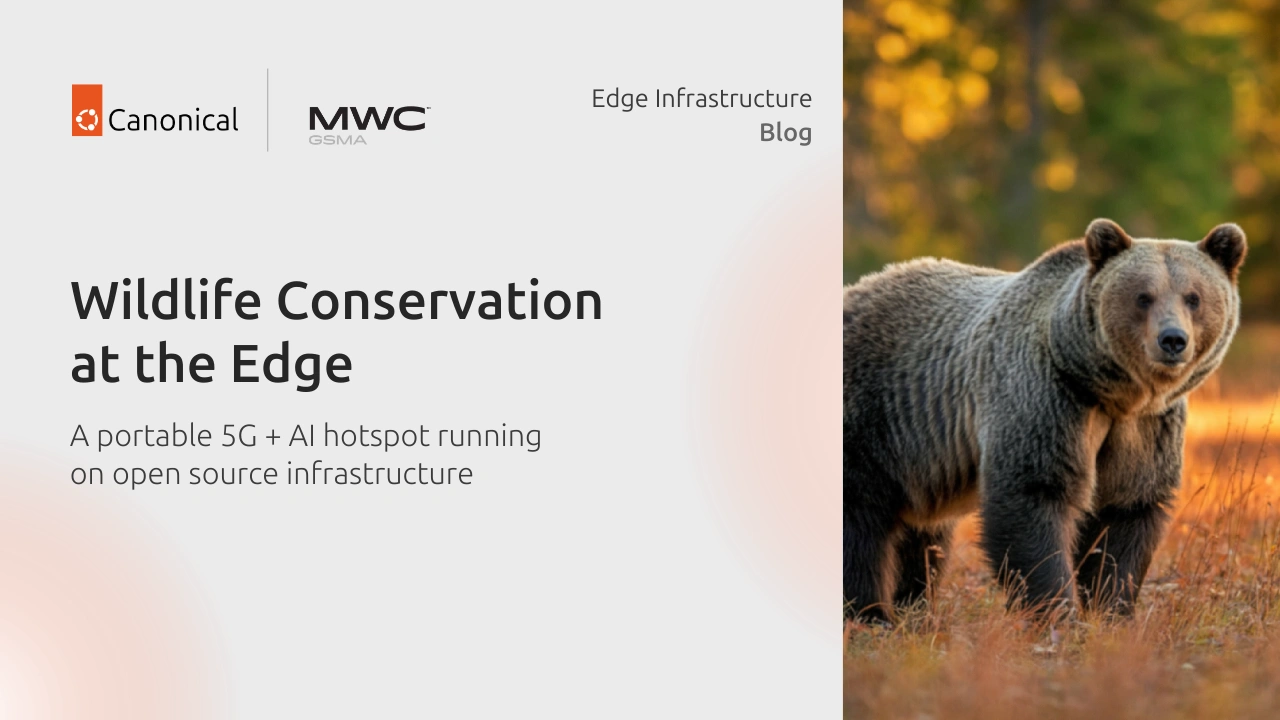
Visitors at Hall 2, stand 2D20, will see the TRAPPER conservation interface in action. This geospatial platform, developed by the Open Science Conservation Fund, visualizes the data, showing annotated media and identified animals (via BearID) on a map. The system filters video locally, meaning only relevant metadata and processed clips are sent to global repositories like the Global Biodiversity Information Facility, drastically reducing bandwidth costs.
| Component | Specification |
|---|---|
| Server Hardware | NextComputing NextServer (2U AmpereOne, 192-core Arm CPU) |
| AI Acceleration | NVIDIA RTX 4000 SFF Ada GPU |
| Memory & Storage | Up to 1TB DDR5 RAM / 1PB NVMe Storage |
| Connectivity | 5G Radio Unit (4 cells, 5000 users) + Starlink Mini Backhaul |
| Software Stack | Ubuntu 24.04.3 arm64 LTS, Canonical Kubernetes, OCUDU 5G |
| AI Models | YOLO, MegaDetector, SpeciesNet, BearID |
My Take
This demonstration at MWC 2026 is a definitive proof-of-concept for the maturity of Private 5G beyond factory floors. While the immediate application is wildlife conservation, the architecture is identical to what is needed for disaster relief, mining, and remote industrial monitoring. The collaboration between Canonical and hardware giants like Ampere and NVIDIA signals that "Edge AI" is no longer a buzzword but a deployable reality. The shift to Arm-based 192-core processors for this use case highlights a broader industry trend: efficiency is becoming the primary metric for edge infrastructure, displacing raw peak performance as the top priority.