OpenAI is rapidly accelerating its transition from a software giant to a hardware manufacturer, with a concrete roadmap revealing a screenless smart speaker and an ambitious "AI agent" smartphone. Driven by the $6.5 billion acquisition of Jony Ive's startup io Products, the ChatGPT maker is assembling a massive hardware division that has already triggered a fierce legal battle with Apple.
The Screenless AI Smart Speaker
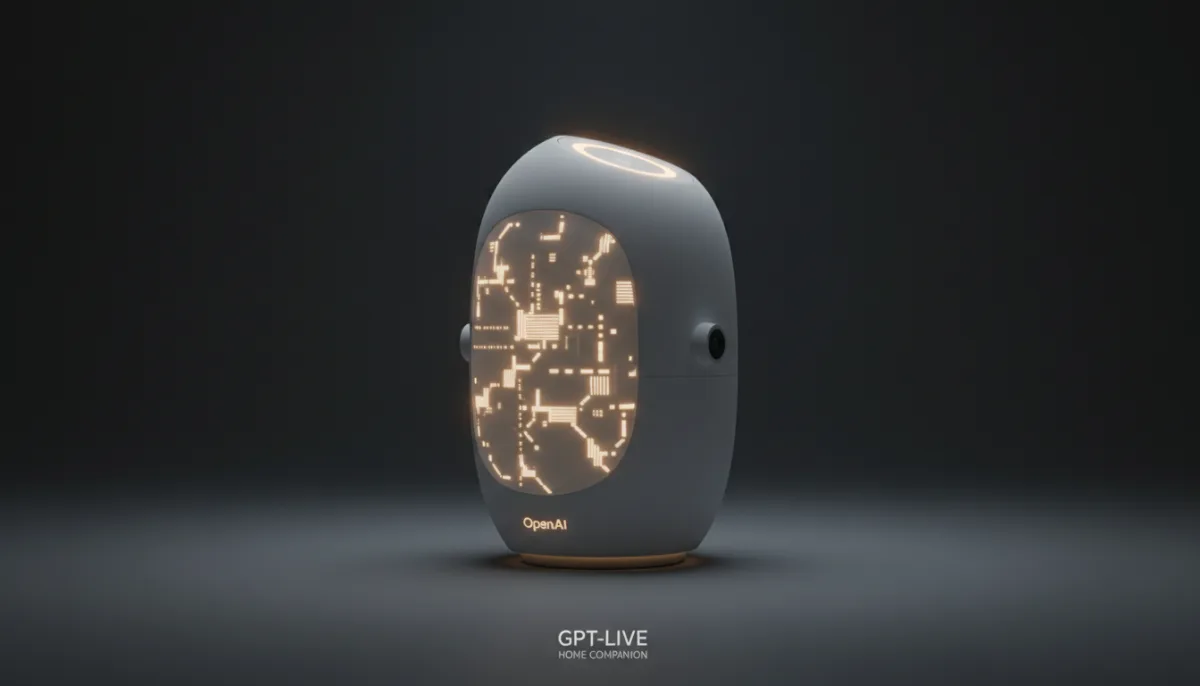
OpenAI's inaugural device will be a portable, screenless smart speaker designed in collaboration with former Apple design chief Jony Ive. Intended as a proactive home companion rather than a basic voice assistant, the device features a rechargeable battery, environmental cameras, and mechanical elements that move to simulate a living entity.
Powered by the newly announced GPT-Live model, the speaker handles smart home controls, media playback, and messaging while developing its own personality over time.
The coolest piece of technology that the world will have ever seen.
- Sam Altman, CEO, OpenAI
The device is slated for an early 2027 launch, having slipped past its initial target for this year, and is expected to be priced between $200 and $300. OpenAI reportedly does not view Apple's HomePod lineup as a direct competitor to this new category.
The "AI Agent" Smartphone
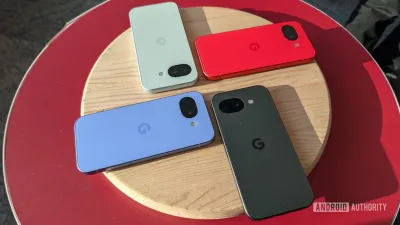
Following the speaker, OpenAI plans to release a dedicated AI smartphone. Supply chain analyst Ming-Chi Kuo reports the device will function as an "AI agent phone," utilizing a continuous, context-aware interface instead of a traditional app grid. Kuo argues that controlling the hardware is the only way OpenAI can capture a user's full real-time state, including location and activity.
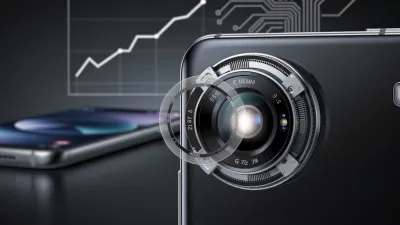
The phone will reportedly be powered by a customized MediaTek Dimensity 9600 processor built on TSMC's N2P node - the same manufacturing process expected for Apple's upcoming A20 chips. Luxshare Precision Industry is slated as the exclusive manufacturer, with Sunny Optical providing camera modules featuring an enhanced HDR pipeline and dual AI processors for simultaneous vision and language tasks.
Originally targeted for 2028, mass production has been accelerated to the first half of 2027. Kuo projects that combined shipments across 2027 and 2028 could reach up to 30 million units if development remains on track.
Apple's Lawsuit and the Talent War
This aggressive hardware push has ignited a massive talent war. OpenAI has recruited over 400 former Apple employees, including key designers like Evans Hankey, Tang Tan, and Vision Products Group leader Paul Meade. In response, Apple issued retention bonuses of up to $400,000 in restricted stock units to its iPhone Product Design team.
The friction culminated on July 10, when Apple sued OpenAI over the alleged theft of trade secrets. According to a report by Bloomberg, the litigation is already deterring potential hires and making supply chain partners cautious, though OpenAI maintains it has "no interest in other companies' trade secrets."
Other Notable Updates
To support this upcoming hardware, OpenAI is rapidly iterating its software ecosystem. Recent developments include:
- GPT-Live: A new voice model capable of listening and speaking simultaneously, using acknowledgment phrases like "mhmm" to simulate natural human conversation.
- ChatGPT Work: A new agent featuring built-in Codex that executes multi-step tasks across web, mobile, and desktop applications in the background.
- ChatGPT Atlas Shutdown: OpenAI is officially shuttering its experimental agentic web browser, which launched last October, shifting focus entirely to OS-level agents.
The OS Bottleneck Forcing OpenAI's Hand
OpenAI's pivot to hardware is not just an expansion; it is a survival mechanism. By relying on iOS and Android, ChatGPT remains constrained by Apple and Google's operating system rules, limiting its ability to act as a true, frictionless background agent. Building a custom smartphone with MediaTek silicon allows OpenAI to bypass these gatekeepers, granting its AI deep system-level access to a user's screen context and daily habits.
However, the July 10 lawsuit from Apple is a calculated strike aimed directly at OpenAI's supply chain credibility. If manufacturers like Luxshare and Sunny Optical fear legal blowback from Apple - which remains their biggest client - OpenAI's accelerated 2027 timeline could face severe manufacturing bottlenecks. The race is no longer just about building the best AI model; it is about securing the physical infrastructure to deliver it.