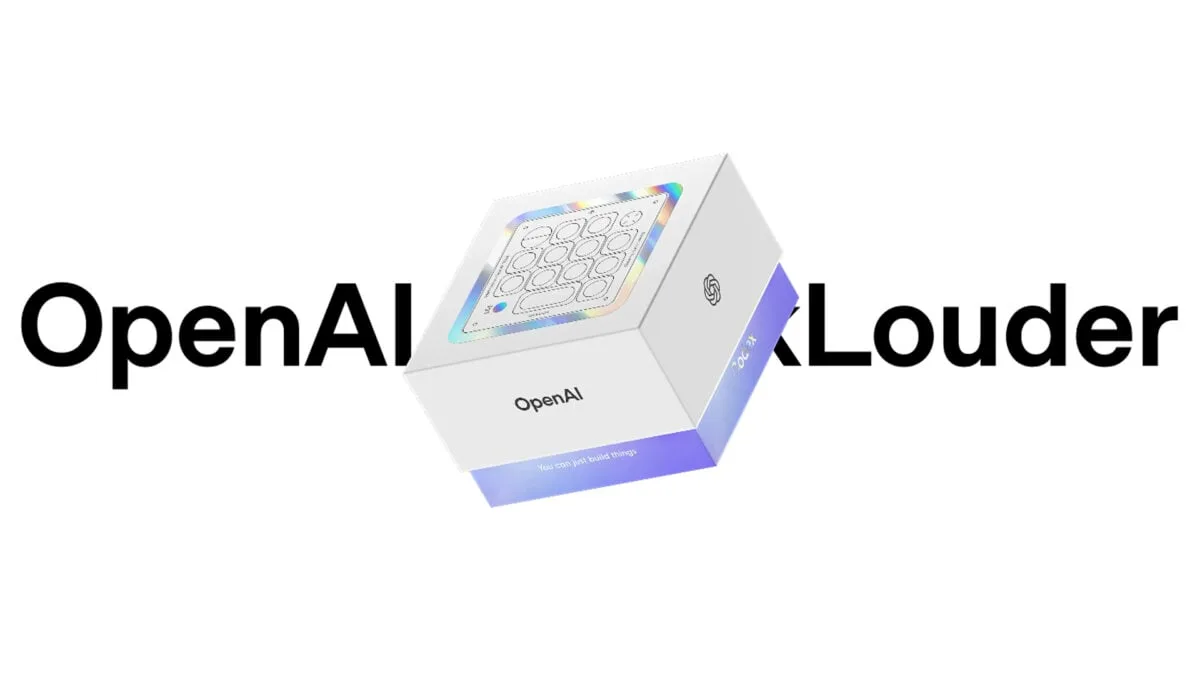
OpenAI has officially entered the hardware market, but its debut device isn't a smartphone or a smart speaker. The company has launched the Codex Micro, a $230 programmable macro pad designed in collaboration with Work Louder to give developers tactile control over AI coding agents.
Officially named the kbd-1.0-codex-micro, the square-shaped command center allows users to map physical buttons and a joystick to specific AI workflows. According to the product page, the device acts as a dedicated hub for agentic work, keeping pinned chats in view and streamlining interactions with OpenAI's Codex.
The hardware is built specifically to bridge the gap between physical inputs and autonomous software. Features include:
- Mechanical Inputs: 13 mechanical switches (available in clicky or silent variants), a touch sensor, a rotary dial, and a joystick.
- Customization: Includes 32 Codex icon keycaps for personalized shortcut mapping.
- Agent Status Lights: Six illuminated keys display real-time AI status: green (unread message), blue (thinking), orange (needs approval or has a question), and red (error).
- Workflow Mapping: The joystick can trigger complex actions like debugging an error or refactoring code, while the dial adjusts the level of reasoning the AI should use for a task.
While the Codex Micro targets developers, OpenAI is actively developing consumer hardware. Recent reports indicate the company is building a screenless, autonomous smart speaker designed as a "humanlike AI companion," projected for a 2027 release. This project is reportedly spearheaded by io Products, the hardware startup founded by former Apple design chief Jony Ive, which OpenAI acquired last year for $6.5 billion.
However, this aggressive push into physical devices has triggered a major legal battle. Last week, Apple filed a federal lawsuit in California against OpenAI, io Products, and two former Apple employees. The lawsuit accuses them of stealing trade secrets related to Apple's manufacturing processes and unreleased products.
The Strategic Pivot to Physical AI
Launching a niche, $230 developer tool before a mass-market consumer device is a calculated move by OpenAI. By targeting its most engaged power users - developers - the company can test how humans physically interact with AI agents without the immense pressure of a mainstream hardware launch. The Codex Micro proves that as AI models become more autonomous, relying solely on text prompts is inefficient; users need physical dials to adjust reasoning and instant visual feedback for agent status.
However, the looming Apple lawsuit over the $6.5 billion io Products acquisition threatens to complicate OpenAI's broader 2027 consumer hardware roadmap. It serves as a stark reminder that building physical supply chains and hardware ecosystems is far more legally and logistically treacherous than scaling cloud software.
This article was written by AI from reporting by gizmodo.com.