Researchers in Finland have successfully built an ultra-sensitive quantum sensor capable of detecting energy levels below one zeptojoule - an amount so small it equals the work needed to move a single red blood cell up by one nanometer. This breakthrough, published in the journal Nature Electronics, paves the way for counting individual photons and hunting for elusive dark matter particles. The research team, led by Academy Professor Mikko Möttönen at Aalto University, collaborated with quantum computing company IQM and the Technical Research Centre of Finland (VTT) to achieve this unprecedented level of precision.
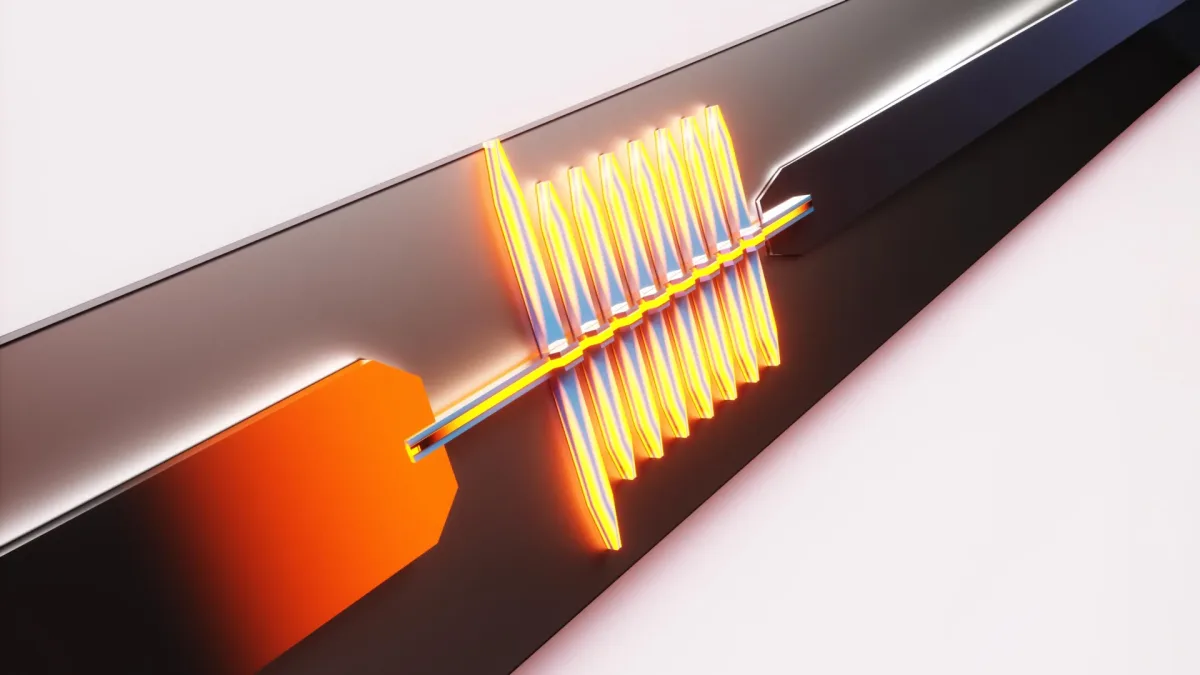
To reach this sensitivity, the scientists designed a specialized calorimeter to measure extremely small changes in heat energy. They directed a microwave pulse into a sensor built from a delicate combination of superconductors and normal conductors. "That combination of metals makes superconductivity such a fragile phenomenon that it weakens immediately if the temperature in the ultracold conductor rises even a little bit," explained Möttönen. This fragility is exactly what makes the setup so highly sensitive to microscopic energy fluctuations.
After carefully filtering the signal, the team confirmed the detection of an electromagnetic pulse measuring just 0.83 zeptojoules. According to the researchers, this marks the first time a calorimetric measurement device has reached such extreme sensitivity, opening new doors for astrophysics and quantum mechanics.
We want to make this setup capable of measuring input that has an arbitrary time of arrival, which is important for things like detecting dark-matter axions in space when you have no idea when they might reach your system.
- Mikko Möttönen, Aalto University
Beyond astrophysics, the technology holds immediate promise for the quantum computing industry. The calorimeter operates at the same extremely cold millikelvin temperatures required by qubits, the basic units of quantum information. The research was conducted using the OtaNano national research infrastructure, with funding from the Future Makers initiative, the Jane and Aatos Erkko Foundation, and the Technology Industries of Finland Centennial Foundation.
The Missing Link for Fault-Tolerant Qubits
While the potential to detect dark matter axions captures the imagination, the immediate commercial value of this zeptojoule sensor lies in quantum computing readout architecture. Current quantum computers struggle with severe thermal interference; reading a qubit's state typically requires amplifying the measurement signal, which introduces heat and noise into the fragile quantum system, leading to high error rates.
Because this new calorimeter operates natively at millikelvin temperatures, it can read qubits without requiring them to be brought to a higher temperature or relying on massive signal amplification. If IQM and other hardware developers integrate this sensor directly into their quantum processing units, it could drastically reduce readout errors. This thermal compatibility is a critical stepping stone toward building scalable, fault-tolerant quantum computers that can operate reliably outside of isolated laboratory conditions.
This article was written by AI from reporting by sciencedaily.com.