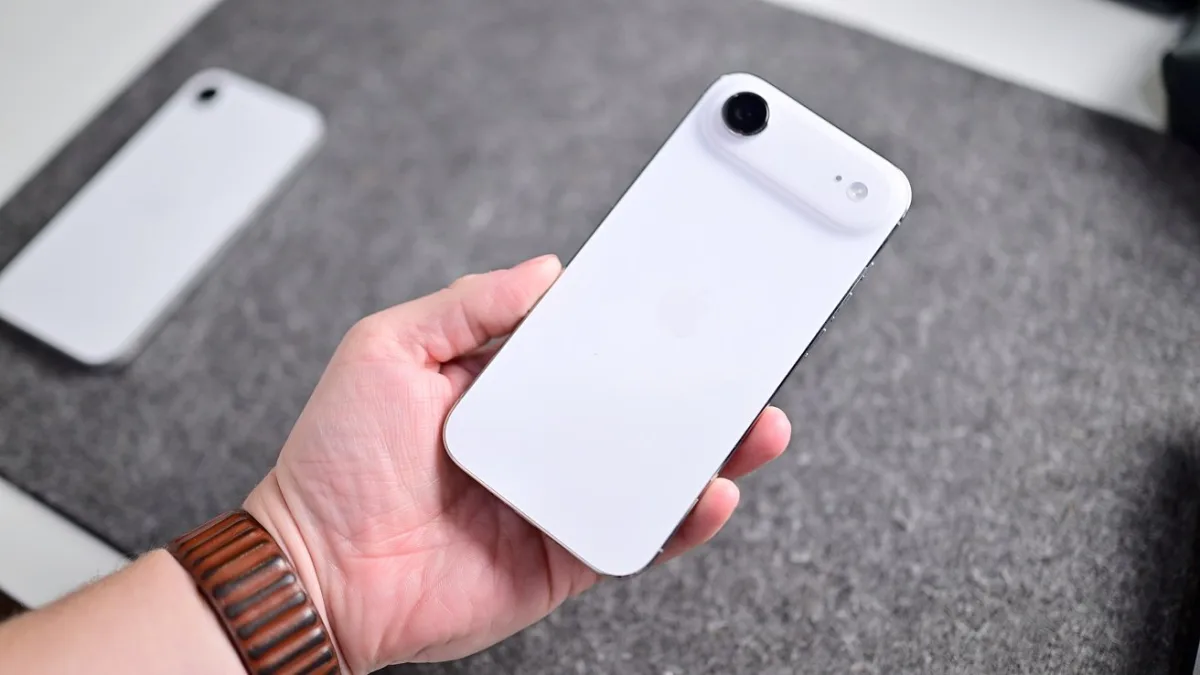
With the iPhone Air 2 slated for an early 2027 release, Apple is preparing to build on a form factor that has already proven its market viability. Despite early skepticism, the first-generation ultra-thin device has reportedly doubled the sales of the outgoing iPhone 16 Plus it replaced. Now, as the device moves through its first-year release cycle, attention is shifting to how Apple will address the hardware limitations of the original model.
The most significant shift for the upcoming generation is its release timeline. According to recent supply chain reports, Apple is planning a highly unusual split launch for the iPhone 18 cycle. The premium tier - comprising the iPhone 18 Pro, iPhone 18 Pro Max, and the highly anticipated "iPhone Fold" - is expected to debut in the fall of 2026. Meanwhile, the standard iPhone 18, the entry-level iPhone 18e, and the iPhone Air 2 will be held back until the first half of 2027.
Three Hardware Upgrades Expected for the Next Generation
While the current model delivers excellent battery life and day-to-day comfort, power users have noted distinct hardware bottlenecks. Based on current testing and industry rumors, Apple is expected to target three specific areas for the second iteration:
- Vapor Chamber Cooling: Prolonged processor loads, such as gaming or video exporting, currently cause the top section of the device to run noticeably hot. Integrating the vapor chamber cooling system found in the Pro line would stabilize performance and potentially unlock processor-heavy features like Cinematic Mode, which is currently absent.
- Dual Speaker System: The current mono speaker located at the top of the device is adequate for vertical scrolling but falls flat for landscape media consumption. Adding a secondary speaker is one of the most requested features from early adopters who use the device for travel and video streaming.
- Spatial Video Capture: The original model's single primary camera prevents it from capturing stereoscopic spatial footage. To support the Vision Pro ecosystem, Apple is expected to add a secondary camera. Rumors suggest the company might utilize square sensors - similar to the rumored front-facing camera on the iPhone 17 - to enable spatial recording in both portrait and landscape orientations.
The Strategy Behind the Split Release Cycle
Apple's decision to delay the iPhone Air 2 until early 2027 is a calculated maneuver designed to maximize hardware revenue. By launching the iPhone 18 Pro, Pro Max, and the new iPhone Fold exclusively in the fall of 2026, Apple forces early adopters and tech enthusiasts to purchase its highest-margin devices during the lucrative holiday quarter. If the ultra-thin model were available on day one, its unique form factor could easily cannibalize sales from the heavier, more expensive Pro lineup.
Furthermore, pushing the standard and ultra-thin models to the spring creates a powerful mid-cycle revenue spike. Historically, Apple has relied on new color variants to boost spring sales, but launching entirely new form factors like the iPhone Air 2 and iPhone 18e will generate significantly more momentum. This staggered approach ensures that the ultra-thin design remains a massive hit without undercutting Apple's premium flagship strategy.
This article was written by AI from reporting by appleinsider.com.