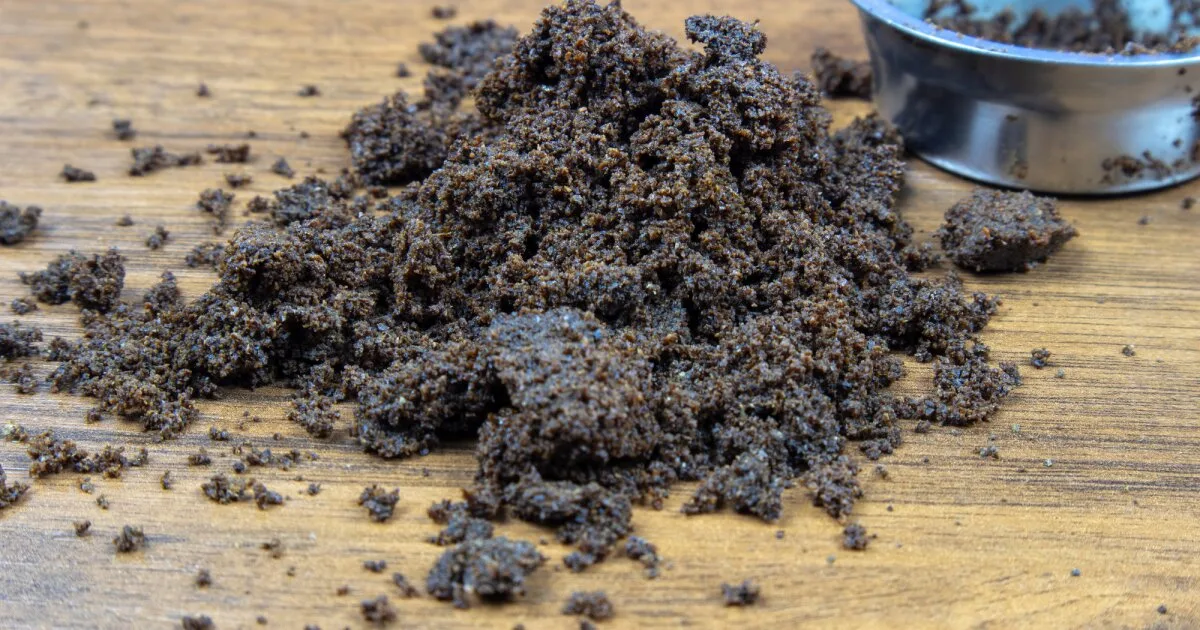
The push for sustainable building materials has led to a breakthrough in coffee grounds insulation, offering a viable alternative to petroleum-based products like styrofoam. With an estimated 8 to 60 million tons of spent coffee discarded annually, researchers at China's Shenyang Agricultural University (SAU) have developed a method to transform this methane-producing landfill waste into highly efficient thermal biochar. This innovation directly addresses the environmental burden of the world's daily two-billion-cup coffee habit.
Coffee waste in landfills contributes significantly to greenhouse gas emissions and spontaneous combustion events. While previous recycling efforts explored biofuels, 3D printing filaments, and concrete reinforcement, using grounds for insulation historically failed due to their low natural porosity of just 40%. This density prevents the raw material from effectively trapping air, which is the fundamental mechanic required for commercial thermal insulation.
To overcome this limitation, the SAU research team engineered a multi-step thermal and chemical process to expand the material's cellular structure. By converting the raw organic waste into biochar, they successfully increased the porosity from 40% to 71%, unlocking its potential as a commercial-grade insulator. The team then developed a specialized technique to maintain this delicate porous structure during manufacturing.
The Pore Restoration Process
To keep the newly expanded porosity intact while forming the biochar particles into a usable composite material, the researchers utilized a three-step "pore restoration" strategy. This ensures the material retains its air-trapping capabilities.
- Thermal Conversion: The raw grounds are oven-dried at 80 °C (176 ºF) for one week, then subjected to intense heat at 700 °C (1,292 ºF) for one hour to create the highly porous biochar.
- Chemical Matrixing: The biochar is pre-mixed with propylene glycol to temporarily fill the expanded pores, while ethyl cellulose powder is added to form a structural matrix.
- Compression and Vacuuming: The composite is compressed in a heated mold at 150 °C (302 ºF) for 10 minutes, followed by an hour in a vacuum oven at 80 °C (176 ºF) to extract the propylene glycol, leaving the insulating air pockets intact.
The resulting composite material demonstrated exceptional thermal resistance during laboratory testing. While standard ethyl cellulose possesses a thermal conductivity of 0.24 per meter per Kelvin, the biochar mixture dropped this metric to just 0.04. This six-fold improvement places the coffee-based material on par with commercial expanded polystyrene. The team successfully tested the material's real-world effectiveness by using it to limit heat transfer in solar panel arrays.
My Take: The Future of Circular Construction
The development of coffee grounds insulation represents a critical step forward for the circular economy in the construction sector. By matching the 0.04 thermal conductivity of traditional expanded polystyrene, this biochar composite proves that eco-friendly alternatives do not require a compromise in performance. Builders and developers have long sought sustainable materials that actually meet strict commercial insulation codes, and this research provides a mathematically sound solution.
The primary hurdle for commercialization will be scaling the "pore restoration" process, specifically the energy-intensive week-long drying and high-temperature baking phases. If SAU's methodology can be optimized for rapid industrial manufacturing, it could simultaneously solve a massive municipal waste problem while reducing the construction industry's reliance on toxic, petroleum-based spray foams. As study co-author Seong Yun Kim noted, turning waste into functional products is the exact blueprint needed to reduce global environmental burdens.
This article was written by AI from reporting by newatlas.com.