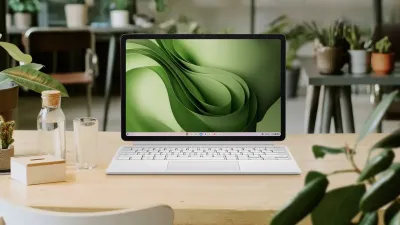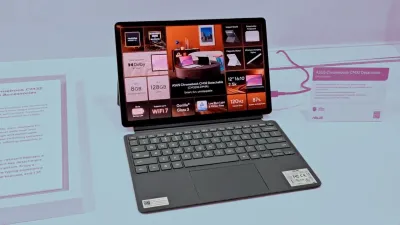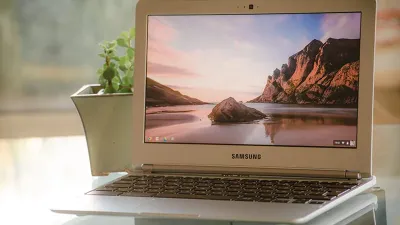
Google is preparing to launch a new tier of high-performance laptops dubbed "Googlebooks," signaling a major shift from its traditional lightweight Chromebooks. Recent code repository leaks reveal these upcoming machines will pack serious hardware to power a unified operating system that merges Android and ChromeOS. With original equipment manufacturers (OEMs) like Lenovo, Asus, and Acer already developing hardware, Google is clearly targeting the premium laptop market.
Acer Googlebook 14: OLED Displays and Panther Lake Power
The most detailed leaks center around the upcoming Acer Googlebook 14, which represents a massive leap in ChromeOS hardware. The device is expected to feature a 14-inch OLED screen, up to 512GB of SSD storage, and a whopping 16GB of RAM. This memory capacity is double what most premium Chromebooks have historically required.
Under the hood, the Acer Googlebook 14 will utilize mainboards equipped with either the Intel Core Ultra 5 325 or the Core Ultra 7 355. These are Intel's latest 8-core Panther Lake processors, designed specifically for lightweight, high-efficiency laptops. Previously, 8-core chips like the MediaTek Kompanio Ultra proved to be overkill for basic web tasks on devices like the Lenovo Chromebook Plus 14 and Acer Chromebook Plus Spin 514.
AluminumOS: Merging Android and ChromeOS
To justify this high-end hardware, Google is developing a new operating system internally dubbed AluminumOS. This platform will reportedly combine Android and ChromeOS into a single, homogeneous environment, allowing users to run a vast library of Android applications natively on a larger screen.
Leaked renders have already shown icons for heavy-duty applications like Adobe Premiere Pro running on the new OS. However, the success of AluminumOS will heavily depend on robust software and driver support. As Qualcomm recently experienced with its push for ARM-based PCs, raw hardware power is useless if users are left scrounging for compatible native applications.
The RAM Advantage in a $1,500 Laptop Market
Google's pivot toward high-end consumers comes at a volatile time for the PC industry. The ongoing memory crisis has severely impacted laptop pricing, pushing many mid-range Windows machines past the $1,500 mark. Simultaneously, Apple is aggressively targeting the entry-level premium segment with devices like the $700 MacBook Neo. Googlebooks appear positioned to strike right in the middle of this pricing battlefield.
This is where Google's architectural choices could provide a massive competitive edge. Because AluminumOS is built on a Linux kernel - just like Android and ChromeOS - it is inherently less RAM-intensive than Windows 11. While traditional Chromebooks easily survived on 4GB or 8GB of memory, equipping a highly optimized Linux-based OS with 16GB of RAM will offer immense multitasking headroom.
As Microsoft actively tries to strip down Windows 11 to make it run smoothly on 8GB devices, Google is entering the premium space with an OS that won't choke under heavy loads. If OEMs like Acer, Lenovo, Asus, and Samsung can keep the final retail prices contained, Googlebooks could become the most efficient mid-range laptops on the market.