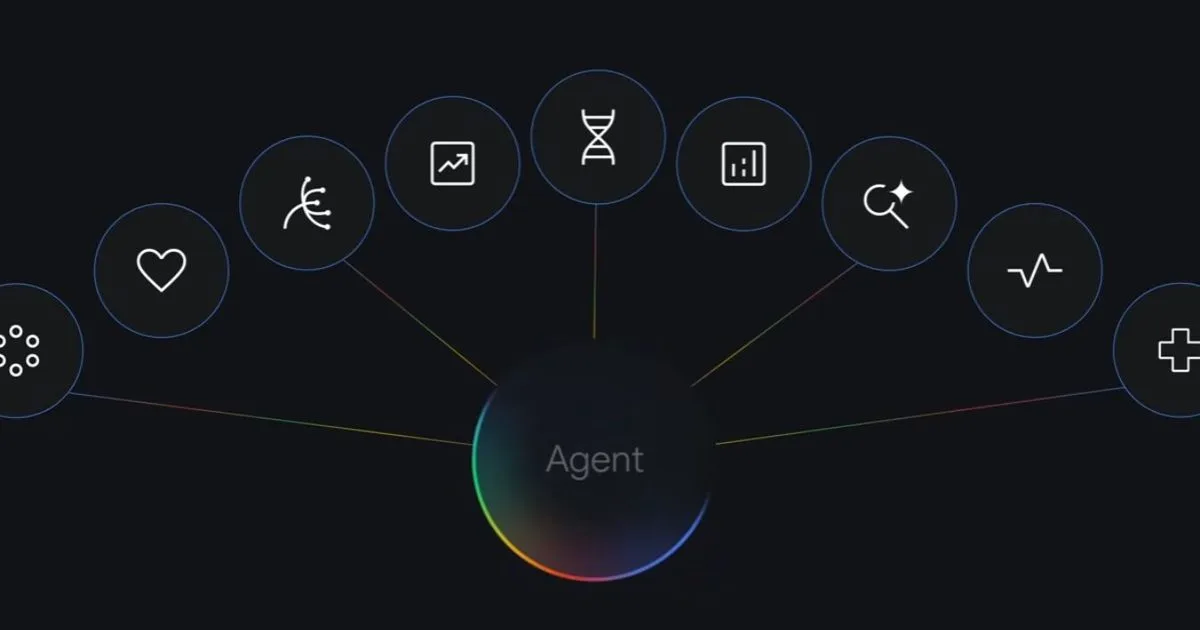
Google is pushing its artificial intelligence beyond basic text generation with the launch of Gemini for Science, an experimental suite of agentic AI tools designed to accelerate scientific breakthroughs. Announced at Google I/O 2026, the platform targets the most labor-intensive phases of research, including hypothesis building, computational testing, and literature review.
Aimed directly at researchers, lab scientists, and enterprise organizations, this toolkit is built to automate the manual grunt work of discovery. By reducing the time spent querying databases and designing routine tests, Gemini for Science aims to give scientific teams more room to focus on high-level judgment, experimental design, and data interpretation.
Unlike standard chatbots, the suite is structured around specific phases of the scientific method. Google has integrated features that pull insights from more than 30 major life science databases and research tools, a capability dubbed Science Skills. This integration prevents scientists from having to constantly jump between specialized, disconnected systems.
Core Features of the Research Suite
To address the specific bottlenecks in modern laboratories, Google has broken the Gemini for Science platform into three primary agentic tools:
- Hypothesis Generation: This tool searches across massive volumes of academic papers to help scientists formulate new ideas. Google notes that all outputs are supported by clickable citations to ensure traceability.
- Computational Discovery: Acting as an agentic search engine for testing, this feature can rapidly generate thousands of experimental tests, bypassing the traditional hands-on workflows required to manually design every possible scenario.
- Literature Insights: Designed to alleviate the reading burden, this tool allows researchers to query published work and instantly convert the findings into written reports, infographics, audio summaries, or video overviews.
The launch positions Gemini for Science alongside Google's wider AI research stack, which includes projects like Co-Scientist, AlphaEvolve, ERA, and NotebookLM. Access to the new suite is currently limited, rolling out gradually through a Google Labs form, while enterprise organizations will receive a dedicated pathway via Google Cloud.
The Rigor vs. Speed Dilemma in AI Research
The introduction of agentic AI into the scientific method presents a massive opportunity, but it carries an equally significant risk profile. AI systems that suggest hypotheses and design tests need to deliver far more than just speed; they require absolute transparency, reproducible outputs, and clear sourcing. If an AI hallucinates a citation or misinterprets a dataset, it could waste weeks of expensive laboratory time.
Google's decision to limit the initial rollout reflects an understanding of these high stakes. The true test for Gemini for Science will not be its impressive demo at I/O 2026, but whether it can maintain rigorous scientific standards in real-world labs. If researchers can genuinely trust the outputs, this suite could fundamentally shift how early-stage discovery is conducted across the life sciences.
This article was written by AI from reporting by digitaltrends.com.