Physicists have uncovered a hidden quantum boundary that fundamentally prevents an electron's position and timing from being known with perfect precision simultaneously. For decades, Werner Heisenberg’s uncertainty principle dictated that a particle's position and momentum could not both be measured with absolute certainty. Now, researchers have proven that a similar, inescapable restriction governs space and time at the quantum level.
The breakthrough, published in Nature Photonics, was achieved by teams at the Regensburg Center for Ultrafast Nanoscopy (RUN) and the Max Planck Institute. By attempting to track an electron across both space and time with extreme precision, the scientists observed a direct tradeoff: the more precisely they determined when an electron moved, the less tightly its quantum wave packet remained confined in space.
This discovery is not a limitation of modern equipment, but a restriction built into the fabric of nature itself. Understanding this quantum space-time limit is critical for the future of technology, as next-generation computer chips, advanced energy materials, and quantum information systems all rely on controlling electrons at scales far beyond the reach of conventional electronics.
Capturing Electrons in Attoseconds
To observe this phenomenon, the research team had to build a specialized laser system capable of generating precisely timed light pulses. Standard microscopes, no matter how powerful, cannot capture the dynamic changes of an electron from one instant to the next. The team needed an ultrafast "movie" with frames separated by attoseconds - one billionth of a billionth of a second.
The laser pulses controlled electrons moving between an atomically sharp metal tip and a silver surface, separated by just a few atomic diameters. The electrons crossed this microscopic gap through quantum tunneling, a process where particles pass through an energy barrier they theoretically shouldn't be able to overcome. By altering the delay between two light pulses, the researchers could reconstruct the exact moment the transfer occurred.
"Our measurement can be understood as a high-speed camera for the electron wave packets, since you can see at what point in time the tunneling process takes place," explained Katharina Glöckl, a doctoral researcher and co-author of the study. The experiment revealed that the electrons did not respond to the laser field instantly; instead, their motion lagged behind by approximately 500 attoseconds.
The Space-Time Tradeoff
The core of the discovery lies in the dual nature of light and energy at the quantum scale. When the team attempted to pinpoint the exact timing of the electron transfer, they had to deliver more energy into the system. This intense laser excitation directly impacted the spatial footprint of the electron.
The more precisely we want to pin down the electron’s position in time, the more energy we need to provide. And as a result, the electron wave packet spreads out more spatially.
- Raffael Spachtholz, Co-author
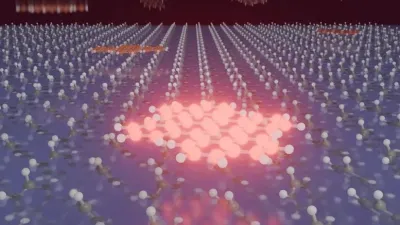
To measure this relationship directly, the researchers placed a single atom on the silver surface to act as a tiny spatial constraint. This localized the electron wave packet briefly before the laser pulses arrived, allowing the team to compare the electron's spatial confinement against the precision of its measured movement in time. Despite the intense energy required, the wave packets remained localized enough for atomic-scale imaging.
The End of the CMOS Era and the Dawn of Attosecond Engineering
This discovery transitions a previously theoretical boundary into an experimental playground, fundamentally shifting how we approach quantum engineering. The ability to compress the transfer of a single electric charge into an infinitesimally small region of space and time can produce local peak current densities of up to 1 trillion amperes per square centimeter. This is not just a physics milestone; it is a blueprint for the post-silicon era.
Currently, the tech industry relies heavily on CMOS technology, which is rapidly approaching its physical limits in terms of miniaturization and speed. By understanding and manipulating the quantum space-time limit, engineers could eventually operate electronics and quantum processors at the intrinsic speed limit of electron motion itself. This would result in systems hundreds of thousands of times faster than today's most advanced chips.
Furthermore, these highly concentrated electron pulses offer a revolutionary approach to chemistry. Instead of heating an entire material to force a reaction, scientists could direct energy toward a specific molecular bond at a precisely chosen attosecond. This level of control could lead to the creation of entirely new materials and highly efficient energy storage systems, proving that the ultimate limits of physics are not roadblocks, but rather the foundation for next-generation technologies.
This article was written by AI from reporting by scitechdaily.com.