

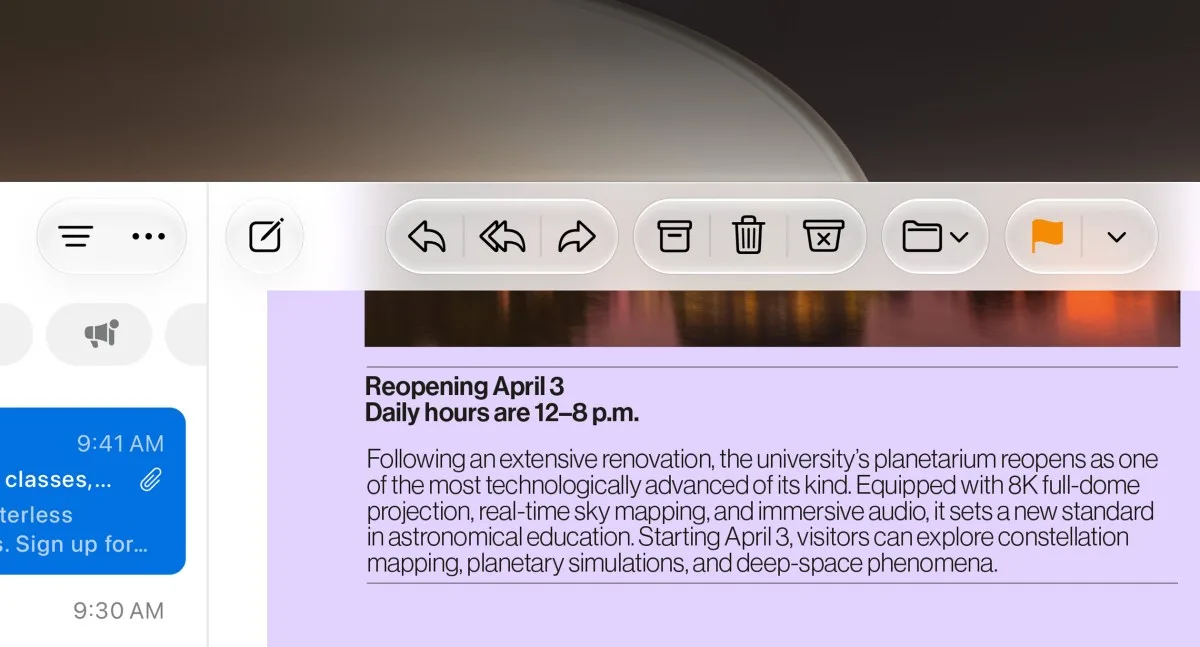
Apple is officially rolling out macOS 27, dubbed Golden Gate, to all compatible Mac users on Monday, September 14. Arriving alongside iOS 27, iPadOS 27, watchOS 27, tvOS 27, and visionOS 27, this major desktop update introduces Siri AI and a revamped Liquid Glass design language. However, the release marks a historic cutoff: macOS Golden Gate is the first version of the operating system to completely drop support for Intel-based Macs, requiring an M1 chip or newer to install.
Beyond the visual overhaul, the update signals the final phase of Apple's silicon transition. macOS 27 Golden Gate will be the last major release to include Apple's full Rosetta translation layer, meaning it can still run legacy Intel applications, but the clock is ticking for developers to provide native binaries. Additionally, beta code analysis by developer Steven Troughton-Smith revealed that the new Liquid Glass interface elements render with enhanced depth on high-end OLED displays with HDR support, strongly hinting at the rumored OLED MacBook Pro or MacBook Ultra expected by early 2027.
Supported Devices and Intel Cutoffs
To install macOS Golden Gate, users will need a machine powered by Apple silicon. The official compatibility list includes the newly announced MacBook Neo (2026), alongside the MacBook Air and MacBook Pro with Apple silicon (2020 and later). Desktop users will need an iMac (2021 and later), Mac mini (2020 and later), Mac Studio (2022 and later), or Mac Pro (2023 and later).
Conversely, macOS 26 Tahoe will remain the final operating system for Intel-based machines. The following Intel Macs that ran Tahoe will not receive the Golden Gate upgrade:
- 13-inch MacBook Pro (2020, Four Thunderbolt 3 Ports)
- 16-inch MacBook Pro (2019)
- 27-inch iMac (2020)
- Mac Pro (2019)
Apple has confirmed that these Intel-based Macs will continue to receive security updates for three years. This ensures that older hardware remains safe to use in enterprise and educational environments, even without access to the latest AI features.
The Final Countdown for Legacy Apps
The most critical takeaway from the macOS Golden Gate release isn't the introduction of Siri AI or the Liquid Glass aesthetic - it is the explicit sunsetting of the Rosetta translation layer. By confirming this is the final major release to support full Rosetta translation, Apple is forcing the hand of any remaining developers who have dragged their feet on compiling native Apple silicon apps.
While the three-year security lifeline for Intel Macs provides a reasonable buffer for enterprise environments, the software ecosystem is moving on rapidly. Users relying on niche, unmaintained Intel software need to start looking for modern alternatives before macOS 28 breaks their workflows entirely next year. The transition era is officially over; Apple silicon is now the sole priority.
