Mercedes-Benz is officially pivoting its electric vehicle strategy with the upcoming 2027 Mercedes-Benz C-Class EV, abandoning the polarizing jellybean aesthetics of its EQ lineup. Riding on a dedicated 800-volt EV architecture shared with the new GLC EV, this electric sedan delivers a massive 483 horsepower and an estimated 400 miles of range. By blending traditional luxury proportions with next-generation charging tech, the automaker is finally delivering an EV that appeals to its core demographic.
The new model will debut in the U.S. in the first half of 2027 as the dual-motor, all-wheel-drive C400 4Matic, with a single-motor C300 variant slated to follow. With an estimated base price of $55,000, it aggressively targets the premium electric sedan market, aiming directly at the Tesla Model 3 and the upcoming BMW i3.
A Design Middle Ground
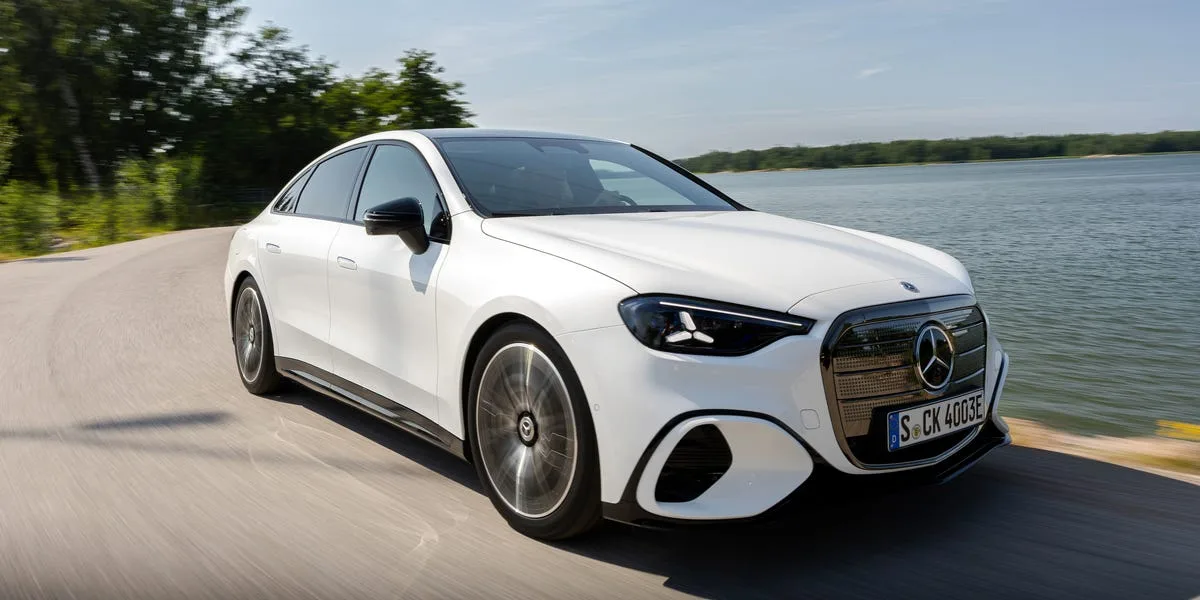
The 2027 C-Class EV strikes a deliberate balance between the conventional gas-powered C-Class and the futuristic EQ models. It features a prominent grille and a relatively long hood, avoiding the stubby front end that defined the EQS. Moving rearward, the design incorporates a rising shoulder line, a fastback roofline, and a bobbed tail that subtly nods to aerodynamic efficiency without looking alien.
Dimensionally, the electric sedan is significantly larger than its gas-powered sibling. It boasts a 116.6-inch wheelbase, which is about four inches longer than the standard C-Class, and the overall length has been stretched by just over five inches. This expanded footprint translates to a generous 17 cubic feet of trunk space, complemented by a 4-cubic-foot frunk accessible via a badge press on the hood.
The All-Screen Cabin Experience
Inside, Mercedes continues its aggressive push toward digital dominance. The dashboard layout mirrors the GLC EV, featuring a digital gauge cluster and a central touchscreen that spans between the air vents. Buyers can upgrade to the Superscreen, which adds a 14.0-inch front-passenger display, or the massive Hyperscreen that unifies all three displays with a single background image chosen from nine available options.
The cabin integrates advanced productivity and comfort features, including an interior-facing camera that enables Microsoft Teams meetings while parked. The steering wheel has been simplified, reducing the frustrating four-way touchpads to a single control, while audio volume and cruise control return to physical buttons. A glass roof is standard, with an option for electrically adjustable opacity divided into nine separate sections.
Powertrain, Range, and Charging
The C400 4Matic is powered by a 94-kWh liquid-cooled lithium-ion battery and a dual-motor setup that generates 483 horsepower and 590 lb-ft of torque. This output easily eclipses the dual-motor EQE350's 315 horsepower and edges past the expected 463 horsepower of the upcoming BMW i3. A two-speed rear gearbox and a front-axle disconnect system further optimize both acceleration and highway efficiency.
Mercedes claims the C400 will hit 60 mph in just 3.9 seconds, a massive improvement over the 5.3-second time recorded by the EQE350. On the European WLTP cycle, the 94-kWh battery delivers up to 474 miles of range, which should translate to roughly 400 miles under EPA testing. This positions it highly competitively against the Tesla Model 3 AWD (309 to 346 miles) and the rumored 112-kWh BMW i3 (up to 440 miles). Crucially, the 800-volt architecture supports DC fast charging at up to 330 kW via a standard NACS port.
Driving Dynamics and Car-to-X Tech
The driving experience is highly customizable, featuring four levels of regenerative braking controlled via steering-wheel paddles. This includes an intelligent regen mode that dynamically adjusts braking force based on navigation data and surrounding traffic. For handling, the optional Agility & Comfort package equips the sedan with air springs, adaptive dampers, and rear-axle steering.
Mercedes engineers report that the C-Class EV features 20 percent greater damping of body motions and 11 percent less body roll compared to the GLC EV. Engaging Sport mode lowers the ride height by 0.6 inches, stiffens the suspension, and sharpens the rear-axle steering. Additionally, the vehicle utilizes Car-to-X technology to detect speed bumps and beam that data to the cloud, allowing other equipped Mercedes models to preemptively adjust their suspensions.
2027 Mercedes-Benz C400 4Matic Specifications
Based on initial testing and manufacturer data, here are the core specifications for the upcoming dual-motor variant:
| Specification | Detail |
| Base Price (Est.) | $55,000 |
| Powertrain | Dual-motor AWD (483 hp, 590 lb-ft) |
| Battery Capacity | 94 kWh (Liquid-cooled lithium-ion) |
| Peak Charge Rate (DC) | 330 kW (800-volt architecture) |
| EPA Range (Est.) | 400 miles (100 MPGe Combined) |
| 0-60 mph Acceleration | 3.8 seconds (C/D Est.) |
| Top Speed | 130 mph |
The Strategic Shift in Mercedes' EV Lineup
The 2027 Mercedes-Benz C-Class EV represents a critical pivot for the German automaker. By abandoning the hyper-aerodynamic but polarizing EQ design language, Mercedes is acknowledging that mainstream luxury buyers want an EV that looks like a traditional status symbol, not a science experiment. The inclusion of a native NACS port and an 800-volt architecture capable of 330-kW charging directly addresses the two biggest hurdles to EV adoption: charging anxiety and infrastructure compatibility.
At an estimated $55,000, it aggressively undercuts the current pricing of the EQE while offering superior performance and a more intuitive interior layout. This pricing strategy effectively renders the older EQ models obsolete and sets a formidable benchmark against the upcoming BMW i3 and the established Tesla Model 3. If Mercedes can deliver on the promised 400-mile EPA range, this sedan will likely become the new default choice in the compact luxury EV segment.