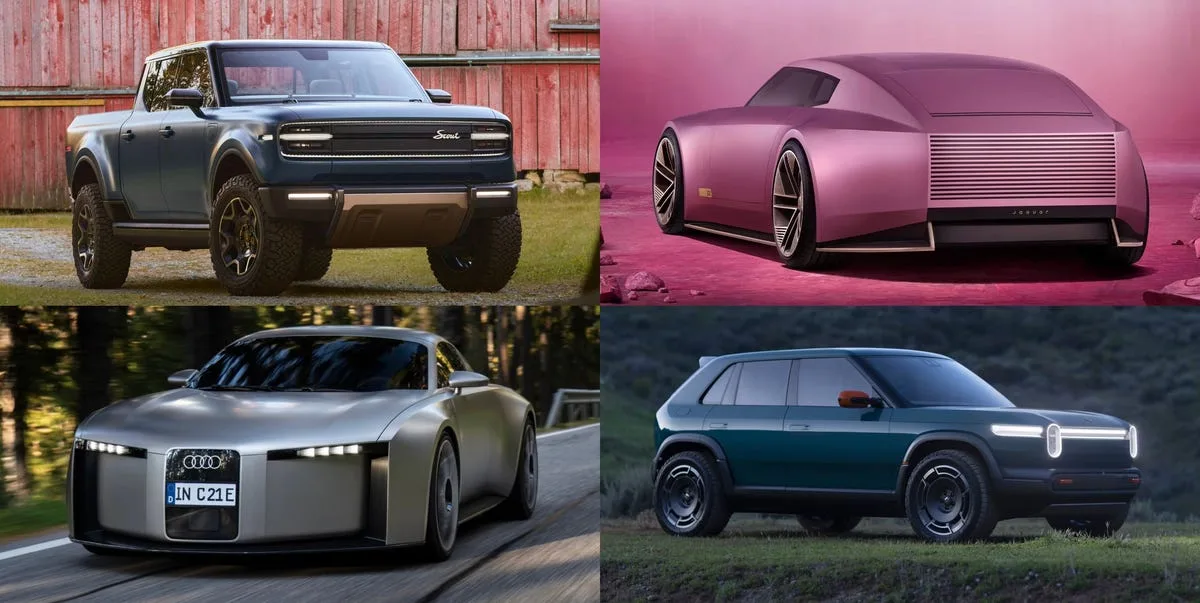
The automotive landscape is undergoing a massive transformation as manufacturers pivot toward next-generation platforms, bringing a wave of upcoming electric vehicles that promise to reshape the market. From ultra-luxury hyper-EVs designed by tech icons to budget-friendly compact pickups, the pipeline for 2026 and beyond reveals a stark divergence in industry strategy. Automakers are no longer just trying to build viable electric cars; they are aggressively segmenting the market to target both extreme performance enthusiasts and cost-conscious daily drivers.
This incoming generation of EVs relies heavily on advanced 800-volt electrical architectures, massive battery capacities, and, surprisingly, a return to physical controls and simulated combustion characteristics. As legacy brands like Ferrari, BMW, and Jaguar prepare to launch their flagship electric models, the focus has shifted from pure range anxiety to emotional engagement and hyper-specific market positioning.
The Ultra-Luxury EV Shift: Ferrari, Bentley, and Jaguar
Ferrari is preparing to launch its first EV, the Luce, in the spring of 2027. Designed in part by former Apple designer Jony Ive, the four-door vehicle blurs the line between a sedan and an SUV. It features a quad-motor powertrain delivering 1,035 horsepower, capable of launching the nearly 5,000-pound vehicle to 62 mph in just 2.5 seconds. Equipped with a 122-kWh battery, the Luce targets just under 300 miles of range and utilizes an 800-volt architecture for 350-kilowatt fast charging. Notably, Ferrari is amplifying actual rear-axle mechanical noise rather than relying solely on simulated V12 sounds. Prices will start at an estimated $640,000.
Bentley is also entering the fray with the Torcal, a compact yet imposing 197-inch EV set for a 2026 reveal and early 2027 sales. Slotting below the Bentayga, the Torcal draws styling cues from the EXP 15 concept, featuring a squared-off front end and a decadent cabin. Meanwhile, Jaguar is entirely reinventing itself as an exclusive EV brand. The automaker will reveal the Type 01, a four-door grand tourer, in late 2026. Priced around $130,000, the Type 01 will boast a tri-motor setup producing over 986 horsepower, an EPA-estimated range of at least 430 miles, and the ability to add 200 miles of range in just 15 minutes.
BMW’s Neue Klasse and CLAR Expansion
BMW is aggressively expanding its electric portfolio, starting with the i3 sedan. Riding on the Neue Klasse platform, the i3 features an 800-volt architecture allowing for 400-kW fast charging. Its 109-kWh battery is expected to deliver 440 miles of range, with the initial 50 xDrive trim producing 463 horsepower. Sales begin in late 2026. This platform will also spawn the highly anticipated iM3, a quad-motor performance variant expected to exceed 600 horsepower. To maintain enthusiast appeal, BMW is testing faux gearshifts and simulated engine noises, sampling audio from classic V8 and V10 M-cars.
On the SUV front, the iX3 arrives in the summer of 2026 with 463 horsepower, a 109-kWh battery, and nearly 400 miles of range. It introduces a radical interior featuring a 43-inch full-width head-up display along the windshield base. A sleeker coupe-SUV variant, the iX4, enters production in November 2026. Further up the lineup, the iX5 will launch in the first quarter of 2027. Utilizing an updated CLAR platform, the iX5 60 xDrive will generate 570 horsepower and 593 pound-feet of torque, offering 435 miles of range and 460-kilowatt charging capabilities.
High-Performance Sedans and Sports Cars
Alfa Romeo is revamping the Giulia on the Stellantis Group's STLA Large platform. The new 800-volt EV will offer up to 500 miles of range, with the base model producing 350 horsepower, the Veloce hitting 800 horsepower, and the flagship Quadrifoglio exceeding 1,000 horsepower. Audi is also targeting the performance sector with a new electric sports car previewed by the Concept C. Arriving in 2027, the rear-wheel-drive concept weighs 3,726 pounds and marks Audi's return to physical interior controls.
Hyundai and Genesis are pushing the boundaries of electric performance. The Hyundai Ioniq 6 N arrives in 2026, featuring a dual-motor setup that produces 601 horsepower, with a 10-second boost mode unlocking 641 horsepower for a 3.2-second sprint to 60 mph. Priced around $60,000, it will feature simulated gearshifts and aggressive aero upgrades. Genesis will launch the GV60 Magma in 2026 with identical power figures, alongside the flagship GV90 SUV, which is based on the opulent Neolun concept and expected to offer 500 horsepower and 250 miles of range.
Affordable EVs, Trucks, and Other Notable Updates
- Ford Compact Pickup: Ford is developing a $30,000 electric truck on a new Universal EV platform. Expected to be named Ranchero, it will feature a 400-volt architecture, cost-effective lithium-iron-phosphate (LFP) batteries, and rear-wheel drive. Production begins in Kentucky in 2027.
- Kia EV3 and Tasman Spin-off: The compact EV3 arrives in late 2026 with a starting price of $35,000. It offers a 58-kWh battery (220 miles) or an 81-kWh battery (320 miles), with a 288-horsepower GT trim topping the range. Kia is also developing a mid-size electric pickup for North America, expected by the end of the decade.
- Caterham Project V: Launching in 2027 for $135,000, this lightweight electric coupe features a 268-horsepower Yamaha motor and a unique split 27-kWh battery design, targeting a 0-62 mph time under 4.5 seconds.
- Hyundai and Chevy Van: A new partnership will yield a U.S.-built electric commercial van in 2028, with both brands offering unique designs on a shared platform.
- Alpine's U.S. Pivot: Due to new import tariffs, Alpine has delayed its A390 crossover. The French brand now plans to enter the U.S. market with the A110 electric sports car and a larger SUV.
The Illusion of Combustion in the EV Era
The most fascinating trend emerging from this upcoming crop of EVs is the industry's desperate attempt to engineer the soul of an internal combustion engine into a battery-powered chassis. For years, the primary selling point of an electric vehicle was its silent, seamless, and instantaneous power delivery. Now, as legacy performance brands like Ferrari, BMW, and Hyundai's N division transition their flagship models to electric platforms, they are actively programming inefficiency and noise back into the driving experience.
BMW's decision to sample E92 V8 audio for the iM3, Hyundai's simulated gear jolts in the Ioniq 6 N, and Ferrari's mechanical axle amplification in the $640,000 Luce all point to a critical realization: raw acceleration is no longer a differentiator. When a $35,000 Kia EV3 can deliver instant torque, luxury and performance brands must manufacture emotional engagement to justify their massive price premiums. This signals a broader market shift where the software tuning of an EV - specifically its ability to mimic the visceral flaws of a gas engine - will become just as important as its battery chemistry or aerodynamic drag coefficient.