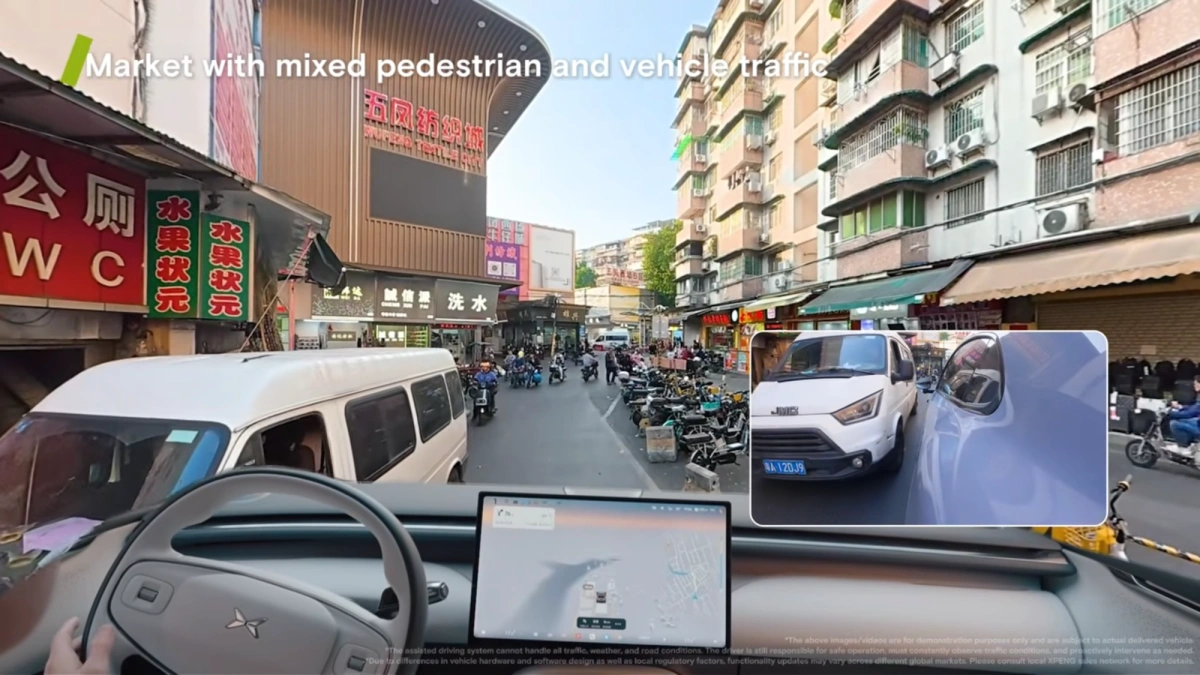
Chinese electric vehicle manufacturer XPENG has released a new video showcasing its in-house self-driving technology navigating highly complex city traffic. The demonstration highlights the system's ability to maintain situational awareness in unpredictable urban environments. For automotive tech enthusiasts and industry analysts, this footage provides a practical look at how advanced driver-assistance systems handle real-world chaos.
The recently published test drive takes place in a bustling Chinese city, an environment notorious for its challenging and erratic traffic patterns. According to the report, the video clearly illustrates the immense difficulty of maintaining a comprehensive overview in such crazy traffic situations. By testing in these demanding conditions, the company aims to prove the robustness of its proprietary autonomous algorithms.
VLA 2.0 and L3 Permits Context
While the specific vehicle model in the video remains undisclosed in the brief report, XPENG's broader autonomous driving capabilities are rapidly evolving. The company's recent milestones include the development of its VLA 2.0 technology and the acquisition of Level 3 (L3) autonomous driving permits. These recent demonstrations underscore the automaker's push to transition from highway-assist features to full urban autonomy.
Frequently Asked Questions
What does the new XPENG video show?
It displays the company's in-house self-driving technology navigating through chaotic and complex traffic conditions in a Chinese city.
What autonomous driving level is XPENG targeting?
The company has been actively securing L3 (Level 3) permits and developing its VLA 2.0 technology for advanced autonomy.
My Take
The decision by XPENG to publicly showcase its system in "crazy traffic conditions" is a calculated move to build consumer trust. Urban environments are the ultimate stress test for autonomous driving, far exceeding the predictable nature of highway cruising. By highlighting its VLA 2.0 technology and L3 permits alongside real-world stress tests, the company is positioning itself as a direct competitor to Western autonomous leaders. If the in-house system can reliably process the unpredictable variables of a dense Chinese metropolis, it will represent a significant leap forward for global EV autonomy.