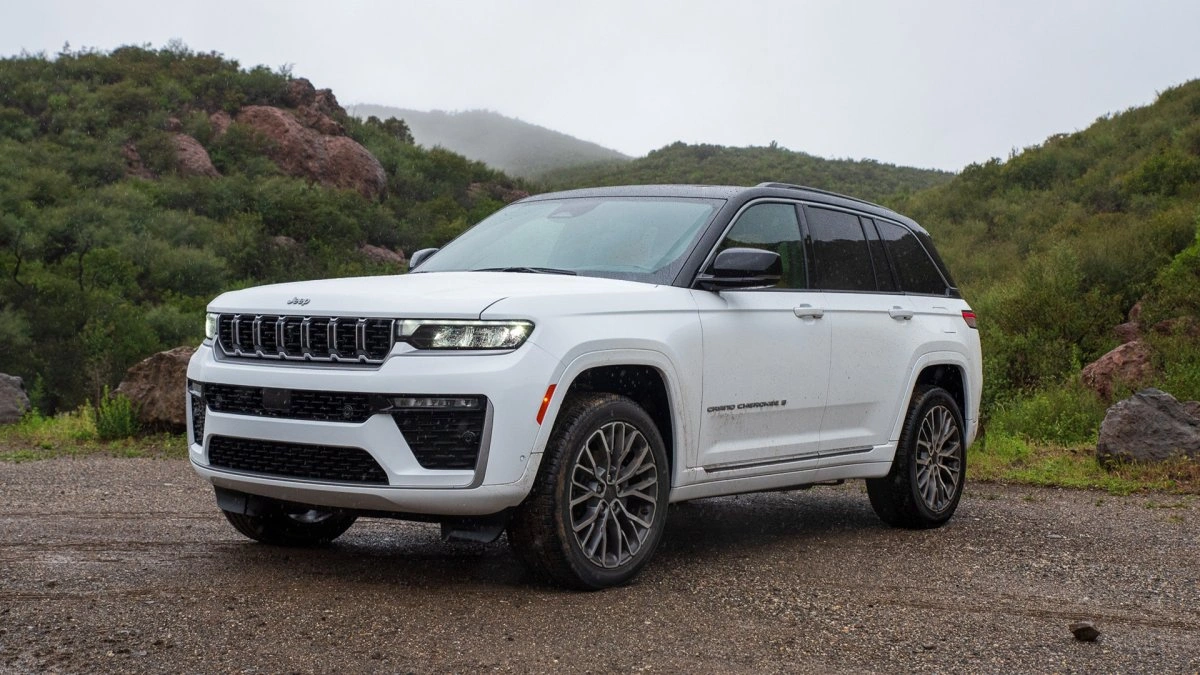
2026 Jeep Grand Cherokee Hurricane 4 is Jeep’s latest attempt to make a downsized turbo engine feel at home in a full-size-feeling, family SUV. The headline is simple: it’s quicker than many people will expect, but it doesn’t always feel as polished as buyers in this price and weight class may want. This is for shoppers cross-shopping mainstream two-row SUVs and entry luxury alternatives who care about everyday drivabilitymerging, passing, towing confidence, and smoothnessmore than spec-sheet bragging rights.
The core question is whether a turbo four-cylinder that sounds more at home in a hot hatch can deliver the calm, effortless character people associate with a Grand Cherokee. In first-drive terms, the answer lands in the middle: the engine’s midrange shove is real, yet the overall powertrain experience can feel imperfect when you’re asking it to do heavy-SUV things at low speeds, on grades, or during frequent throttle changes.
2026 Jeep Grand Cherokee Hurricane 4: what’s changing and why it matters
The 2026 Jeep Grand Cherokee Hurricane 4 story is fundamentally about right-sizing powertrains without making the vehicle feel “right-sized.” Automakers are leaning on turbocharging and modern engine management to deliver usable torque while improving efficiency and meeting tightening emissions requirements. In a vehicle that can tip the scales around the 5,000-pound mark depending on configuration, the engineering challenge isn’t just peak outputit’s how the engine, transmission, and calibration behave in the messy middle of real driving.
For a typical owner, that messy middle is school runs, stop-and-go traffic, short highway on-ramps, and two-lane passing. A powertrain can be objectively strong yet still feel busy or inconsistent if boost delivery, gear selection, and throttle mapping aren’t perfectly aligned. That’s why first-drive impressions often focus less on “is it fast?” and more on “does it feel effortless?”
Hurricane 4 turbo four-cylinder performance: punchy where you use it
The most positive takeaway is that the Hurricane 4 delivers the kind of punch that makes a heavy SUV feel lighter than it is when you roll into the throttle. Turbo engines can create a satisfying surge in the midrange, and that’s the zone drivers live in when merging or passing without flooring it. In practice, that means the Grand Cherokee can feel responsive in the moments that matter mostlike jumping into a gap in traffic or climbing a mild grade without immediately hunting for multiple downshifts.
Where this matters is confidence. A family SUV that hesitates can feel stressful, especially with passengers onboard. A punchy midrange reduces the need for dramatic throttle inputs, which can also help keep the cabin calmer. The tradeoff is that turbo torque often arrives in a more “step-like” way than a larger naturally aspirated engine, and that character can become more noticeable as load increases.
Refinement and drivability: where the “imperfect” part shows up
The “imperfect” label typically comes from refinement gaps rather than raw capability. In a heavy SUV, a turbo four-cylinder may need to work harder more often, and that can show up as more audible effort, more frequent gear changes, or a less linear response when you’re modulating the throttle in traffic. Even if the engine is strong, the sensation of the powertrain constantly adjusting can make the vehicle feel less relaxed than buyers expect from a Grand Cherokee.
A common real-world scenario is creeping in congestion, then accelerating briefly, then lifting again. If the calibration is aggressive about building boost and then quickly backing off, the vehicle can feel slightly jumpy or inconsistent. Another scenario is a rolling highway pass: if the transmission drops a gear and the turbo spools in a way that feels abrupt, the acceleration can be effective but not especially smooth. These are the kinds of details that separate “fast enough” from “premium-feeling.”
Why a four-cylinder in a 5,000-pound SUV is hard engineering
Moving a heavy SUV isn’t just about horsepower; it’s about managing heat, load, and repeatability. Turbocharged engines generate more thermal stress under sustained demand, and a large vehicle asks for sustained demand more oftenlong grades, higher speeds, towing, or simply carrying people and cargo. Engineers can absolutely make this work, but the calibration window is narrower: you’re balancing responsiveness, smoothness, fuel economy, and durability all at once.
There’s also a perception challenge. Many buyers equate cylinder count with effortlessness. Even if the Hurricane 4 is objectively capable, it has to “feel” right in a vehicle that has historically been associated with larger-displacement engines. That means the transmission tuning and throttle mapping become as important as the engine itself, because they shape what the driver perceives as refinement.
Who should consider the Hurricane 4 Grand Cherokee (and who shouldn’t)
If your Grand Cherokee life is mostly commuting, errands, and highway cruising with occasional road trips, the Hurricane 4’s punchy midrange can be a strong fitespecially if you value responsive passing power over the sound and smoothness of a bigger engine. Drivers coming from modern turbo crossovers may find the character familiar and acceptable, and they may appreciate that the vehicle doesn’t feel underpowered in everyday use.
If you prioritize silky, low-effort acceleration, frequently drive in hilly terrain with a full load, or plan to tow regularly, you’ll want to pay extra attention to how the powertrain behaves under sustained demand. The key is not whether it can do the job once, but whether it does it repeatedly without feeling strained or busy. A longer test drive that includes stop-and-go, a steep grade, and a few highway passes will reveal more than a quick loop around the dealership.
| Decision factor | What the Hurricane 4 tends to deliver | What to evaluate on your test drive |
|---|---|---|
| Everyday acceleration | Strong midrange punch for merging and passing | Roll-on acceleration from 3070 mph without flooring it |
| Smoothness in traffic | Can feel less linear during frequent throttle changes | Creeping, then accelerating lightly, then lifting repeatedly |
| Powertrain refinement | Effective performance, not always “effortless” | Engine sound and shift behavior on grades |
| Load handling | Capable, but may feel busier when heavily loaded | Full passenger load simulation and uphill acceleration |
Actionable steps: how to test-drive the 2026 Grand Cherokee Hurricane 4 properly
- Start with a cold start and listen for how quickly the engine settles into a smooth idle, then note any vibration through the steering wheel and seat.
- Drive a stop-and-go loop and use light throttle only; pay attention to whether the response feels linear or “on/off” as boost comes in.
- Do two highway merges: one with moderate throttle and one with a firm push, then note whether the transmission’s downshifts feel decisive or busy.
- Find a long grade and hold a steady speed; listen for sustained engine effort and watch for frequent gear changes.
- If towing matters, ask the dealer about tow ratings for your exact trim and drivetrain, then replicate load with passengers and cargo during the drive.
Frequently Asked Questions
Is the 2026 Jeep Grand Cherokee Hurricane 4 underpowered?
Nofirst-drive impressions point to strong usable punch, especially in the midrange where most passing happens.
What does “punchy but imperfect” mean in daily driving?
It typically means the SUV accelerates well, but the smoothness and consistency of response can vary with throttle inputs and shifting.
Who is the Hurricane 4 Grand Cherokee best for?
Drivers who want responsive everyday performance and don’t mind a more turbo-style power delivery, especially for commuting and highway use.
My Take
The Hurricane 4 makes a compelling case that a modern turbo four-cylinder can move a Grand Cherokee with real authority, but it also highlights how refinementnot speedbecomes the deciding factor in this segment. If Jeep continues to polish calibration and drivability, this powertrain could become the smart mainstream pick. For buyers today, the recommendation is simple: test-drive it like you actually live with ittraffic, grades, and real passingbecause that’s where “punchy” turns into either “confident” or “a little busy.”
This article was written by AI from reporting by thedrive.com.