Tesla Semi Mass Production Officially Begins in 2026
After nearly a decade of development, testing, and design refinement, Tesla is finally ready to bring its long-awaited electric Semi truck to market. CEO Elon Musk confirmed that high-volume production of the Tesla Semi will begin in 2026 at a dedicated manufacturing facility near Gigafactory Nevada, with the company targeting an annual production capacity of 50,000 units.
The announcement comes as Tesla revealed the final specifications for the production-ready Semi, ending years of speculation about the vehicle's capabilities and performance metrics. This represents a critical turning point for commercial electric vehicle adoption, as the Semi has been one of the most anticipated EV launches in the trucking industry.
Two Trim Levels with Distinct Range Options
Tesla has announced that the Semi will be available in two configurations: Standard Range and Long Range. The Standard trim delivers up to 325 miles of range with an energy consumption of 1.7 kWh per mile and a gross combination weight of 82,000 pounds. The Long Range variant pushes the range to 500 milesa figure Musk has championed despite industry skepticismwith a higher curb weight of 23,000 pounds, likely due to an expanded battery pack.
Both trims feature impressive charging capabilities, with Tesla's Megacharger system delivering 1.2 MW of power. This enables drivers to recover 60% of driving range in just 30 minutes, a critical advantage for commercial fleet operations where downtime directly impacts profitability.
Redesigned for Efficiency and Autonomy
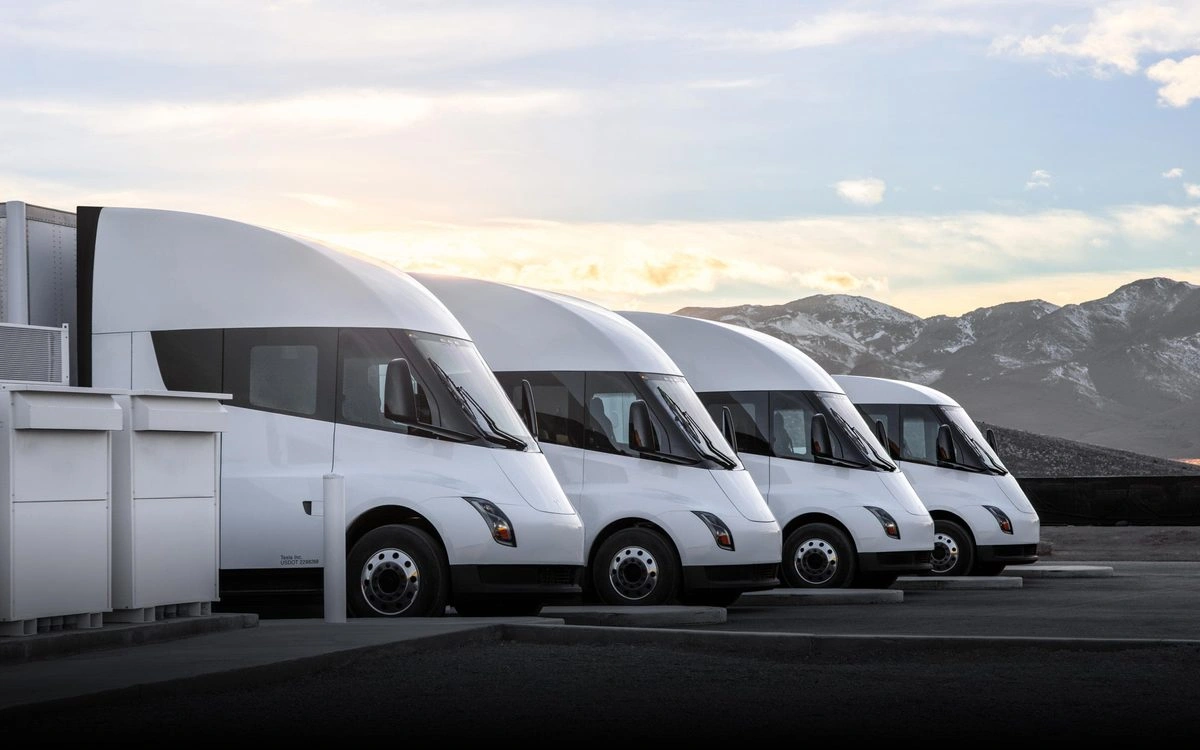
The refreshed Semi incorporates a complete design overhaul, moving away from the original 2017 concept to align with Tesla's modern design language seen in the Model Y Juniper and Cybercab robotaxi. The updated exterior features improved aerodynamics, new headlights, a smaller windshield, and a redesigned chassis that collectively boost efficiency and payload capacity.
Under the hood, each Semi is powered by three independent motors on the rear axles, delivering up to 800 kW of drive power. Tesla has also integrated electric Power Take Off (ePTO) capability up to 25 kW, allowing operators to power auxiliary equipment directly from the vehicle. Notably, both trims are designed with autonomy in mind, underscoring Tesla's broader vision for self-driving commercial transport.
Real-World Testing and Early Deliveries
Tesla has already delivered Semi units to select customers, with approximately 70 units produced to date. Major logistics and food companies including DHL, PepsiCo, and Frito-Lay have integrated the Semi into their commercial fleets and reported favorable results. DHL's operational data shows its Tesla Semi traveling approximately 100 miles per day in California, requiring charging just once weeklydemonstrating practical viability for real-world logistics operations.
Ongoing testing in California's Modesto and Sacramento regions continues to validate the vehicle's performance across diverse operational scenarios. These field tests have been instrumental in refining the Semi's design and confirming its readiness for mass production.
Economic Advantages Over Diesel
Beyond environmental benefits, the Tesla Semi offers compelling economic advantages for fleet operators. The total cost of ownership undercuts traditional diesel economics through lower electricity costs per mile, minimal maintenance requirements, over-the-air software updates, and improved fleet uptime compared to conventional trucks. These factors address the primary concerns of commercial fleet managers evaluating the transition to electric vehicles.
Path to Global Adoption
Musk has confirmed that the Semi is intended as a global vehicle, with plans to expand beyond North American markets. California has already committed $165 million in subsidies through its Clean Air Resources Board voucher program to support EV truck adoption, though only five units have been delivered through this program to date. State officials expect the majority of pending orders to be fulfilled in late 2026 as production ramps up.
The Tesla Semi represents a watershed moment for commercial vehicle electrification. With final specifications now public, production facilities being prepared, and early customers validating real-world performance, Tesla appears positioned to deliver on its long-delayed promise. If the Semi performs as specified in commercial fleet operations, it could fundamentally reshape the trucking industry and accelerate the broader transition to electric commercial vehicles.
This article was written by AI from reporting by dataconomy.com.