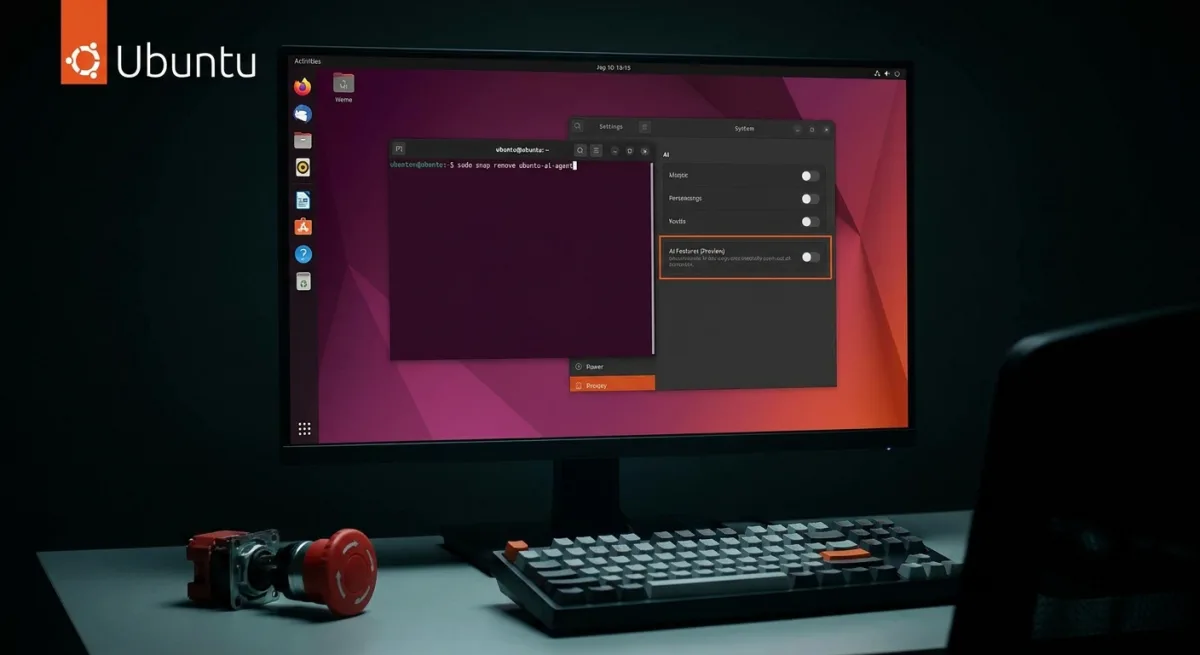
Canonical's upcoming Ubuntu AI features have sparked immediate backlash from the Linux community, with users demanding a dedicated "kill switch" to block the integration. As the operating system prepares to introduce agentic AI and accessibility tools, privacy-conscious users are drawing uncomfortable comparisons to Microsoft's aggressive AI rollout in Windows 11. The core pain point for many developers and power users is the forced inclusion of background AI processes in an ecosystem traditionally defined by absolute user control.
In response to the growing unrest, Canonical's VP of Engineering, Jon Seager, clarified that the company will not implement a global AI kill switch. Instead, the AI tools - which include local speech-to-text dictation and automated troubleshooting agents - will be delivered as Snaps layered on top of the existing Ubuntu stack. Because they are packaged as Snaps, users will retain the ability to manually uninstall any AI components they do not want on their system.
The rollout strategy is designed to give users control over their desktop environment without abandoning Canonical's AI roadmap. Seager confirmed that the AI-backed features will debut as a strictly opt-in "preview" in Ubuntu version 26.10. For subsequent releases, Canonical plans to add a dedicated step in the initial setup wizard, allowing users to explicitly choose whether to enable these AI-native capabilities before they even reach the desktop.
The Ripple Effect on Alternative Distros
For users who refuse to engage with AI entirely, the shift is prompting discussions about migrating to other Ubuntu-based distributions like Linux Mint, Pop!_OS, or Zorin OS. Artyom Zorin, CEO of Zorin OS, stated that his distribution remains "AI agnostic" and will only adopt features that respect user privacy, security, and system performance.
While Zorin noted that Ubuntu's local speech-to-text dictation appears to meet these security requirements on paper, his team will rigorously review the actual implementations. They plan to ensure the tools meet their strict standards before considering them for default inclusion in Zorin OS.
The Clash Between Open Source and AI Integration
The friction surrounding Ubuntu's AI roadmap highlights a fundamental divide between modern OS development and the traditional Linux philosophy. By packaging these tools as removable Snaps and promising an opt-in setup wizard for version 26.10, Canonical is attempting to walk a tightrope between modernizing its OS and alienating its core user base. The decision to avoid a single "kill switch" in favor of modular Snap removal is a clever technical compromise, but it still requires users to actively manage their system's AI footprint.
However, the mere presence of agentic AI in the default stack - even if removable - signals a permanent shift in how mainstream Linux distributions will operate. If Canonical fails to make the opt-out process completely frictionless during the initial setup, we will likely see a significant migration toward privacy-first forks and alternative distributions that guarantee a zero-AI environment out of the box.