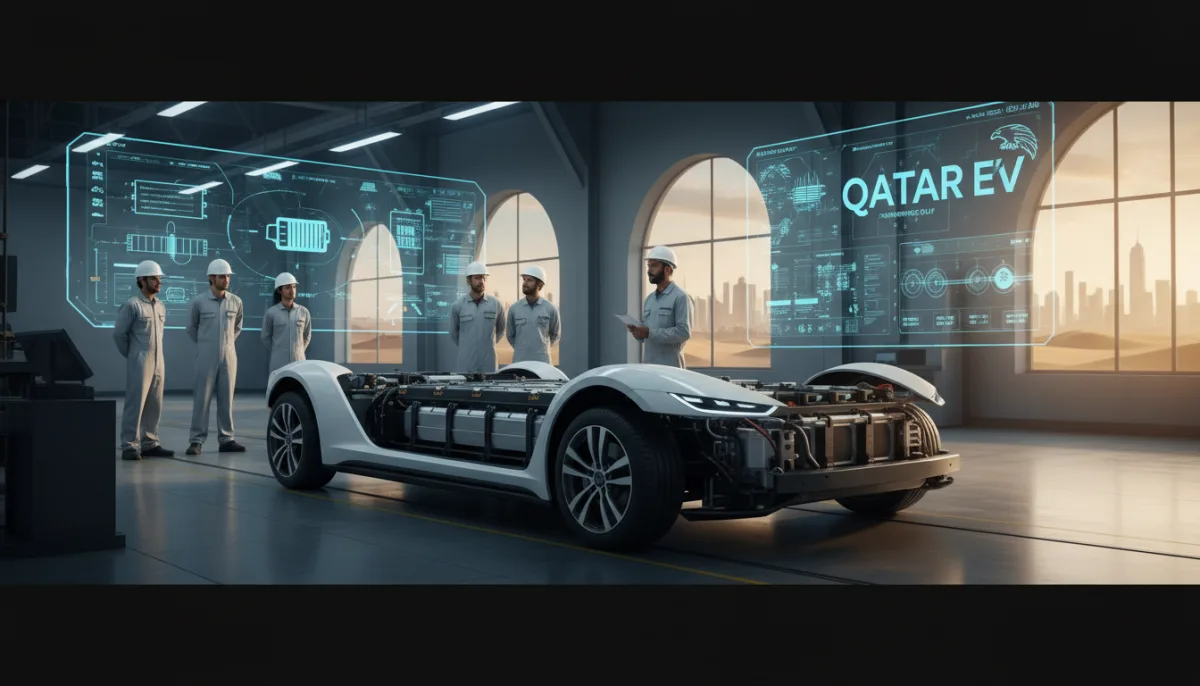
Qatar is officially entering the automotive manufacturing race with plans to build its first dedicated Qatar EV factory. By partnering with the UK-based WATT Electric Vehicle Company, the Gulf nation aims to solve one of the biggest hurdles for electric vehicles in the Middle East: severe battery degradation caused by extreme heat.
JTA International Investment Holding is spearheading the initiative, providing the financial backing and regional market access required to launch the facility. The vehicles will be built on WATT’s proprietary PACES electric skateboard platform. While the physical manufacturing will take place domestically under a new "Made in Qatar" strategy, the core engineering and product development will be handled in the United Kingdom.
A major focus of this joint venture is developing thermal management systems tailored specifically for Gulf conditions. High ambient temperatures place immense stress on EV battery cooling systems, often reducing range and long-term battery health. By engineering vehicles specifically to withstand these extreme climates, the partnership hopes to create a highly localized product that outperforms standard imports.
Production will initially serve the domestic Qatari market before expanding exports across the broader Gulf Cooperation Council (GCC). While the companies have not yet disclosed the total investment value, projected production capacity, or an official start date, the project is positioned to build a regional supply chain and develop local technical skills.
The Strategic Shift from Oil to Skateboard Platforms
The establishment of a Qatar EV factory represents a critical pivot for a nation historically reliant on fossil fuel exports. By leveraging WATT's PACES architecture - a modular system designed for low-volume, cost-effective manufacturing - Qatar is bypassing the traditional, multi-billion-dollar legacy auto plant model. This allows them to scale production dynamically based on regional demand without risking massive upfront capital on unproven local adoption rates.
Furthermore, solving the thermal management puzzle could give this joint venture a unique export advantage. If WATT and JTA can successfully engineer an EV that maintains peak battery efficiency in extreme Middle Eastern heat, that technology will be highly sought after not just in the GCC, but in other extreme-climate markets like North Africa and the American Southwest.