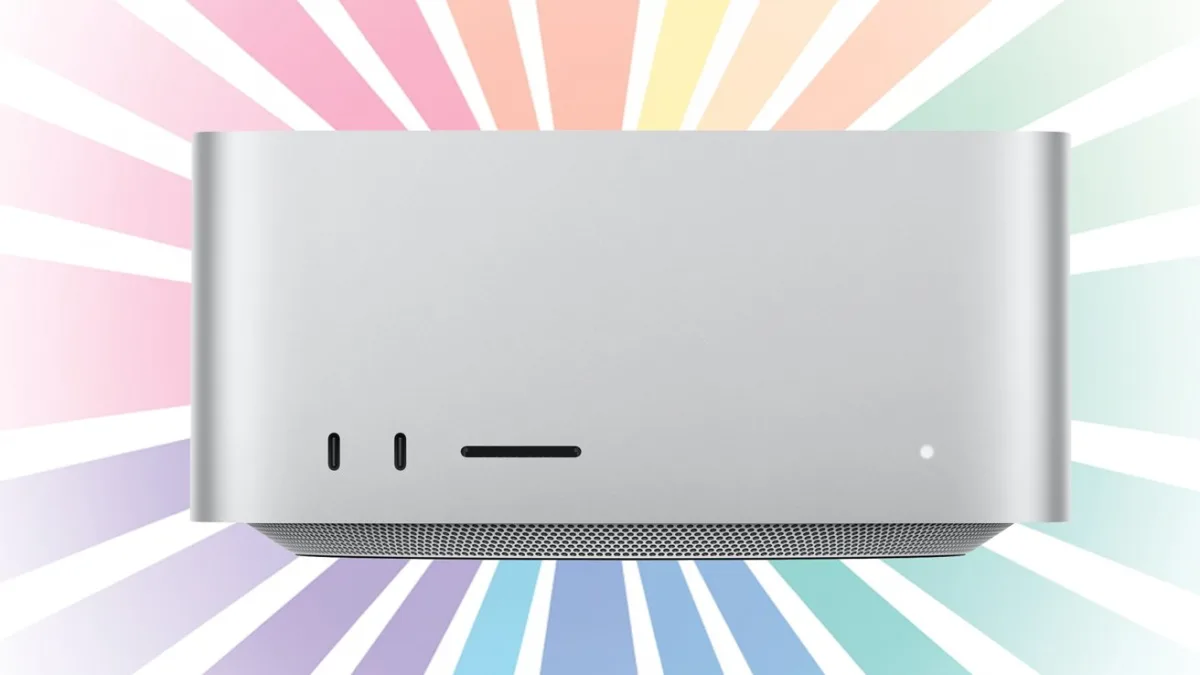
Tech giants like OpenAI are quietly purchasing tens of thousands of Mac mini and Mac Studio units, leading to 10- to 12-week wait times and straining Apple's supply chain. However, these pint-sized powerhouses are not replacing Nvidia GPUs to build massive AI supercomputers. Instead, the surge in demand is driven by hyper-specific enterprise workloads, reinforcement learning, and the sheer volume of AI-generated code requiring continuous integration and continuous delivery (CI/CD).
While a fully maxed-out Mac Studio currently carries an $18,299 price tag before taxes, enterprise buyers are not deterred. The overlap of unprecedented supply chain constraints for storage and memory components, combined with this new wave of corporate purchasing, has fundamentally shifted how Apple's desktop computers are being utilized in the enterprise sector.
The Role of Macs in AI Training
Major artificial intelligence outfits are integrating Apple hardware into their pipelines for highly specific tasks. OpenAI has purchased tens of thousands of Mac minis and Mac Studios, while Anthropic leases its Mac minis through Amazon Web Services. These machines are primarily used for reinforcement learning - a process where autonomous agents learn to perform tasks through trial and error without human guidance.
Because AI models will eventually need to interface seamlessly with macOS, running these sequential decision-making processes directly on Mac hardware is a relatively economical and energy-efficient strategy. While there are niche instances of companies clustering Mac hardware together - such as Mount Thor building a Mac-based Neocloud and EXO Labs software allowing multiple Macs to run oversized models - these are not indicative of a broader shift in core AI infrastructure.
Apple is not positioned to displace Nvidia's purpose-built hardware for massive, interconnected computing systems. Instead, the Mac mini serves as a highly efficient, desktop-class node for tasks that require a small footprint and low power consumption.
The CI/CD Bottleneck: More Code, More Macs
The most significant driver of Mac demand comes from developers building software for Apple platforms. A recent survey by MacStadium of 300 U.S.-based mid-market and enterprise developers revealed that AI coding tools are dramatically accelerating software development, which in turn requires more physical hardware to test and deploy that code.
The survey highlighted several critical data points regarding enterprise Mac usage:
- The entry-level M4 Mac mini accounts for roughly 80% of sales, as the starting SSD space is sufficient for basic automated tasks.
- About 55% of the surveyed teams use 26 or more physical Macs for their CI/CD pipelines.
- The average team utilizes 81 physical Macs, despite typically employing only around 20 Apple-platform engineers.
- A staggering 90% of respondents reported increased pull requests and commits since adopting AI coding tools.
- AI adoption has directly increased Mac infrastructure costs for 83% of the surveyed organizations.
More code means more builds. More builds mean more Macs.
- MacStadium
Interestingly, most of these engineers are not relying on self-hosted AI. More than a third use hosted services like OpenAI or Claude, while less than a quarter primarily self-host private models. Despite this, about half of the respondents plan to move from self-hosted Macs to managed or cloud solutions over the next year, indicating that managing physical Mac infrastructure is becoming a bottleneck.
Apple's Dedicated AI Infrastructure
When Apple requires serious infrastructure for its own AI initiatives, it does not rely on off-the-shelf Mac Studios. For its Private Cloud Compute network, Apple purpose-builds its own servers using custom Apple Silicon to handle heavy-duty AI workloads that exceed local device processing capabilities.
Despite requests from enterprise businesses for access to these custom servers, Apple has firmly turned them down, creating a market gap that companies like Mount Thor and EXO Labs are attempting to fill. Furthermore, contrary to rumors that Apple lacks a developer relations team to manage this enterprise shift, there is an active team of approximately 65 professionals handling these responsibilities, stemming from the original "Pro" group that developed the iMac Pro and the Mac Studio.
The Silent Triumph of Unified Memory
Apple did not accidentally stumble into this enterprise hardware success. The current demand is the direct result of a decade-long strategy focused on power efficiency and architectural integration. Apple Silicon's unified memory architecture offers a distinct advantage for specific AI workloads, allowing both the CPU and GPU to access the same pool of memory. This makes it significantly easier to fit large AI models into local memory without the latency of traditional architectures.
While Apple may not have explicitly predicted that OpenAI would buy tens of thousands of units for reinforcement learning, the company's long-term investment in the Neural Engine and low-power, high-yield computing has perfectly positioned the Mac mini and Mac Studio for this exact moment. The surprise is not that these devices are being used for AI development; the surprise is how rapidly AI-generated code has forced the entire software industry to scale its physical Apple infrastructure just to keep up with the output.
This article was written by AI from reporting by appleinsider.com.