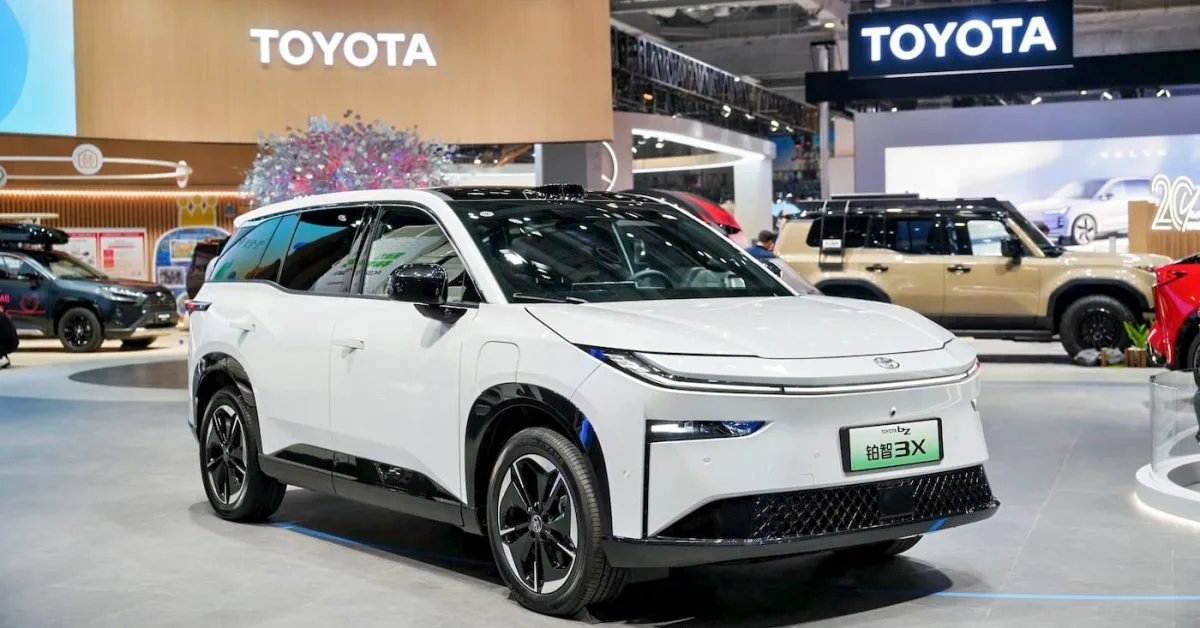
The Toyota bZ3X EV is aggressively capturing the Chinese market with a starting price of just 109,800 yuan, or approximately $15,000. Driven by a radical shift in the automaker's supply chain, industry estimates from a recent Nikkei xTECH report reveal that nearly 90% of the electric SUV's components are sourced locally from China. Despite official denials from the Japanese automaker, this strategy marks a major departure from its traditional manufacturing network.
This development is critical for automotive industry analysts, EV consumers, and investors tracking the global transition to electric mobility. It explicitly demonstrates how legacy automakers must adopt Chinese technology to remain competitive in pricing and innovation. For consumers, this shift enables the production of highly affordable, feature-rich electric vehicles that would be impossible to manufacture at the same price point using traditional Western or Japanese supply chains.
The broader market context underscores why this transition is necessary for survival. Global battery electric vehicle (BEV) sales crossed the 4 million mark for the first time in the fourth quarter of 2025, according to PwC Research. China accounted for nearly 3 million of those sales, while leading Chinese battery manufacturers BYD and CATL captured over 55% of global EV battery sales in 2025 alone.
The "bZ Shock" and Supply Chain Upheaval
Developed under the leadership of Toyota's Chinese joint venture, GAC Toyota, the bZ3X has been a massive commercial success. From September 2025 through January 2026, it ranked as the best-selling new energy vehicle (NEV) among joint-venture brands in China. The affordable SUV managed to sell over 80,000 units in its first year on the market.
However, this success in China is causing significant disruptions back in Japan, creating what industry insiders are calling the "bZ shock." According to the Nikkei report, most of the linked suppliers in Japan, known as the Toyota Keiretsu group, lost their contracts as a direct result of this localized sourcing strategy. Toyota is now reportedly planning to utilize this Chinese technology in EVs destined for overseas markets, including Southeast Asia.
The integration of local parts extends beyond a single model. Toyota recently launched the bZ5 and the flagship bZ7 earlier this month, both of which are packed with locally sourced components. The flagship bZ7 model reportedly utilizes around 30% Chinese components, proving that the strategy is scaling across the brand's premium offerings.
Industry-Wide Capitulation to Chinese Tech
Toyota is not the only Japanese automaker pivoting its strategy to survive the brutal EV price wars. Nissan, operating through its joint venture Dongfeng Nissan, is actively ramping up EV exports to Europe and other overseas markets, prominently featuring models like the N7. These vehicles rely heavily on the advanced powertrains and software developed within the Chinese ecosystem.
Meanwhile, Honda recently issued a stark admission regarding its inability to compete with Chinese EV technology. The company announced that its restructuring costs could reach a staggering 2.5 trillion yen, which equates to $15.7 billion. In a public statement, Honda admitted it was unable to deliver products that offer better value for money than newer EV manufacturers, resulting in a severe decline in competitiveness.
My Take
The situation unfolding with the Toyota bZ3X EV is the ultimate textbook example of the incumbent's dilemma. Legacy automakers prioritized short-term profit margins by protecting their internal combustion engine (ICE) businesses, effectively leaving the innovation field wide open for Chinese manufacturers. By the time global BEV sales hit 4 million in Q4 2025, companies like BYD and CATL had already built an insurmountable lead in battery tech and cost efficiency.
Now, Japanese companies that were once globally renowned for their manufacturing cost advantages are being forced to dismantle their own historic supply chains, such as the Toyota Keiretsu group. The fact that Honda is absorbing $15.7 billion in restructuring costs proves that denial is no longer a viable business strategy. Moving forward, any legacy automaker that refuses to integrate Chinese EV components will simply be priced out of the global mass market.
Frequently Asked Questions
How much does the Toyota bZ3X cost in China?
The electric SUV starts at 109,800 yuan, which translates to approximately $15,000, making it one of the most affordable options in its class.
Why are Japanese suppliers losing contracts?
To achieve the ultra-low price point of the bZ3X, Toyota's joint venture sourced nearly 90% of the vehicle's parts from local Chinese manufacturers, bypassing traditional Japanese suppliers.
Are other legacy automakers using Chinese EV parts?
Yes, nearly every major global automaker, including Volkswagen, Mercedes-Benz, Ford, GM, Nissan, and Stellantis, is increasingly turning to China for advanced EV technology and cost-effective components.