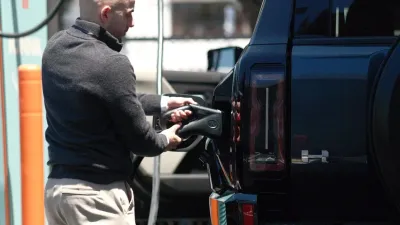
Electric vehicle owners in Illinois could soon face the highest annual registration costs in the United States if a newly proposed legislative measure becomes law. Senate Bill 3566, introduced by Senator Ram Villivalam, aims to add a $320 surcharge to the existing $151 base registration fee, bringing the total yearly cost to $471 starting July 1, 2027. This development directly impacts the total cost of ownership for zero-emission vehicles, potentially slowing EV adoption rates in a state that currently boasts one of the lowest EV fees in the country.
Currently, Illinois EV drivers pay a modest $100 surcharge on top of standard fees. The new proposal would catapult the state past New Jersey, which currently holds the national record with a $260 annual EV surcharge. The legislation leaves room for future annual recalculations, meaning the $471 total could easily surpass the $500 mark in subsequent years as the state seeks to offset lost gas tax revenues.
The Road Usage Charge Alternative
For drivers who do not want to pay the flat $320 surcharge, the bill introduces an alternative Road Usage Charge Program. Under this system, EV owners can opt to pay 1.5 cents per mile driven, capped at the $320 maximum. However, this route requires meticulous annual mileage reporting and remains subject to the same yearly fee increases as the flat surcharge. This option primarily benefits low-mileage drivers who use their vehicles strictly for short local commutes.
Diminishing State Rebates
While the registration fees threaten to rise, the state's Electric Vehicle Rebate Program remains intact, though it is operating on a diminishing timeline. Currently, low-income applicants can receive a $4,000 rebate, while standard buyers receive $2,000 for vehicles purchased before May 31, 2026. After this deadline, the maximum rebate drops to $2,000 for purchases made before June 30, 2027, and falls further to just $1,000 thereafter.
Coupled with industry-wide RAM shortages that are already pushing EV manufacturing costs upward, these shrinking incentives and rising fees create a challenging financial landscape for future buyers. The combination of higher upfront costs and increased annual maintenance fees forces consumers to carefully evaluate the long-term savings of abandoning traditional gas-powered cars.
Frequently Asked Questions
When would the new Illinois EV registration fee take effect?
If Senate Bill 3566 passes, the new fee structure will be implemented on July 1, 2027.
How does the Road Usage Charge Program work?
Instead of a flat $320 surcharge, drivers can choose to pay 1.5 cents per mile driven, up to a maximum of $320, provided they accurately report their annual mileage to the state.
My Take
The proposed $320 surcharge in Illinois highlights a growing national dilemma: as EV adoption rises and gas tax revenues fall, states are scrambling to fund road maintenance. However, jumping from a $100 surcharge to a nation-leading $320 penalty - especially as state purchase rebates simultaneously drop from $4,000 to $1,000 by mid-2027 - risks severely stalling EV momentum. The 1.5 cents-per-mile alternative offers a slight reprieve for low-mileage drivers, but the overarching financial burden will likely force budget-conscious consumers to reconsider transitioning away from internal combustion engines. If passed, this bill could serve as a cautionary blueprint for other states balancing infrastructure budgets against green energy goals.