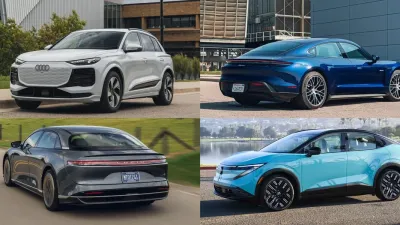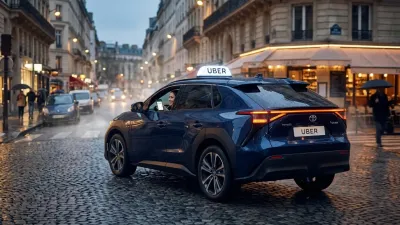
The U.K.'s aggressive push to make electric vehicles account for 80% of new car sales by 2030 is creating a financial pressure cooker for legacy automakers. As the government enforces strict quotas, the resulting market distortion is placing immense strain on traditional manufacturers and dealers. In a stagnant automotive market, this rapid transition is paving the way for cost-efficient Chinese rivals to dominate, leaving Western brands vulnerable to severe casualties.
The Zero Emission Vehicle (ZEV) rules are currently facing a harsh reality check, as underlying consumer demand fails to match the government's ambitious targets. While the mandate requires a 33% EV market share this year, actual sales only reached 22.6% in March. According to the Society of Motor Manufacturers and Traders, this forced transition has already cost the British auto industry over £10 billion ($13.5 billion) in incentives over the past two years.
The Chinese Advantage and Market Squeeze
As European, American, Japanese, and Korean manufacturers struggle to adapt to the regulations, Chinese automakers are perfectly positioned to emerge as the primary beneficiaries. According to French automotive consultancy Inovev, Chinese EV market share in Europe sat at just over 10% last year, but is projected to surge to between 18% and 25% by 2030. The British government may even use its lucrative market as leverage to persuade SAIC's MG to build its proposed European factory directly in the U.K.
To meet the prescribed EV sales quotas and avoid heavy government fines, legacy manufacturers are resorting to drastic pricing strategies. Automakers are being forced to artificially raise the prices of highly profitable internal combustion engine (ICE) vehicles to deter buyers, effectively cross-subsidizing their largely unprofitable EV lineups. Experts warn that this pricing distortion is a recipe for financial disaster for incumbent brands and a clear victory for Chinese competitors offering affordable alternatives.
Multi-Billion Dollar Write-offs
The financial toll of these over-ambitious EV targets is already visible on global balance sheets, with major automakers writing off approximately $65 billion. This massive figure includes a staggering $26 billion hit from Stellantis, alongside smaller write-offs from General Motors and Ford. In Europe, Volkswagen has absorbed significant losses, while luxury brands Mercedes and BMW have both issued profit warnings directly related to their EV operations.
Johannes Trenka, EMEA Lead for Growth Strategy at Accenture, noted that electrification is compressing profitability from multiple angles by reducing traditional aftersales income and intensifying price competition. Pedro Pacheco, senior research director at Gartner Group, added that legacy manufacturers are suffering because they failed to invest early enough to make EVs attractive to the public. Pacheco highlighted that these companies prematurely canceled EV projects, leading to billions in write-offs during the first quarter of 2026.
Industry Pushback and Survival Strategies
Industry analysts are increasingly vocal about the unsustainability of the current trajectory. British automotive analyst Dr. Charles Tennant described the upcoming U.K. targets of 38% in 2027 and 52% in 2028 as bordering on draconian. Andy Mayer, Energy Analyst at the Institute of Economic Affairs, criticized the ZEV policy as central planning dogma that dictates output targets while remaining entirely blind to the operational challenges of individual firms and actual customer demand.
To survive the impending Chinese onslaught led by Geely, BYD, and Chery, Western automakers are rapidly adjusting their strategies:
- Volkswagen is expanding its EV range into more affordable niches through its Skoda and SEAT/Cupra brands.
- Stellantis has partnered with China's Leapmotor to leverage its advanced technology and reduce development costs.
- Ford has teamed up with Renault to co-develop and produce cheaper EVs by 2028.
A Forced Restructuring of the Auto Industry
The data reveals a deep structural crisis for legacy automakers operating in Europe. According to GlobalData, the Western European market is currently stagnating at an annual sales rate of just under 12 million vehicles, far below the pre-Covid peak of 15.8 million. This lack of overall market growth, combined with aggressive ZEV mandates, creates a zero-sum environment where every gain for an affordable Chinese EV is a direct loss for a traditional European brand.
If the U.K. government refuses to adjust its 2030 targets, it risks systematically destroying the profit margins of legacy automakers who are forced to subsidize unpopular EVs with ICE profits. Without a massive organic shift in consumer demand or a breakthrough in battery cost reduction, the mandate is effectively handing a massive market share to Chinese manufacturers who already possess superior supply chains and cost advantages. By 2030, the casualties in the European auto sector will not be a result of fair market competition, but of regulatory pressure accelerating an unwinnable price war.