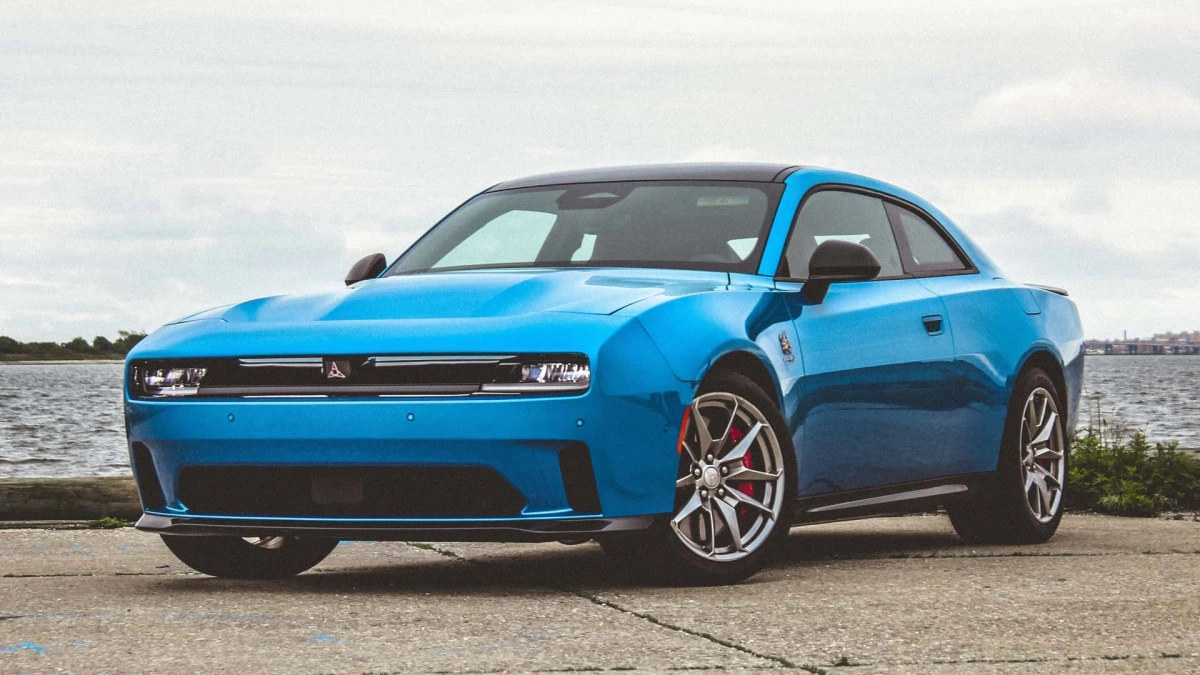
Dodge CEO Matt McAlear has strongly hinted that the highly anticipated 900-horsepower Dodge Charger Banshee EV is still in the pipeline, dispelling recent rumors of its abrupt cancellation. Speaking in a recent interview with the Canadian publication Driving, McAlear clarified that the departure of former Stellantis CEO Carlos Tavares did not derail the brand's high-performance electric vehicle plans. Instead, the executive shakeup has allowed the automaker to adopt a more flexible approach to its future powertrain offerings.
This development is crucial for automotive enthusiasts and prospective EV buyers who feared Dodge was abandoning its electric muscle car ambitions in favor of legacy engines. The confirmation means buyers can still expect a halo electric model that significantly outperforms traditional combustion engines, while the brand simultaneously explores bringing back classic V8 options to satisfy its traditional fanbase.
Stellantis Powertrain Strategy and Production Shifts
Last year, reports surfaced suggesting that Dodge had completely scrapped the high-performance Charger Banshee EV, a model rumored to produce over 900 horsepower, which would easily eclipse the output of the legendary Hellcat. However, McAlear explicitly stated that the Banshee is never completely dead. He noted that the brand did not make any fundamental changes to its long-term plan following Tavares's exit. The primary adjustment has been a shift in the production mix to better align with current market realities.
As part of this adjusted production strategy, Dodge previously canceled the entry-level Charger Daytona R/T EV for the 2026 model year. Despite this cut, the automaker continues to sell the robust 670-horsepower Charger Daytona Scat Pack alongside its combustion-powered counterparts. This dual-path strategy indicates that Dodge is not retreating from electrification, but rather recalibrating its rollout to ensure high-performance models take precedence.
The departure of Tavares has reportedly granted Dodge the flexibility to return to offering multiple powertrains across its lineup. Industry rumors strongly suggest that Dodge is actively developing a new Hellcat motor for the current Charger generation. If these rumors hold true, the 900-horsepower Banshee EV may no longer sit alone at the absolute top of the lineup, but will instead share the flagship tier with a high-output combustion alternative.
Frequently Asked Questions
Is the Dodge Charger Banshee EV canceled?
No. According to Dodge CEO Matt McAlear, the high-performance electric vehicle project is not completely dead, and development plans remain intact despite recent executive changes at Stellantis.
How much horsepower will the Charger Banshee have?
The Charger Banshee EV is rumored to produce over 900 horsepower, making it significantly more powerful than the traditional Hellcat combustion engine.
Will Dodge bring back the Hellcat V8?
There are strong rumors that Dodge is developing a Hellcat version of the current Charger, taking advantage of the brand's newfound flexibility to offer multiple powertrains alongside its EV lineup.
My Take
Dodge is executing a textbook hedging strategy that perfectly encapsulates the current state of the automotive industry. By keeping the 900-horsepower Banshee EV alive while simultaneously exploring the resurrection of the Hellcat motor, Dodge is refusing to alienate either side of its customer base. The cancellation of the entry-level Charger Daytona R/T EV for 2026 is a clear signal: Dodge understands that its brand identity is rooted in extreme performance, not budget-friendly commuting. If the Banshee launches alongside a new Hellcat, it will create a fascinating internal rivalry, forcing consumers to choose between the instant, silent torque of a 900-horsepower EV and the visceral, roaring appeal of a traditional V8. This multi-energy platform approach is exactly what Stellantis needs to navigate the unpredictable transition to electric mobility.