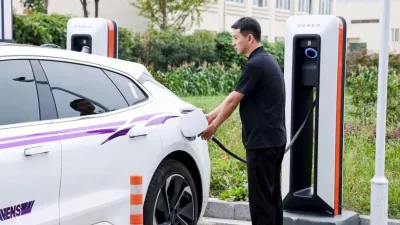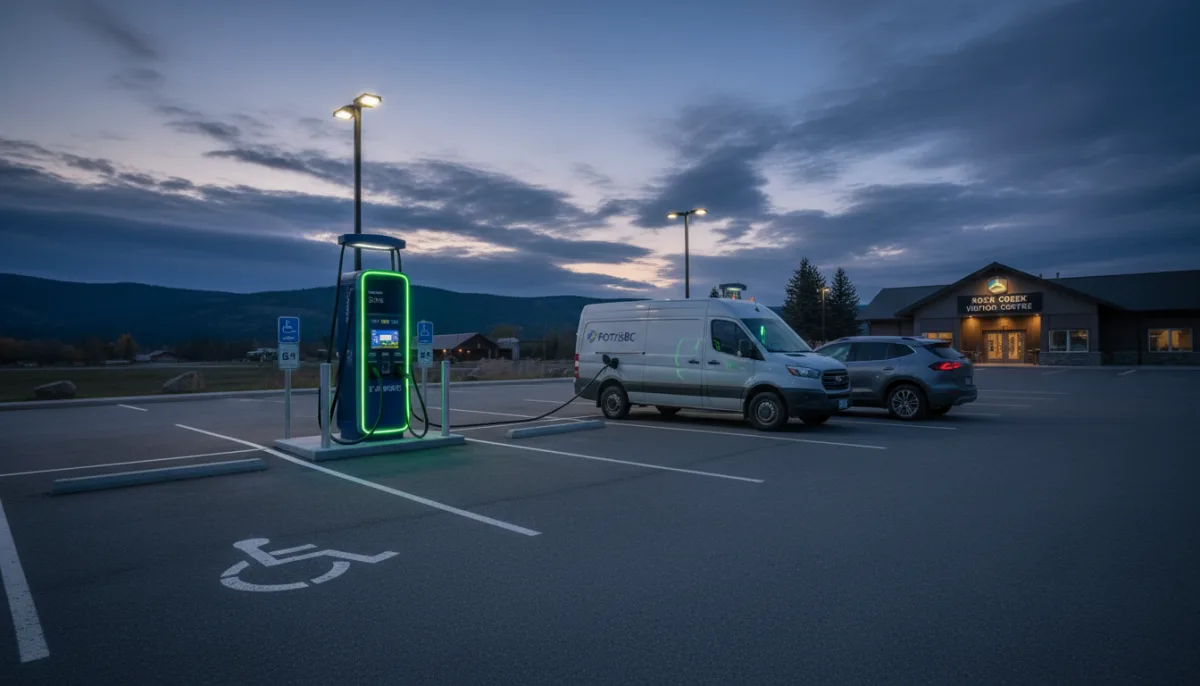
Electric vehicle drivers navigating British Columbia’s Okanagan and Boundary Country regions can now significantly cut down their pit stop times. The FortisBC EV charging network has officially expanded, deploying three new high-powered fast-charging stations across Rock Creek and Kelowna to support the growing influx of both light and medium-duty electric vehicles.
The infrastructure upgrade introduces a 150-kilowatt (kW) charger at the Rock Creek Visitor Centre, alongside two 180-kW chargers located at Rutland Centennial Park and the Okanagan Heritage Museum in Kelowna. Designed to accommodate larger vehicles like delivery trucks and panel vans, these stations feature dual ports to charge two vehicles simultaneously. Crucially, they come equipped with North American Charging Standard (NACS) plugs and contactless payment options, streamlining the experience for a wider range of EV models.
Beyond raw charging speed, FortisBC has implemented physical accessibility improvements across its network. Most locations now feature dusk-to-dawn lighting, paved surfaces, and dedicated accessible stalls. This expansion bolsters a network that currently operates 45 Direct Charge Fast Charging stations across 22 sites, connecting over 1,000 kilometers of highway in B.C.’s Southern Interior. Since the first station opened in 2018, the network has facilitated more than 100,000 charging sessions.
The Riverside Centre has become one of the most significant EV charging hubs in the Boundary, and this latest investment makes it even better. Adding an even faster charger to the three fast chargers already at this strategic location is a fantastic enhancement that will benefit all who pass through Rock Creek.
- Grace McGregor, Chair, Regional District of Kootenay Boundary
With the transportation sector accounting for 44 percent of provincial greenhouse gas emissions in B.C., expanding reliable EV infrastructure is a critical component of regional climate action goals. "Our goal is to make sure EV drivers can travel with confidence across the Southern Interior region," explained Phil Horacek, director of low carbon transportation at FortisBC, noting the importance of meeting the needs of drivers making lower-emission choices.
The NACS Advantage in Rural Corridors
The inclusion of NACS plugs and 180-kW speeds at these new FortisBC stations highlights a necessary shift in rural EV infrastructure. Early charging networks often relied on 50-kW chargers, which are increasingly inadequate for modern EVs equipped with larger battery packs that demand higher peak charge rates.
By upgrading to 150-kW and 180-kW units, FortisBC is effectively future-proofing the Highway 3 and Highway 97 corridors. This ensures that drivers of newer, fast-charging capable vehicles aren't bottlenecked during peak travel seasons. Furthermore, integrating NACS natively reduces the reliance on cumbersome adapters, signaling a maturing, user-first approach to public charging networks that prioritizes seamless interoperability.