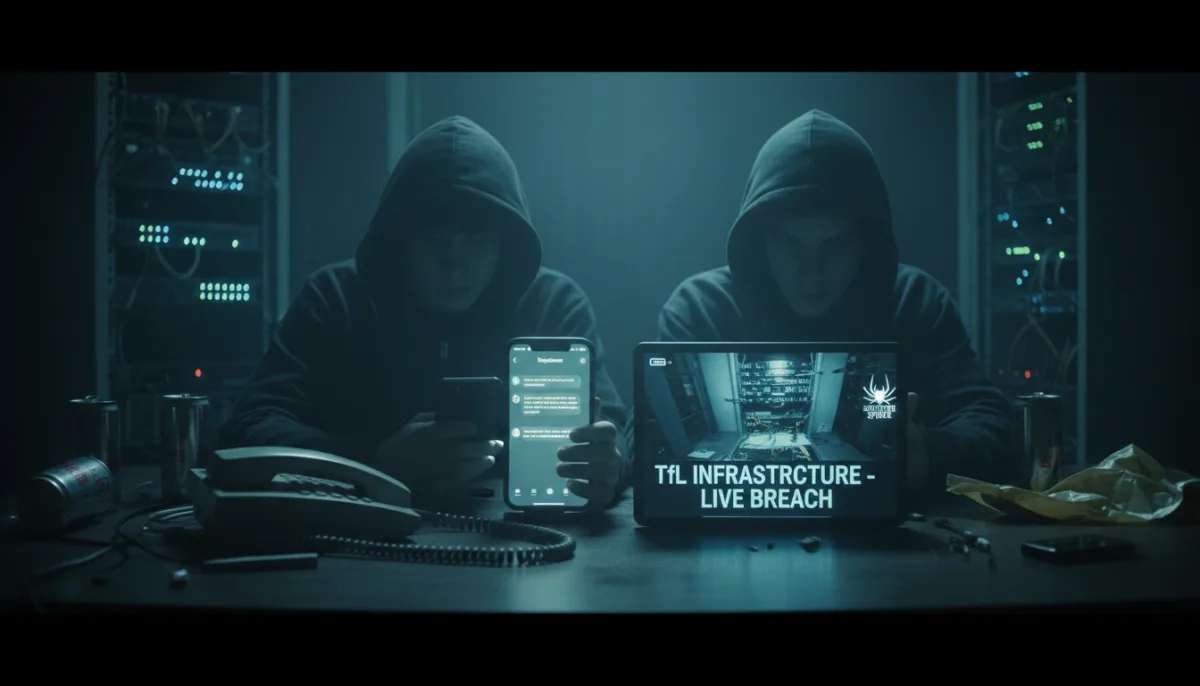
A devastating TfL cyberattack that exposed the personal data of 10 million transit customers was executed not through complex coding, but via a simple phone call. Two teenage hackers have been sentenced to five and a half years in prison after livestreaming their 16-hour breach of Transport for London, causing an estimated $33 million in damages. The attackers bypassed enterprise-grade security by simply requesting a password reset for an employee over the phone.
Between August 31 and September 3, 2024, Owen Flowers and Thalha Jubair compromised the transit network's infrastructure. The breach forced approximately 27,000 TfL employees to reset their passwords and caused months of severe operational disruptions. Investigators discovered that the teens coordinated their efforts and communicated via Telegram, where messages revealed their broader ambitions to access customer bank accounts and search for the personal information of celebrities.
The duo was linked to Scattered Spider, a notorious, loosely connected underground group of English-speaking hackers. Authorities have previously arrested individuals tied to this collective across the UK, Spain, Finland, and the United States. During the sentencing at Woolwich Crown Court, defense lawyers argued that the teens, who both have an autism diagnosis and were described as socially isolated, were groomed into cybercrime by older hackers. Despite these mitigating factors, the sheer scale of the disruption resulted in significant prison time.
How to Protect Systems from Social Engineering
The TfL cyberattack highlights the critical danger of phone-based password resets and human manipulation. Organizations and users must implement stricter verification protocols to prevent similar breaches.
- Require Multi-Factor Authentication (MFA) for all employee password resets, strictly bypassing phone-only or voice verification.
- Implement rigid identity verification protocols for IT helpdesks, such as mandatory manager approvals or the use of hardware security keys.
- Train staff to recognize social engineering tactics, specifically targeting helpdesk personnel who hold the keys to internal network access.
The Human Element Remains the Weakest Link
The fact that a $33 million disaster began with a basic phone call to an IT helpdesk proves that enterprise security is only as strong as its most gullible employee. While the public debate centers on whether the UK government should jail or hire these young hackers, the real scandal is the fragility of the Transport for London infrastructure. Relying on legacy verification methods in an era of highly organized cybercrime is a systemic failure.
Scattered Spider has repeatedly weaponized social engineering because it bypasses millions of dollars in cybersecurity software entirely. Until organizations mandate hardware-based authentication and eliminate human-approved password resets, teenage threat actors armed with nothing but a smartphone and a Telegram account will continue to dismantle national infrastructure.
This article was written by AI from reporting by inquisitr.com.