SpaceX has secured regulatory approval from the Federal Communications Commission (FCC) to offer international telecommunications services, clearing the path for Starlink Mobile to operate as a global cellular provider. For frequent travelers and users in remote areas, this global facilities-based and resale authority means a single mobile plan could soon provide seamless, high-speed coverage anywhere on Earth. The move officially transitions the company's ambitions from eliminating rural dead zones to competing directly with traditional telecom giants.
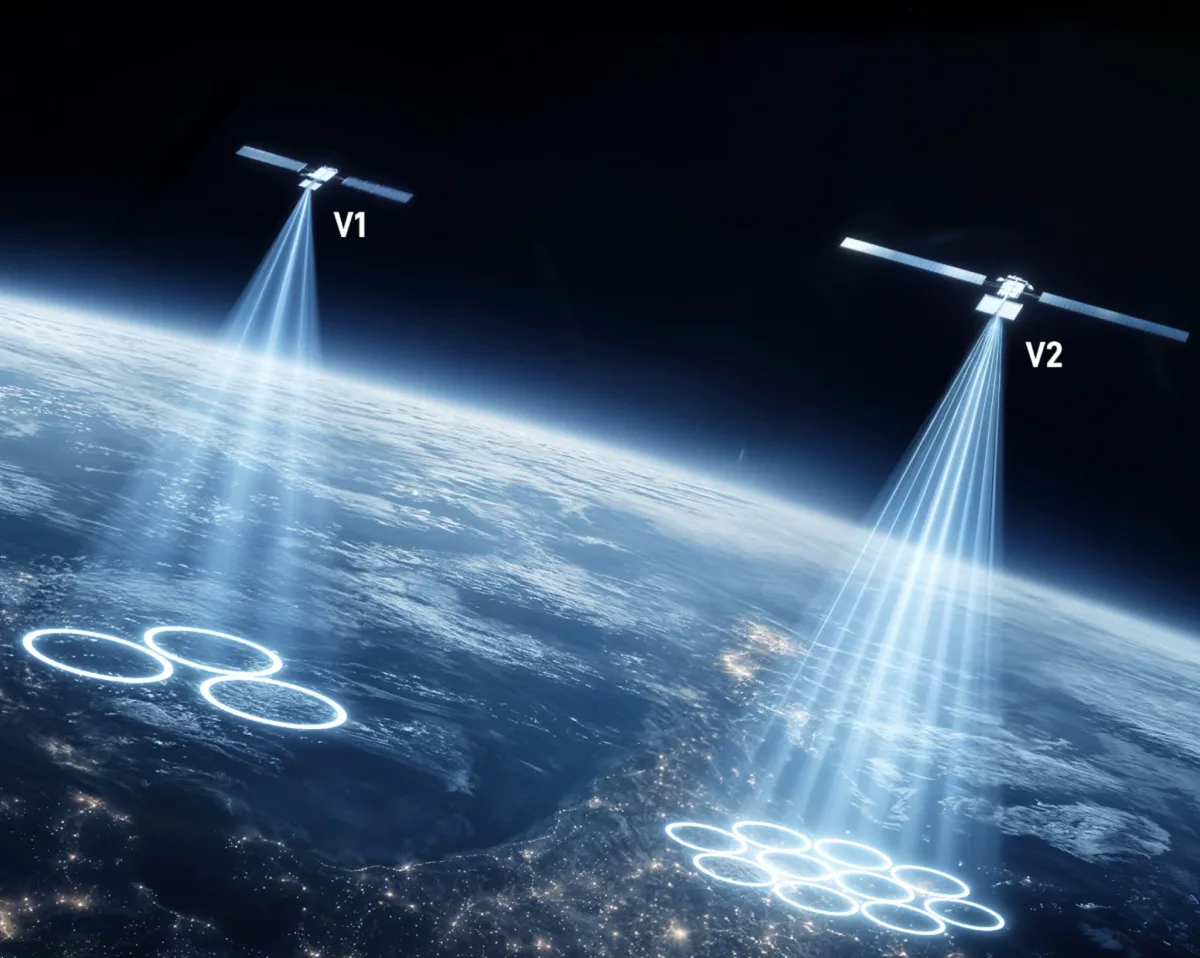
Currently, Starlink Mobile operates in the US through a partnership with T-Mobile, dubbed T-Satellite, which allows standard smartphones to connect to satellites in emergencies. However, SpaceX is preparing to deploy next-generation direct-to-cell satellites designed to function as cell towers in space. These upgraded satellites aim to deliver 5G-level speeds of up to 150 Mbps, transforming the baseline expectations for satellite connectivity.
To accelerate its international footprint, SpaceX recently announced a partnership with Japanese telecommunications giant KDDI to launch Starlink Mobile V2. This international rollout claims to offer 100 times the data density of earlier iterations. The increased capacity will enable native phone calls, high-speed app usage, and video streaming straight from orbit, with the company rapidly establishing footholds across Latin America, Europe, Asia, and Africa.
Despite the aggressive expansion, legacy carriers like AT&T and Verizon argue that satellites will struggle to match the dense capacity of ground-based cell towers. To counter this limitation, SpaceX is reportedly developing cost-effective ground networks using small radio equipment known as femtocells. While industry experts remain skeptical of this hybrid approach, SpaceX executives maintain that native global roaming will be the ultimate differentiator in a crowded market.
The Femtocell Capacity Battle
The true test for Starlink Mobile will not be its orbital hardware, but its ability to manage network congestion on the ground. Legacy carriers are correct that traditional satellites cannot match the localized bandwidth of urban cell towers, making SpaceX's pivot toward femtocells a critical strategic necessity. If the company can successfully deploy these small radio nodes to offload heavy data traffic in populated areas, it neutralizes the primary advantage held by AT&T and Verizon.
Furthermore, the promise of 150 Mbps speeds and 100 times the data density with Starlink Mobile V2 shifts the service from a mere emergency backup to a viable daily driver. By securing global roaming rights and partnering with regional giants like KDDI, SpaceX is building a decentralized telecom infrastructure that bypasses the fragmented, border-restricted roaming agreements that have frustrated consumers for decades.