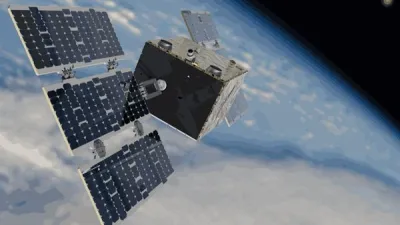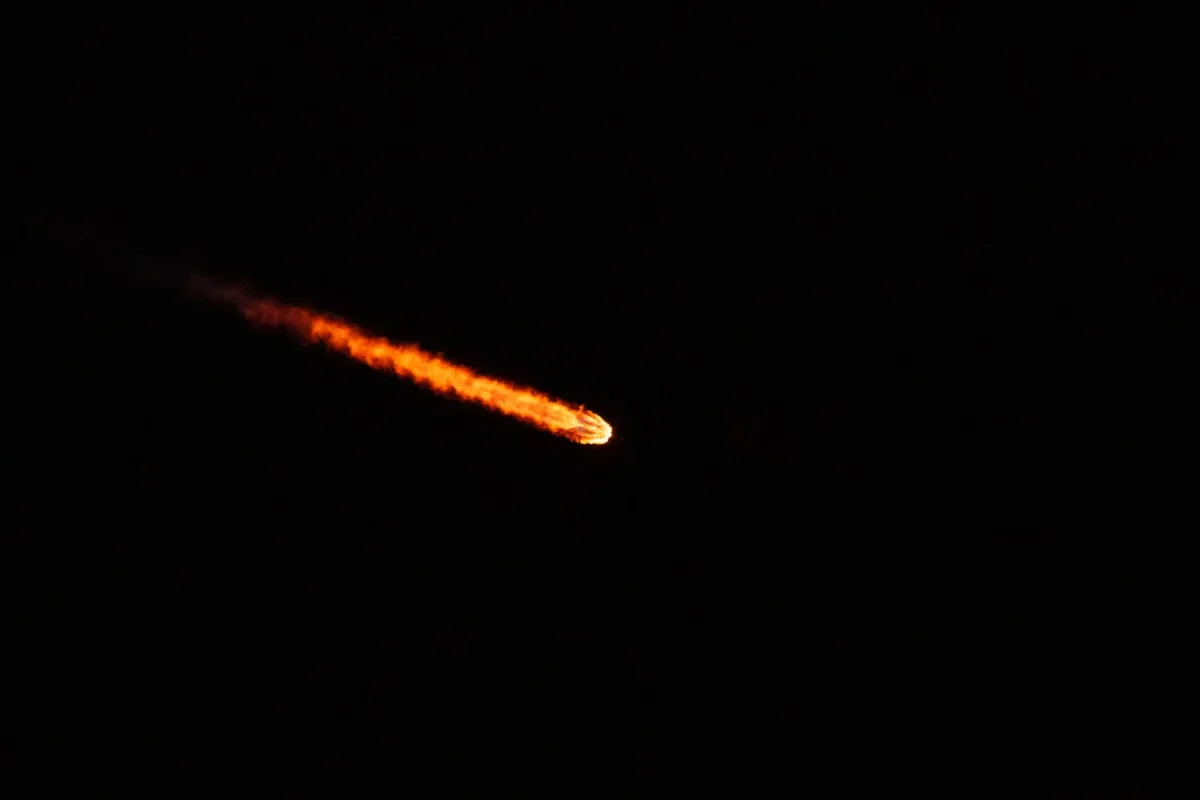
Earth's orbit is becoming increasingly crowded, with a staggering 15,711 active satellites currently circling the globe as of June 2026. This represents an almost eightfold increase since the start of 2019, driven overwhelmingly by a single entity: the SpaceX Starlink constellation. According to the quarterly space index released by Look Up, a French space-situational-awareness company operating the tracking platform SYNAPSE, Starlink accounts for 10,365 of those working satellites. This means that 65.97 percent - nearly two out of every three active spacecraft - belong to SpaceX.
The rapid orbital population growth is a stark contrast to the landscape just seven years ago. At the beginning of 2019, the active satellite count sat below 2,000. The Look Up index, produced in collaboration with the French magazine Le Point, highlights a relentless launch cadence. In just the first quarter of 2026, the active spacecraft population increased by 1,322. Over the preceding year, the index attributed 3,320 new active Starlink satellites to the total count, while also noting significant growth from other global players.
While SpaceX dominates, international competitors are accelerating their own deployments. The report listed China at 1,286 active satellites, which includes the rapidly developing Qian Fan and GuoWang systems. Meanwhile, Eutelsat OneWeb accounted for 651 active satellites. It is important to note that the 15,711 figure strictly counts working satellites, not the entirety of human-made objects in space. Look Up separately tracks more than 33,000 cataloged objects, which includes active payloads, spent rocket bodies, and fragmentation debris.
The Complexity of Tracking Active Payloads
Determining whether a satellite is "active" is a complex operational judgment rather than a simple launch metric. Newly deployed satellites often spend weeks raising their orbits and undergoing rigorous system checks. Furthermore, spacecraft may respond intermittently, be held as orbital spares, or begin a controlled descent toward atmospheric reentry. Because public observers do not always know exactly when an operator declares a unit operational or retired, different tracking catalogs can yield slightly different totals.
For example, the ESA space-environment statistics page provides a broad estimate of about 16,000 functioning satellites, which closely aligns with Look Up's June snapshot. However, the numbers are highly dynamic. By June 28, independent trackers put the active Starlink fleet above 10,700, and the number grew again by August. This constant fluctuation underscores why any satellite census must carry a specific timestamp.
The current reality was predicted years ago. In September 2019, the European Space Agency (ESA) had to execute a collision-avoidance maneuver for its Aeolus wind satellite due to a predicted close approach with one of the first 60 Starlink spacecraft. At that time, ESA noted that while over 9,000 satellites had been launched since Sputnik, only about 2,000 were then functioning. The agency warned that mega-constellations would soon make manual coordination entirely impractical.
The Industrial Rhythm of Low Earth Orbit
SpaceX fundamentally changed the rate at which a satellite constellation could be built and maintained. This shift to an industrial-scale deployment model relies on several key operational pillars:
- Launch Bottleneck Reduction: The use of reusable Falcon 9 boosters allows for an unprecedented launch frequency.
- Standardized Manufacturing: Spacecraft are built in series and packed by the dozens into single missions, drastically lowering per-unit costs.
- Continuous Expansion: A global broadband network requires constant growth; adding more orbital planes and satellites directly increases capacity, coverage, and network redundancy.
- Lifecycle Management: The active population is constantly refreshed through a rhythm of deployment, orbit raising, replacement, and intentional deorbiting of older units.
This scale brings significant operational challenges. Large low Earth orbit (LEO) constellations provide low-latency broadband and connect remote regions, but they also multiply the number of conjunction screenings - predicted close approaches between objects. While most alerts do not require a maneuver, operators must constantly process orbital uncertainties and communicate avoidance plans.
To handle this immense workload, automation is becoming mandatory. ESA's CREAM collision-avoidance program aims to automate these workflows, reducing false alerts and operator fatigue. However, automation still relies on accurate tracking, shared maneuver plans, and strict end-of-life disposal rules to prevent failed satellites from becoming hazardous debris.
The Monopoly on Orbital Real Estate
The fact that a single private company operates 10,365 satellites - exceeding the rest of the world's combined active fleet of 5,346 by more than 5,000 spacecraft - represents a fundamental shift in geopolitical and technological power. SpaceX is no longer just a participant in the space economy; it is the undisputed landlord of low Earth orbit. This unprecedented concentration gives the company outsized influence over global launch demand, orbital-traffic workloads, and the practical norms of constellation operations.
Because Starlink makes up nearly 66 percent of all active satellites, SpaceX's internal design choices regarding altitude, maneuverability, brightness, and disposal protocols effectively dictate the de facto regulatory standards for the entire shared space environment. If SpaceX alters its collision avoidance algorithms, every other operator - from national space agencies to commercial rivals - must adapt to their rhythm. Furthermore, this dominance creates a strategic bottleneck. As orbital slots and radio frequencies become increasingly scarce, rival nations like China are accelerating their own mega-constellations not just for broadband capacity, but to secure their presence before the most viable orbital real estate is entirely consumed by a single corporate entity.