The emergence of Simile AI digital twins is set to fundamentally disrupt how market researchers, enterprise strategists, and pollsters gather consumer insights. By replacing traditional human surveys with highly accurate simulated populations, the platform enables organizations to conduct infinite market research without encountering survey fatigue. Backed by a massive $100 million venture capital injection from Index Ventures, Simile aims to build a foundation model capable of predicting human behavior across any situation and scale.
Traditional public opinion polling has faced mounting criticism over accuracy and declining response rates, particularly following recent election cycles. To solve this, Simile co-founder and CEO Joon Park has developed a system where AI agents are trained on chat-style interviews with real individuals. These agents are then enriched with actual behavioral and consumer habit data, transforming them into highly accurate digital clones. Market researchers can then query these clones endlessly to derive actionable insights, bypassing the logistical bottlenecks of human focus groups.
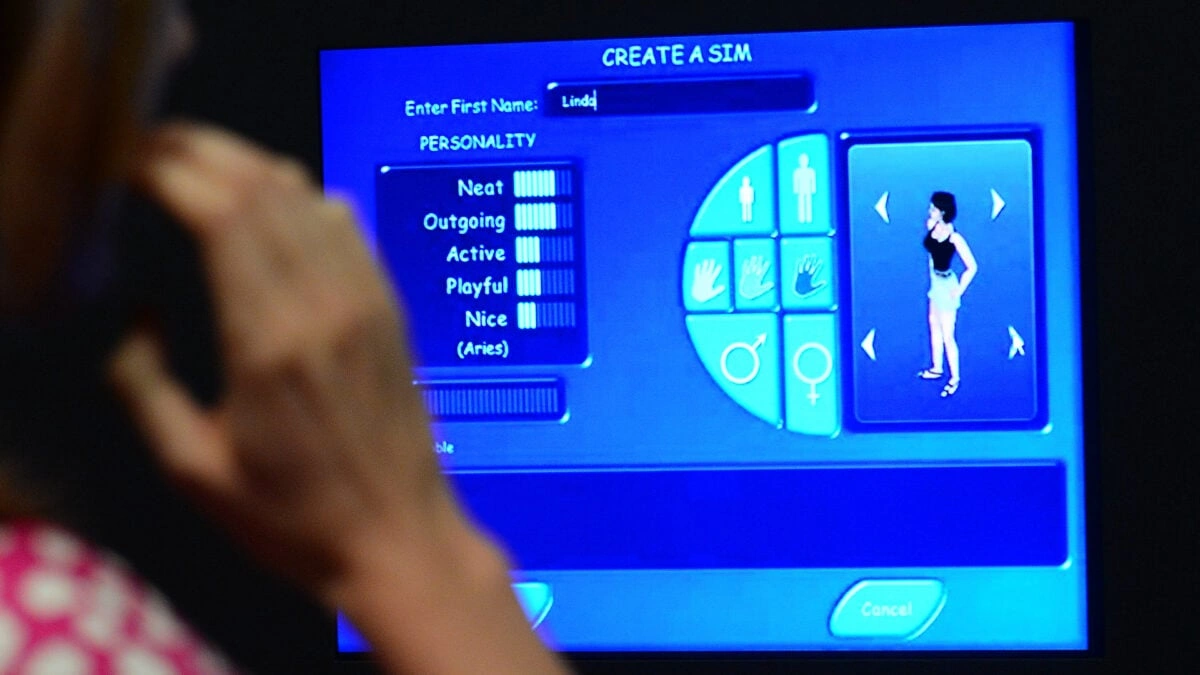
The underlying technology draws heavy inspiration from the life simulation video game The Sims. In a foundational research paper from 2023, co-authored by Park, researchers demonstrated how generative agents could populate an interactive sandbox environment. The paper detailed a small town of 25 agents interacting via natural language, possessing overarching desires, and engaging in unscripted conversations about local politics and daily life.
Enterprise Adoption: CVS and Gallup
Major corporations are already deploying the technology to bypass the limitations of traditional focus groups. Sri Narasimhan, Vice President of Enterprise Customer Experience and Insights at CVS, noted that the tool eliminates the fatigue associated with human polling. CVS is currently utilizing the platform to test consumer sentiment on pet medication, discovering that simulated owners do not view administering pet medicine as a chore.
According to the report, CVS is preparing to scale its roster to 100,000 simulated people to query them on specific operational elements, including:
- Evaluating new retail store layouts.
- Testing early-stage new product designs.
Similarly, polling giant Gallup has partnered with Simile to simulate the experience of asking policy questions to massive demographic groups. The platform provides a chatbot-style interface where researchers can prompt the system to model decisions against real-world sentiment in a transparent, replicable, and empirically validated manner.
Frequently Asked Questions
What are Simile AI digital twins?
They are generative AI agents trained on real human interviews and consumer data to simulate how actual people would respond to market research questions and product testing.
How much funding did Simile raise?
The company recently secured $100 million in venture capital funding from Index Ventures to develop its behavioral foundation model.
My Take
The transition from human focus groups to simulated AI populations represents a massive paradigm shift in enterprise data collection. CVS scaling its testing to 100,000 simulated people highlights the sheer economic advantage of this technology; running a traditional focus group of that size would be financially and logistically impossible for any corporation. However, while Simile's foundation model promises empirical validation, the industry must remain cautious about AI echo chambers. If the underlying training data contains unaddressed biases, the "infinite questions" asked by researchers will simply yield infinitely biased answers, potentially leading to flawed multi-million dollar product decisions. The true test for Simile will be proving that its digital clones can accurately predict irrational human behavior, not just logical consumer patterns.