OpenAI Deploys Age Prediction Across ChatGPT Consumer Accounts
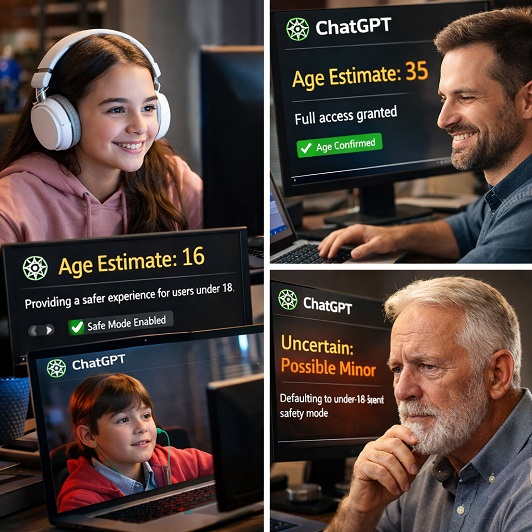
On January 20, 2026, OpenAI began rolling out age prediction technology to ChatGPT consumer accounts, a major step in enhancing platform safety for younger users. This system uses machine learning models to analyze user behavior, typing patterns, and interaction styles to estimate whether a user is likely under 18, moving beyond unreliable self-declared ages.
Background: Why Age Verification Matters Now
OpenAI first signaled this shift in September 2025, admitting that simple age checkboxes fail to prevent minors from accessing content or features not suited for them. Regulatory pressures from bodies like the EU's AI Act and U.S. child safety laws have intensified, demanding proactive measures. ChatGPT, with millions of daily users including students, faces scrutiny over exposure to mature discussions or unfiltered responses.
The age prediction model draws from vast anonymized datasets of user interactions. It looks at signals like vocabulary complexity, query topics, session length, and even device usage patterns. Early tests showed it outperforms traditional methods by 20-30% in accuracy, though OpenAI emphasizes it's probabilistic, not definitive.
Technical Breakdown: How the System Works
Upon signup or during key interactions, the model runs in the background. If it flags a user as potentially underage, access to certain featureslike advanced voice mode or unfiltered searchesgets restricted. For adults misclassified, a reversal process kicks in: users submit a selfie verified by Persona, a third-party service used by platforms like Instagram and TikTok for age checks.
Persona's facial analysis complies with privacy standards, processing images on-device where possible and deleting them post-verification. OpenAI reports false positive rates under 5% in pilots, refined through real-time feedback loops. The system also adapts regionally, factoring in cultural query differencesEuropean users might discuss GDPR more, skewing signals differently than U.S. ones.
- Key Signals Analyzed: Typing speed, emoji usage, topic diversity, time of day activity.
- Model Architecture: Likely a fine-tuned transformer variant on GPT lineage, trained on age-labeled interaction logs.
- Privacy Safeguards: No raw data storage; aggregated signals only for model improvement.
Impact on Users and Developers
For everyday users, the change is seamlessmost adults won't notice. Minors attempting access face gentle nudges toward kid-friendly modes or parental consent flows. Developers integrating ChatGPT APIs gain new endpoints for age-gated responses, crucial for apps in education or gaming.
This rollout doubles as a live experiment. OpenAI tracks performance metrics like reversal requests and user satisfaction, feeding data back to iterate the model weekly. Collaborations with groups like the American Psychological Association and ConnectSafely inform adjustments, ensuring psychological safety alongside technical accuracy.
Broader Implications for AI Safety
Age prediction sets a precedent for behavioral biometrics in AI. Similar tech could soon verify expertise levels (e.g., blocking complex code queries from novices) or detect bots. Critics worry about privacy erosion, but OpenAI counters with opt-out options and transparent audits.
In context of recent updateslike GPT-5.2's personality tweaks on Jan 22 and voice search improvements on Jan 25this safety layer reinforces ChatGPT's maturity as an enterprise tool. With 1.3 million weekly science/math users as of Jan 2026, balancing openness and protection is key to sustained growth.
Expect refinements soon; OpenAI calls this a 'milestone, not endpoint.' As AI permeates daily life, such innovations highlight the trade-offs: enhanced safety versus nuanced privacy challenges.