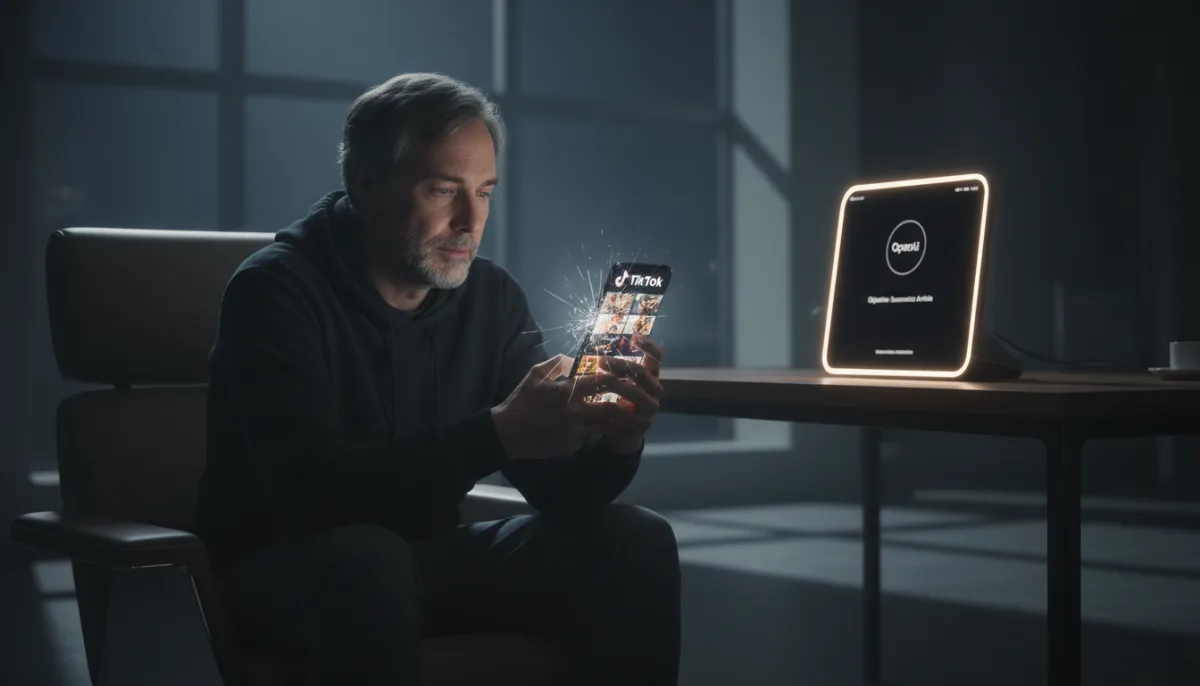
OpenAI CEO Sam Altman has permanently deleted TikTok from his phone after a three-hour scrolling binge, exposing the overwhelming psychological grip of modern recommendation algorithms. This personal revelation coincides with OpenAI's strategic decision to shut down Sora, its highly anticipated AI video generation platform, after the project consumed unsustainable levels of computing power.
Speaking on the Relentless podcast, Altman admitted he initially downloaded the social media app to study its mechanics while OpenAI was developing Sora. What began as a 10-minute nightly routine quickly escalated into hours of lost time on weekends. "I was really enjoying it in the moment like a drug," Altman confessed, highlighting how even the architects of advanced AI systems are vulnerable to hyper-optimized engagement loops.
I made myself get addicted to TikTok, because I wanted to just learn.
- Sam Altman, CEO, OpenAI
The Compute Crisis Behind Sora's Demise
The parallel between Altman's personal bandwidth and OpenAI's technical bandwidth is striking. In March, OpenAI officially scrapped Sora after roughly six months of development. Despite securing a high-profile partnership with Disney and generating massive industry hype, the underlying economics simply failed.
Video generation required too much compute at a critical moment when competitors like Anthropic were accelerating the frontier AI race. The company realized that sustaining a video-first social network would drain resources needed for its core language models.
The Jony Ive Hardware Pivot
This dual realization about the toxicity of endless scrolling and the high cost of video generation is now shaping OpenAI's hardware ambitions. Altman is currently collaborating with former Apple design chief Jony Ive on a dedicated AI device, slated for a reveal before the end of the year. The goal is to build hardware that cuts through the notification noise that makes modern smartphones feel like "walking through Times Square."
Unlike Google, which leverages AI summaries to keep users trapped inside its ecosystem longer, OpenAI is taking the opposite approach. The company stated last August that it measures success by whether users leave the product having accomplished their initial goal, rather than maximizing time spent or clicks.
The Algorithm Nobody Can Outsmart
The fact that the CEO of the world's most valuable AI company could not resist TikTok's algorithm is the ultimate testament to its power. Wharton researchers recently found that users accept AI outputs 80% of the time, even when the system hallucinates. But TikTok's recommendation engine does not hallucinate; it is ruthlessly precise about human psychology.
Altman's retreat from the app, coupled with the death of Sora, signals a broader industry pivot. We are moving away from the era of infinite, compute-heavy content consumption and toward task-oriented AI agents that prioritize utility over addiction. If the creator of ChatGPT cannot outsmart a scrolling feed, the future of consumer tech must be built on getting users off their screens entirely.
This article was written by AI from reporting by thenextweb.com.