

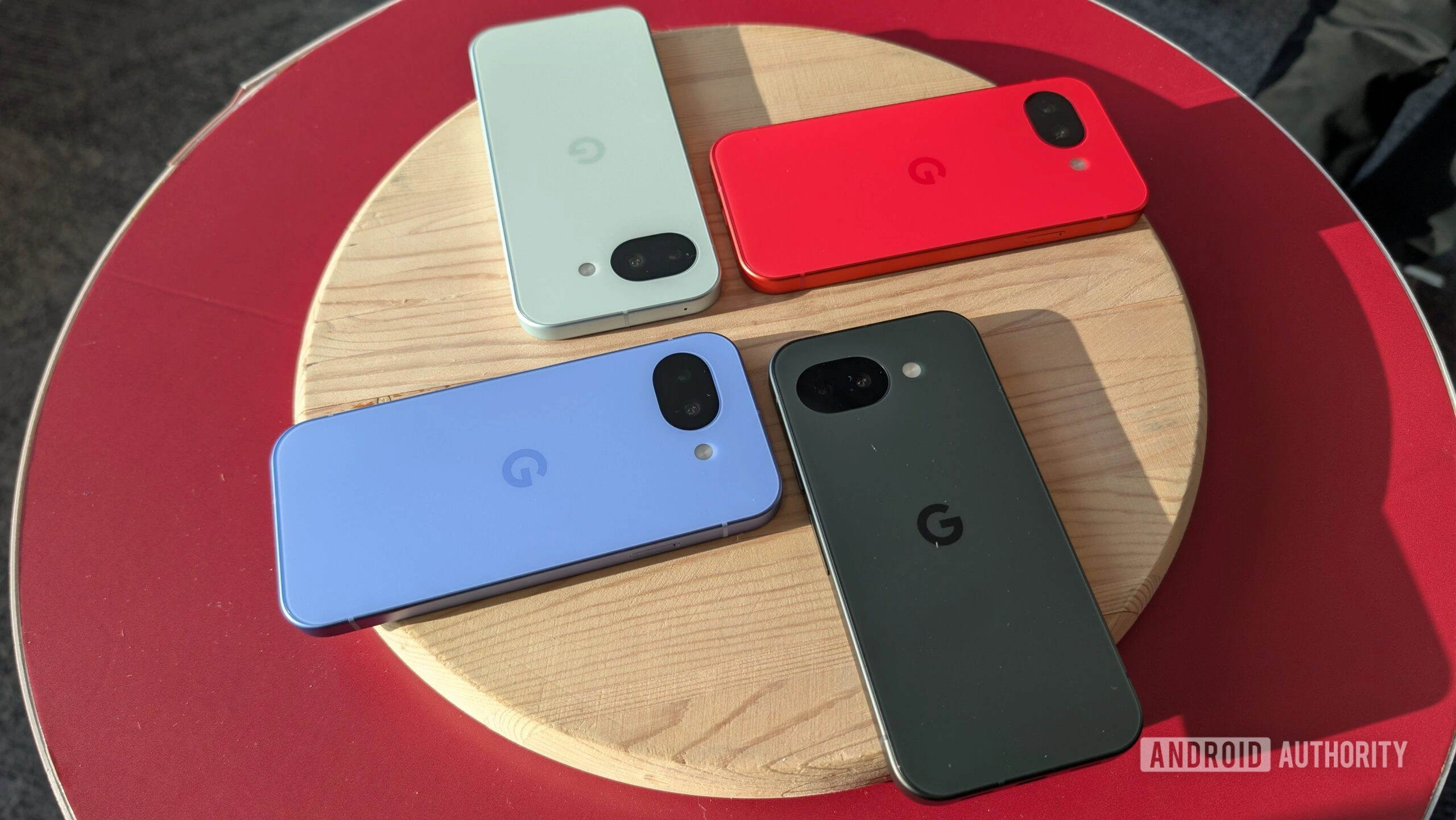
Google's decision to equip the Pixel 10a with the Tensor G4 processorthe same chip from last year's modelsstrikes a balance for budget-conscious consumers seeking reliable performance without flagship prices. This mid-range smartphone outperforms identically priced competitors like the Samsung Galaxy A56 with its Exynos 1580, especially in gaming, making it a compelling option for everyday users who prioritize smooth experiences over raw benchmark dominance.
For those shopping in the sub-$500 segment, this hardware delivers exactly what's needed: fast web browsing, seamless social media scrolling, and capable camera processing powered by Google's in-house imaging and AI capabilities. The Tensor G4's 4nm process ensures efficiency that holds up well against most mid-range rivals, proving that processor age doesn't always dictate real-world usability.
Tensor G4 Performance: Good Enough for Mid-Range Dominance
While the Tensor G4 may not lead synthetic benchmarks, its real-world prowess shines in scenarios typical for a budget phone. In gaming, for instance, the Pixel 10a pulls ahead of the Galaxy A56, handling titles like Genshin Impact or Call of Duty Mobile with higher frame rates and less thermal throttling thanks to optimized software integration. This stems from Google's focus on holistic system performance rather than peak clock speeds, where the G4's Arm-based cores excel in sustained loads without excessive power draw.
Daily tasks feel snappy: app launches occur in under a second, and multitasking between Chrome tabs, YouTube, and Gmail incurs no noticeable lag. The chip's third-generation AI Tensor Processing Unit (TPU) handles on-device features like Magic Editor and Live Translate efficiently, benefits that mid-range users in creative or productivity workflows will appreciate without needing cloud dependency. Compared to the Exynos 1580, the G4's GPU configuration provides a tangible edge, reducing dropped frames during extended play sessionsa key win for gamers on a budget.
Missing Out on Tensor G5: The Trade-Offs Explained
The Tensor G5, rumored for Pixel 10 flagships, promises up to 35% faster multi-core performance on paper, built on a more efficient 3nm process with a fourth-generation TPU for advanced AI tasks. For Pixel 10a buyers, this means forgoing subtler gains like quicker video rendering in apps such as CapCut or smoother desktop-mode emulation via apps like Termuximprovements more relevant to power users than casual scrollers.
However, the G4's maturity brings stability; it's battle-tested across millions of devices, minimizing bugs in AI features that newer silicon might introduce. Efficiency-wise, the 4nm node keeps battery life competitive, with users reporting all-day usage on mixed workloads. In a head-to-head with pricier alternatives like the Galaxy S24 FE's Exynos 2400, the G4 holds its own in basics but cedes ground in heavy multitasking, underscoring Google's strategy to reserve cutting-edge tech for premium tiers.
| Feature | Tensor G4 (Pixel 10a) | Tensor G5 (Expected) | Exynos 1580 (Galaxy A56) |
|---|---|---|---|
| Process Node | 4nm | 3nm | 4nm |
| AI TPU Gen | 3rd | 4th | N/A |
| Gaming Edge | Strong (vs A56) | Excellent | Average |
| Multi-Core Boost | Baseline | +35% | Similar |
Who Wins in the Mid-Range Arena?
Budget buyers get a phone that punches above its weight, with Pixel-exclusive software perks like seven years of updates amplifying the G4's longevity. Professionals editing photos on the go or gamers seeking value will find the performance adequate, as the chip's custom optimizations for Android 16 ensure fluid integration. Drawbacks surface in niche scenarios, like prolonged 4K video exports, where the G5's edge would shave minutes off processing times.
Alternatives like the Nothing Phone (3a) or Motorola Edge 50 share similar silicon tiers but lack Google's AI suite, making the Pixel 10a stand out for shutterbugs and voice assistants fans.
Frequently Asked Questions
Is the Tensor G4 still good for gaming on Pixel 10a? Yes, it outperforms the Galaxy A56's Exynos 1580, delivering stable frames in demanding titles.
Will I notice the difference between G4 and G5 daily? No, for browsing and social apps; yes, for AI-heavy tasks like video editing.
Should I skip Pixel 10a for a G5 phone? Stick with 10a if budget matters; upgrade for future-proofing.
My Take
Google's Tensor G4 choice for Pixel 10a is a pragmatic win for value seekers, prioritizing reliability over hype. I recommend it for most mid-range buyers, but hold out for Pixel 10 if AI innovation drives your decisionsexpect G5 refinements to redefine on-device intelligence by mid-2026.
