

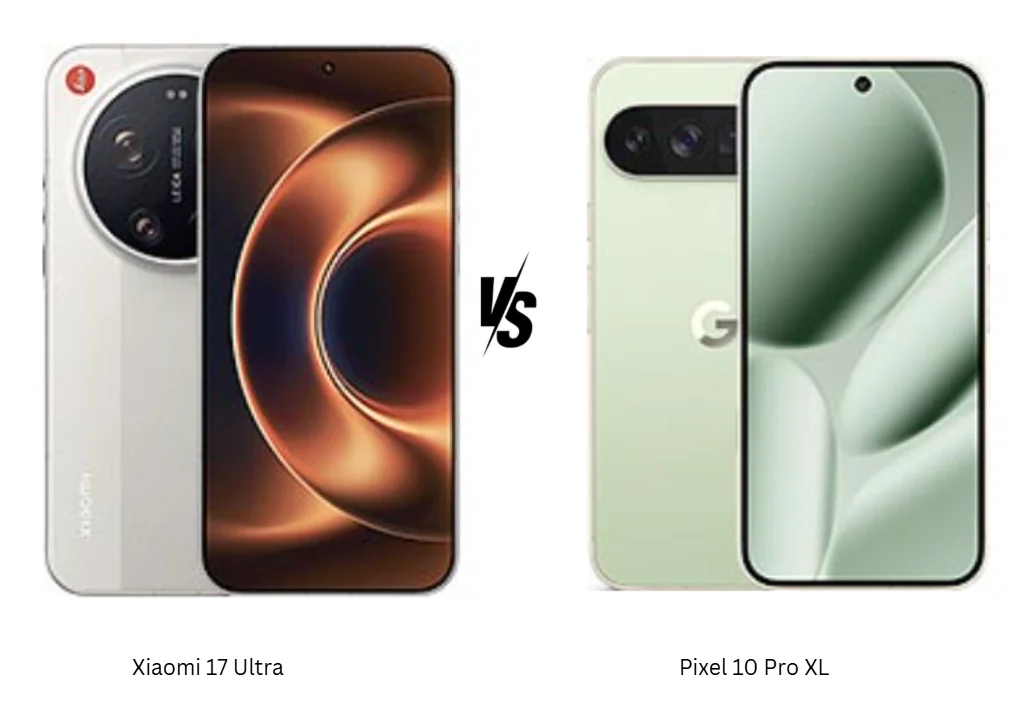
The Pixel 10 Pro XL vs Xiaomi 17 Ultra camera debate highlights a critical turning point in smartphone photography for 2026. For mobile photographers and flagship buyers deciding on their next $1,000 investment, this comparison reveals whether Google's software-first approach can still compete with massive optical hardware upgrades. While Google built its legacy on computational photography, doing more with modest hardware, the latest generation of Chinese flagships is proving that raw optical power is becoming impossible to simulate.
For years, the Pixel lineup has been lauded for its incredibly reliable point-and-shoot capabilities. The computational photography pipeline remains a core part of the sales pitch for the Pixel 10 series, offering superb dynamic range and realistic colors. However, upon closer inspection, Google's processing artifacts are becoming increasingly apparent. Users are noticing grainy shadows, mottled low-light details, and overly-sharp portraits that break down into mush when blown up for printing or close pixel-peeping.
In stark contrast, the Xiaomi 17 Ultra relies on overwhelming physical hardware to capture lifelike images. By equipping the device with a massive 200MP sensor and a 75mm-100mm variable focal length lens, Xiaomi caters to both short and long distances with natural optics. This hardware-centric approach exposes the growing divide in the flagship market, where Apple and Samsung have also allowed their iPhone and Galaxy Ultra camera hardware to languish with barely meaningful upgrades over recent years.
Low Light and Portrait Performance
When pushed to the limits in 10x extreme low light scenarios, the differences between the two philosophies become glaring. The Pixel 10 Pro XL struggles significantly with detail preservation, exhibiting noticeable noise and smudged textures even with the assistance of Night mode. Meanwhile, the Xiaomi 17 Ultra delivers a level of detail that rivals dedicated mirrorless cameras, utilizing multi-frame processing to maintain clarity without destroying the natural aesthetic of the shot.
Portraits have long been a bugbear for Google's processing engine. Despite the heavy marketing behind the Pure Tone feature, blemishes and textures on the Pixel 10 Pro XL often look artificially over-sharpened at full frame. Xiaomi takes a different route, utilizing its new 75mm lens to create natural bokeh blur. The physical depth of field generated by Xiaomi's optics provides a much more accurate and aesthetically pleasing background blur than Google's software-driven edge detection.
The Zoom and Macro Divide
At extreme distances, Google relies heavily on AI diffusion upscaling paired with Pro Res Zoom to flesh out details at 30x magnification and beyond. While this artificial intelligence works well on certain textures, it struggles with consistency. Xiaomi's larger sensor ensures that its long-range efforts remain highly competitive in daylight, matching or exceeding Google's AI upscaling without relying on generative guesswork.
This hardware advantage extends directly into macro photography. Xiaomi's novel lens design allows it to focus reasonably close to subjects, resulting in natural depth without requiring the user to physically crowd the subject. Conversely, the 5x telephoto camera on the Pixel 10 Pro XL cannot focus at such close ranges. Google is forced to resort to digital upscaling or switching to the ultrawide camera, which inevitably introduces perspective distortion and a distinct lack of real depth. While Google still dominates in software tools like Add Me and Magic Editor, its imaging pipeline is undeniably lagging in raw image quality.
| Feature | Google Pixel 10 Pro XL | Xiaomi 17 Ultra |
|---|---|---|
| Primary Sensor Strategy | Computational Photography & AI | 200MP Large Physical Sensor |
| Telephoto Hardware | 5x Optical Telephoto | 75mm-100mm Variable Focal Length |
| Extreme Zoom (30x+) | AI Diffusion Upscaling & Pro Res Zoom | Sensor Cropping & Multi-frame Processing |
| Portrait Bokeh | Software-driven Edge Detection | Natural Optical Blur (75mm lens) |
| Macro Photography | Ultrawide Lens (Distortion prone) | Telephoto Macro with Natural Depth |
Frequently Asked Questions
How does the Pixel 10 Pro XL handle 30x zoom?
The device relies on AI diffusion upscaling and Pro Res Zoom to artificially flesh out missing details, which works well on some textures but can look unnatural on others.
What makes the Xiaomi 17 Ultra camera hardware superior?
It utilizes a massive 200MP sensor paired with a 75mm-100mm variable focal length lens, allowing it to capture natural bokeh and sharper details without relying heavily on software over-sharpening.
Are Apple and Samsung keeping up with these camera upgrades?
According to industry observations, both Apple and Samsung have allowed their iPhone and Galaxy Ultra camera hardware to languish in recent years, falling behind the aggressive hardware pushes from Chinese manufacturers.
My Take
The camera showdown between the Pixel 10 Pro XL and the Xiaomi 17 Ultra perfectly encapsulates the limits of computational photography. Google built its reputation on doing more with less, using brilliant software to compensate for smaller sensors. However, Xiaomi's integration of a 200MP sensor and a 75mm-100mm variable lens proves that AI cannot indefinitely cheat the physics of light and glass. When you look at the smudged details in Google's 10x extreme low light shots compared to Xiaomi's mirrorless-grade clarity, the writing is on the wall. If Google, Apple, and Samsung continue to stagnate on physical hardware upgrades, they will permanently cede the premium photography crown to Chinese OEMs who are willing to invest in massive optical components.
