Nvidia has officially unveiled DLSS 5, promising a massive leap in real-time rendering and photoreal lighting. However, the gaming community is pushing back as the AI-driven upscaling tool transforms beloved characters into generic, homogenized faces.
This development is critical for PC gamers and 3D artists who prioritize visual fidelity and artistic intent. Understanding how DLSS 5 alters character models allows players to decide whether to enable this optional feature when it launches this fall.
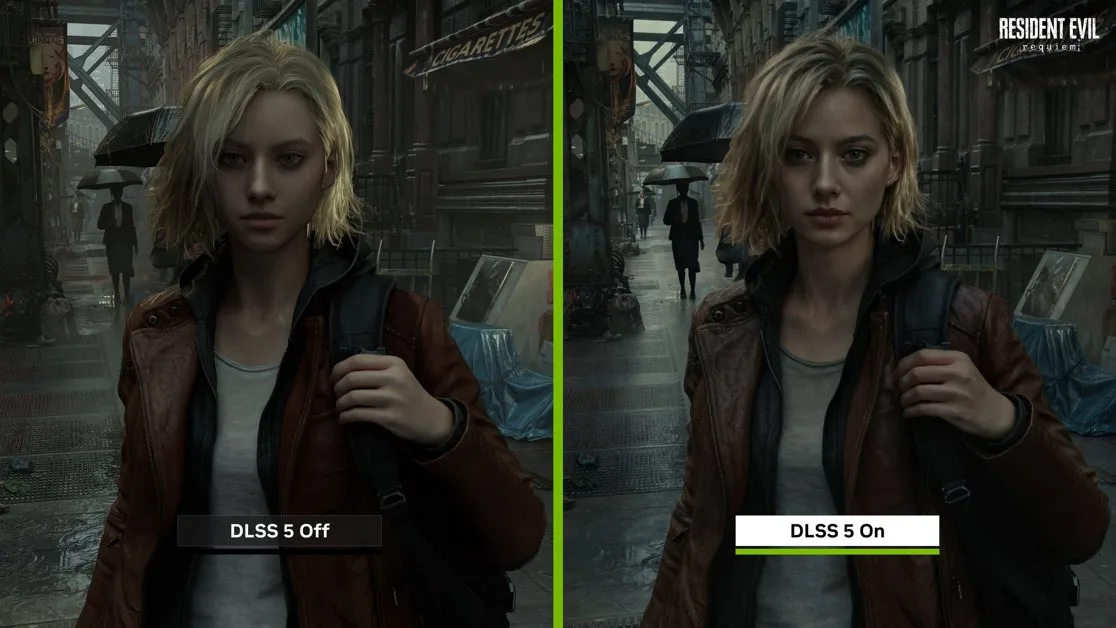
Nvidia described the new technology as the company's most significant breakthrough in computer graphics since the debut of real-time ray tracing in 2018. Instead of purely enhancing lighting, the tool imbues everything with a look that has become synonymous with AI-generated art. The resulting faces feature unnaturally smooth skin, perpetually cheerful eyes, synthetic-looking hair, and HDR-style lighting that highlights every contour.
This homogenization was immediately apparent across several major titles shown during the reveal. Resident Evil Requiem protagonist Grace got a makeover that completely altered her original design. Similarly, the characters in Hogwarts Legacy looked like they had been wrung through an Instagram filter. Even real-world figures were affected, as Liverpool captain Virgil van Dijk had his features warped and became just some other dude with DLSS 5.
Industry Backing and Developer Pushback
Despite the visual controversy, DLSS 5 has secured support from some of the most influential names in the gaming industry. Bethesda boss Todd Howard praised the tool, noting that the feature will be available in Starfield to push artistic styles without traditional rendering limits. Jun Takeuchi, executive producer at Capcom, also supported the tech, stating it represents an important step in pushing visual fidelity for Resident Evil.
Following the immediate public backlash, Bethesda issued a follow-up statement clarifying that the footage was a "very early look" and that their art teams will further adjust the lighting and final effects. Meanwhile, a growing number of indie developers have publicly lambasted DLSS 5, with some smaller studios adopting "AI free" as a marketing label to protest the replacement of human artistic work amid widespread industry layoffs.
My Take
The fact that Bethesda had to issue a follow-up tweet clarifying that art teams will "further adjust" the DLSS 5 effects proves that raw generative AI upscaling is not yet ready to replace bespoke human art direction. As the gaming industry continues to grapple with severe layoffs and studio closures, the push for "AI free" marketing from indie studios will likely become a premium selling point. This movement will serve as a direct counter to AAA titles that over-rely on automated homogenization, giving players a clear choice between handcrafted art and algorithmic efficiency.
Frequently Asked Questions
When does Nvidia DLSS 5 release?
The upscaling technology is scheduled to launch in the fall and will require high-end PC hardware to operate.
Can I turn off DLSS 5 in games?
Yes, DLSS 5 is an entirely optional feature that players can disable if they prefer the original artistic rendering.
Which games are confirmed to support DLSS 5?
Major titles including Starfield and Resident Evil Requiem have been confirmed to support the new technology at launch.