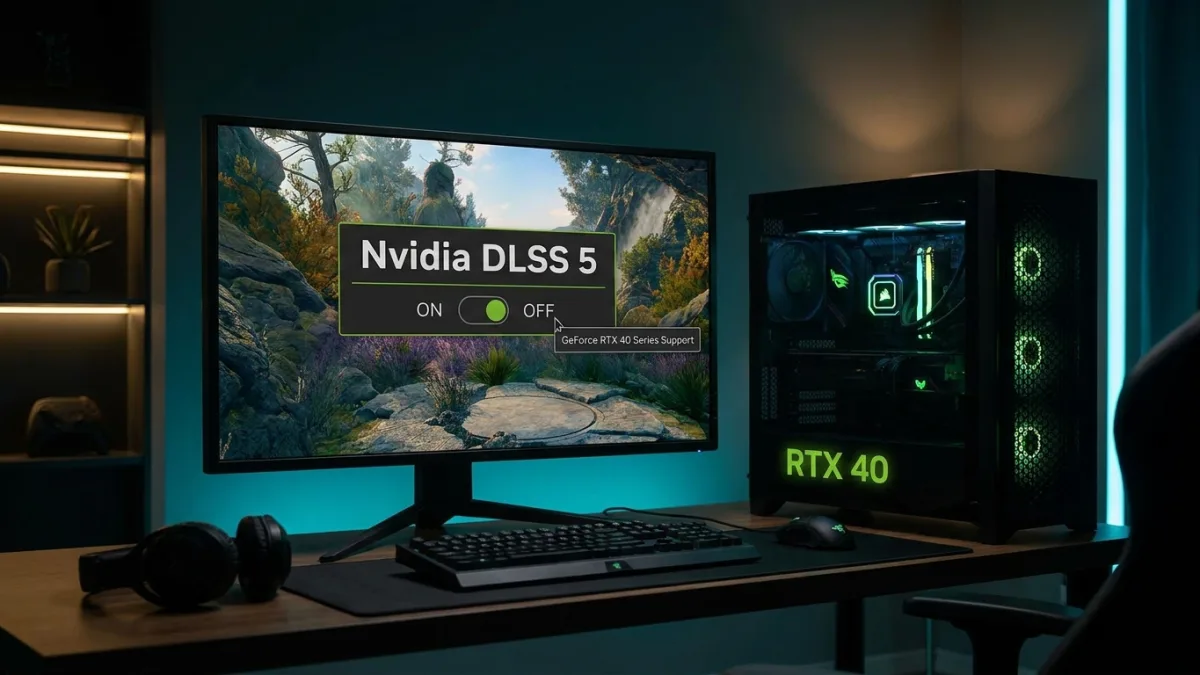
Nvidia is officially bringing its controversial Nvidia DLSS 5 AI rendering technology to older RTX 40-series graphics cards, reversing its initial stance after modders successfully ported a leaked version. However, while hardware support is expanding, PC gamers will be locked out of the granular visual controls that developers enjoy. Originally, the technology was supposed to launch exclusively on the upcoming RTX 50 GPUs, leaving older hardware behind.
Nvidia spokesperson Rajal Maharaj confirmed to The Verge that official support for the GeForce RTX 40 Series is now in the pipeline. "Our current focus is on optimizing performance for the GeForce RTX 50 Series with model updates expected later this fall," Maharaj explained. "Once RTX 50 Series performance is more fully tuned, we plan to work on expanding official support to the GeForce RTX 40 Series."
As for the older RTX 30 and RTX 20-series GPUs - which modders also managed to run the leaked tech on, albeit with severe crashes and unplayable frame rates - official support remains uncertain. Maharaj noted that the company will only look at the 40-series once the 50-series is in a good place, leaving older generations off the immediate roadmap.
The Control Divide: Gamers vs. Developers
Despite the leaked mod giving players full access to DLSS 5's sliders, Nvidia is strictly limiting what everyday users can tweak. For gamers, Nvidia DLSS 5 will function simply as a basic on-or-off toggle. The company stated that granular artistic controls are reserved exclusively for developers.
These developer-only tools include model selection, Structure Intensity, Tone Intensity, automatic masking, and custom per-pixel masking. However, Nvidia noted that developers could choose to pass some of these controls along to players in their own in-game settings menus, similar to how earlier DLSS iterations evolved from a simple toggle to offering multiple quality presets.
For more targeted control, semantic AI masking can automatically recognize scene objects, while engine-level masking allows artists to isolate specific props or groups of assets, such as glassware, water droplets or foliage, and apply custom neural lighting adjustments to those elements.
- Nvidia
One of the primary benefits of DLSS 5 is its ease of integration. The AI models can automatically recognize and isolate objects in a scene without manual tagging, distinguishing between faces, textiles, foliage, silverware, and furniture to apply varying levels of AI processing. The technology runs on every single frame, meaning there is no minimum frame rate required for it to function, and it is supported by a native plug-in for Unreal Engine 5 alongside Nvidia's own SDKs.
Uncertainty Surrounding Game Support
While the technology itself is advancing, the roster of games supporting it appears to be shrinking. Nvidia declined to reconfirm whether the 12 originally announced titles would still ship with the technology. When asked specifically about massive releases like Assassin’s Creed Shadows, Hogwarts Legacy, Starfield, and Resident Evil Requiem, the company offered a vague response.
"More games are on the way," Nvidia stated. "Many developers are actively integrating DLSS 5, and we’ll share updates on upcoming titles as partners finalize their integrations." This non-committal answer suggests that early backlash against the AI rendering tech may have scared away some publishers.
The Silent Retreat of Publisher Support
Nvidia's refusal to explicitly reconfirm DLSS 5 support for flagship titles like Starfield and Hogwarts Legacy is a massive red flag for the technology's immediate adoption. This diplomatic evasion strongly implies that the "controversial" nature of the AI rendering - likely its potential to override a studio's carefully crafted artistic vision - is causing real friction behind the scenes.
If the AI models automatically alter lighting on faces or textiles without giving players the granular sliders to correct it, developers risk facing severe community backlash for visual inconsistencies. By locking the advanced masking tools behind developer SDKs and offering gamers only a blunt on/off toggle, Nvidia is forcing studios to take full responsibility for the AI's output. For many publishers, simply dropping the tech entirely might be the safer bet until the ecosystem matures.
This article was written by AI from reporting by theverge.com.