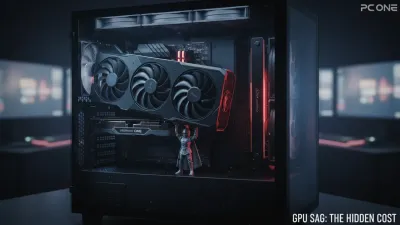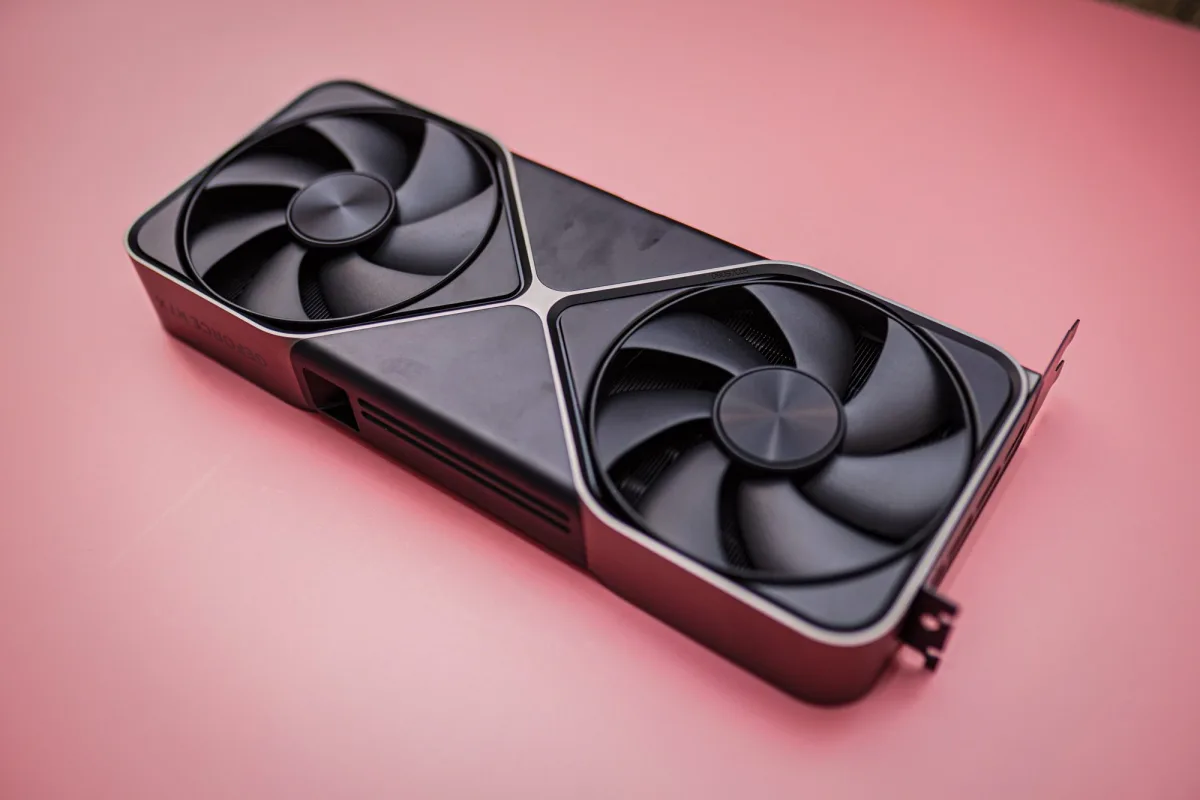
PC builders waiting for graphics card prices to stabilize are in for a rude awakening, as the AI boom continues to drain consumer hardware supplies. A new supply chain report indicates that Nvidia GPU prices could surge by up to 30%, marking the company's third major pricing adjustment in 2026 alone.
According to Taiwan’s Economic Daily News, the 20% to 30% increase will not be limited to flagship models. The price hike is expected to impact the entire consumer lineup, hitting both next-generation GDDR7 cards and older GDDR6-based models. The root cause is the insatiable demand for memory components like DRAM, driven by cloud providers pouring billions into AI infrastructure and data centers. As production costs rise to secure these components, the financial burden is being passed directly to gamers.
The reality at retail is already grim. While the GeForce RTX 5090 officially launched at $1,999, some variants are currently selling for an astonishing $4,500. Mainstream options like the RTX 5060 Ti have also surged well past their original MSRPs. In regional markets like China, board partners including MSI and Colorful have already implemented 20% price increases on the RTX 50-series.
Nvidia's focus remains heavily skewed toward enterprise solutions. Its NVIDIA Blackwell Architecture and large-scale AI infrastructure projects with partners like SK Group continue to dominate its production pipeline, leaving consumer GPUs as a secondary priority.
Other Notable Tech Updates
- AMD Follows Suit: AMD has reportedly informed its AIB partners via ChannelGate that GPU and memory bundle prices will increase by at least 10% in August. The situation has prompted AMD to reintroduce 4GB graphics cards, recently launching the RX 9050 for $279 - just $20 cheaper than the RX 9060 XT, which features double the VRAM.
- Google Earth's AI Misstep: Google briefly integrated its Nano Banana 2 AI image generator into Google Earth, allowing users to place AI-generated structures on the map. The feature was pulled after just one day when users began generating life-like satellite images of nuclear reactors, tanks, and historical destruction.
- Windows 11 RAM Optimization: Microsoft is shifting focus to make Windows 11 run smoothly on PCs with just 8GB of RAM. Following recent fixes to right-click menus and Search speeds, this new milestone aims to make budget laptops reliable by sacrificing heavy on-device AI features.
The Death of the Budget PC Build
The simultaneous price hikes from both Nvidia and AMD signal a fundamental shift in the PC gaming ecosystem: the traditional budget build is effectively dead. When an entry-level AMD RX 9050 with a meager 4GB of VRAM costs $279, and Nvidia's mainstream RTX 5060 Ti is drifting out of reach, the barrier to entry for native PC gaming has never been higher. The fact that this is Nvidia's third price adjustment in 2026 proves that consumer graphics cards are now a secondary priority behind enterprise AI hardware.
This hardware inflation will inevitably accelerate the adoption of alternative gaming platforms. As native rendering becomes prohibitively expensive, cloud gaming services and aggressive AI upscaling technologies will transition from optional features to absolute necessities for the average player. Furthermore, Microsoft's sudden pivot to optimize Windows 11 for 8GB systems suggests the industry is acutely aware that consumers can no longer afford to brute-force their way through bloated, AI-heavy operating systems.