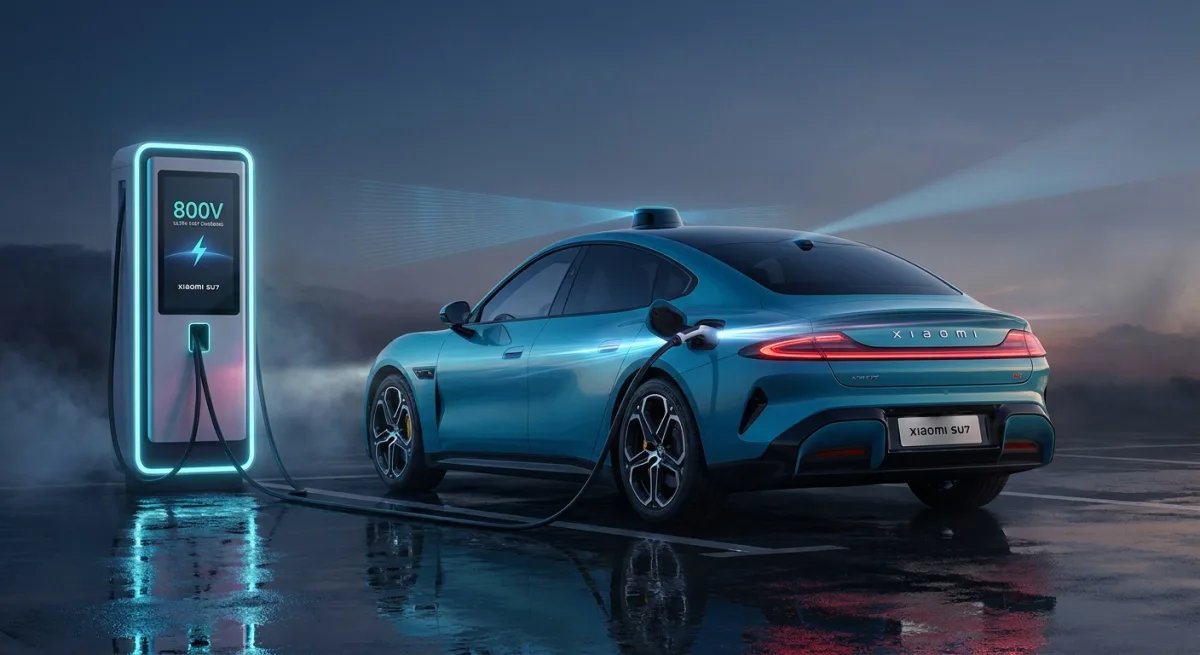
The next-gen Xiaomi SU7 has officially arrived, delivering a massive mid-cycle refresh that brings 800V charging architecture and standard LiDAR to every trim level. By aggressively upgrading its electric sedan with up to 902 km (560 miles) of CLTC range and NVIDIA Thor computing power, Xiaomi is putting unprecedented pressure on competitors. Deliveries of the updated best-seller began in April following over 100,000 pre-orders, building on the massive success of the 381,000 first-gen models sold since March 2024.
This refresh touches virtually every major system in the vehicle, transforming it from a strong debut into a dominant market force. For buyers looking for high-performance EVs, the new SU7 offers flagship-level specifications at an entry-level price point, fundamentally shifting the value expectations in the electric vehicle market.
800V Architecture and Blistering Charging Speeds
The most significant technical leap is the implementation of 800V architecture across the entire lineup. The original SU7 Standard and Pro models were limited to a 400V platform, but the new versions have jumped to 752V. Meanwhile, the top-tier Max trim pushes the boundaries further to an 897V system.
This voltage increase results in dramatically faster charging times. The Max model can now charge from 10% to 80% in just 12 minutes, down from the previous 19 minutes. A brief 15-minute charge adds an impressive 670 km of CLTC range. Even the base Standard model benefits heavily, cutting its 10-80% charge time from 25 minutes down to just 20 minutes.
Enhanced Range and Powertrain Performance
Efficiency and power output have seen across-the-board improvements. The Standard model's range increases from 700 to 720 km CLTC, while its efficiency improves from 12.3 to 11.7 kWh/100km. The Pro model sees a massive jump from 835 to 902 km, and the Max increases from 800 to 835 km.
Under the hood, the Standard and Pro rear motors now produce 235 kW (320 PS) and 505 Nm of torque, up from 220 kW (299 PS) and 400 Nm. The dual-motor Max climbs to a staggering 508 kW (690 PS) and 866 Nm, compared to the outgoing 495 kW (673 PS) and 838 Nm. Additionally, the top speed for the Standard and Pro trims has been raised from 210 to 240 km/h.
Standardized LiDAR and NVIDIA Thor Computing
In a move that disrupts the industry standard, LiDAR and the NVIDIA Thor-U chip are now standard on every single trim. The previous SU7 Standard lacked LiDAR, utilized a single NVIDIA Orin chip at 84 TOPS, and was restricted to highway-only navigation. Now, the entry-level model features an 8x increase in computing power.
Every new SU7 is equipped with 4D millimeter-wave radar and the NVIDIA Thor-U chip, delivering 700 TOPS of computing power. This hardware runs Xiaomi's full highly automated driving (HAD) system, which now includes city NOA (Navigate on Autopilot) capabilities right out of the gate.
The Dragon Chassis and Safety Upgrades
To handle the increased power, Xiaomi has heavily upgraded its "Dragon Chassis" and braking hardware. The Standard model upgrades from floating calipers to fixed four-piston calipers. Rear tires across all models have been widened to 265mm, up from 245mm, providing crucial grip for first-time performance car owners.
Suspension and structural integrity have also been refined. The Pro trim now features closed dual-chamber air suspension with CDC damping and height-plus-stiffness adjustment, a feature previously exclusive to the Max. The Max itself upgrades to a dual-chamber air suspension system. The body structure now utilizes 2,200 MPa ultra-high-strength steel in an integrated roll cage design, replacing the 2,000 MPa door impact beams. Rear side airbags and an enhanced rear collision warning system (RCW+) are now standard.
Cabin Tech, Pricing, and the Tesla Rivalry
Inside, the infotainment system is powered by the new Snapdragon 8 Gen 3 chip, utilizing a "Four-in-One Domain architecture" to consolidate systems. Standard features now include a 14-speaker audio system (up from 10), 80W wireless charging (up from 50W), an electric front trunk, and an exterior XiaoAi AI voice assistant. The Max trim adds standard Nappa leather, an optional customizable AR-HUD, and a detachable rear remote control panel.
Despite the massive upgrades, pricing remains highly aggressive. The Standard starts at 219,900 yuan (approximately $31,000), the Pro at 249,900 yuan, and the Max at 303,900 yuan. This represents a modest 10,000 to 14,000 yuan increase over the outgoing models.
- Tesla Model 3 RWD: Starts at 235,500 yuan (634 km CLTC, 264 PS, 2C charging).
- Xiaomi SU7 Standard: Starts at 219,900 yuan (720 km CLTC, 320 PS, 3.5C charging, standard LiDAR).
By undercutting the base Model 3 by 15,600 yuan while offering superior specs, Xiaomi is cementing its dominance. In 2025, the SU7 already outsold the Model 3 in China by a wide margin (258,164 units versus 200,361), and this refresh is positioned to widen that gap.
The Speed of Iteration and One Missed Opportunity
The sheer speed at which Xiaomi is iterating is a wake-up call for legacy automakers. Transitioning from a smartphone company to delivering a mid-cycle vehicle refresh with 800V architecture in just two years is an unprecedented pace. Furthermore, standardizing 4D millimeter-wave radar directly challenges Tesla's vision-only approach. As Elon Musk noted in 2021, high-definition radar combined with vision is theoretically safer than vision alone - a reality Xiaomi is now mass-producing while Tesla holds back.
However, the refresh isn't entirely flawless. The most glaring omission is the absence of the 1.1-meter panoramic dash display found in the YU7. Integrating that HyperVision display would have modernized the SU7's interior just as convincingly as the 800V architecture modernized its powertrain. Despite this missed opportunity, the next-gen SU7 remains a masterclass in rapid engineering, setting a new benchmark that Western automakers will struggle to match before Xiaomi's planned European expansion in 2027.