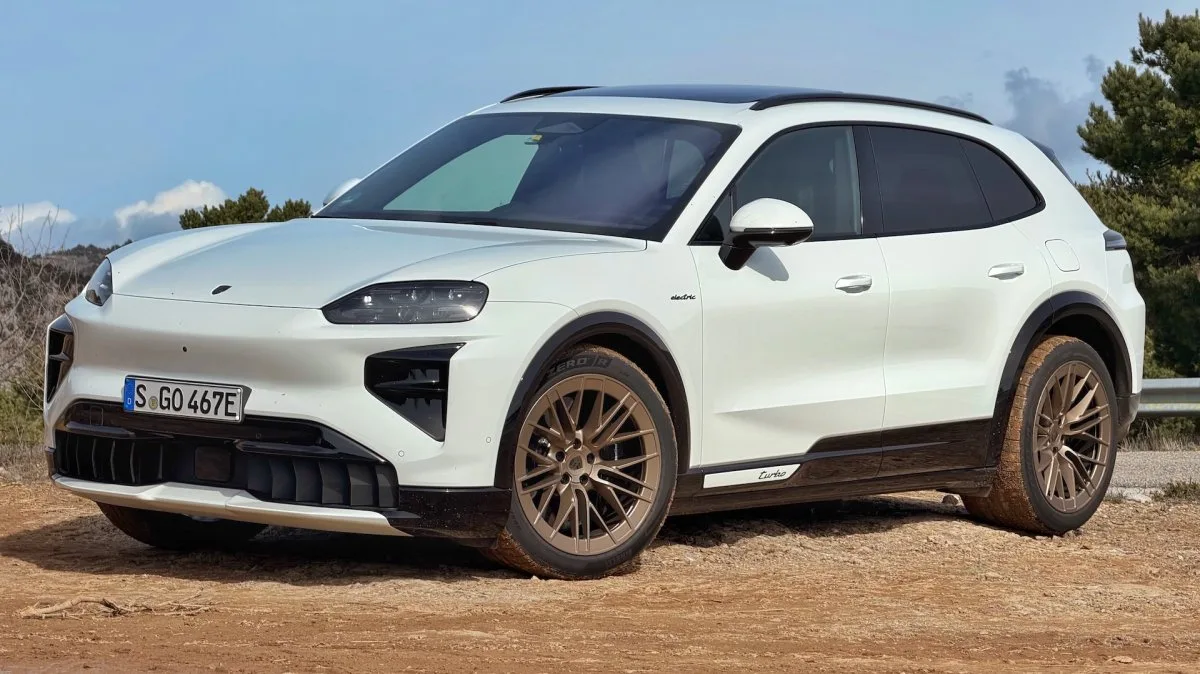
The 2026 Porsche Cayenne Electric proves that transitioning a legendary performance SUV to battery power does not require sacrificing its dynamic soul. Designed for luxury EV buyers and driving enthusiasts, this new iteration leverages an advanced 800-volt architecture to deliver up to 1,139 horsepower, ensuring that the shift to electric propulsion enhances rather than dilutes the classic Porsche experience. By maintaining the engaging driving dynamics of its gas-powered predecessor, the automaker provides a seamless upgrade path for drivers demanding extreme performance alongside zero emissions.
Built on a modified version of the Premium Platform Electric (PPE) shared with the Macan Electric, the new Cayenne integrates a massive 113-kWh battery pack across all trims. It supports ultra-fast DC charging at up to 400 kW via a NACS plug, allowing a 10 to 80 percent charge in under 16 minutes. To handle extreme loads during spirited driving, the rear-axle electric motor features dedicated oil cooling, a distinct engineering choice that sets it apart from standard high-performance EVs. Both the motors and the battery are manufactured in-house by Porsche.
Base vs. Turbo Performance Specifications
Porsche offers the Cayenne Electric in three main trims: base, S, and Turbo. The data below highlights the massive performance gap between the entry-level model and the flagship Turbo variant, demonstrating the platform's extreme scalability.
| Specification | Cayenne Electric (Base) | Cayenne Turbo Electric |
|---|---|---|
| Starting Price (As Tested) | $111,350 ($161,480) | $165,350 ($214,540) |
| Horsepower (with overboost) | 435 hp | 1,139 hp |
| Torque | 615 lb-ft | 1,106 lb-ft |
| 0-60 mph | 4.8 seconds | 2.4 seconds |
| Top Speed | 143 mph | 162 mph |
| Estimated Range | 399-405 miles WLTP (310-330 miles EPA est.) | 399-405 miles WLTP (310-330 miles EPA est.) |
| Towing Capacity | 7,716 pounds | 7,716 pounds |
| Cargo Volume | 19.5 cu ft (56.1 folded) + 3.2 cu ft frunk | 19.5 cu ft (56.1 folded) + 3.2 cu ft frunk |
Driving Dynamics and Regenerative Braking
Despite weighing between 5,600 and 5,800 pounds - roughly 1,000 pounds heavier than its combustion-engine counterpart - the Cayenne Electric maintains exceptional agility. The standard air suspension and adaptive dampers manage the heft seamlessly, providing tight steering and coherent chassis feedback. Porsche engineered the regenerative braking system to handle up to 600 kW of energy recuperation, covering an estimated 97 percent of all daily braking maneuvers purely through the electric motors.
However, testing revealed that the Turbo model exhibits a harsh transition between regenerative and friction braking during aggressive deceleration. This abrupt jolt is particularly noticeable when the vehicle is equipped with the optional $10,900 carbon composite brakes. Conversely, the base model's six-piston mechanical brake setup delivers smooth, generous feedback without overwhelming the driver.
Interior Technology and Aerodynamic Design
Inside the cabin, Porsche prioritizes ergonomic simplicity alongside digital innovation. The dashboard features a 14.25-inch curved display that integrates flawlessly with Apple CarPlay, avoiding the trap of burying essential functions in complex submenus. Physical controls are retained for vital climate adjustments, fan speed, and volume, ensuring drivers can operate the vehicle intuitively. The interior also includes a built-in wrist pad for added comfort during touchscreen navigation.
On the exterior, the SUV achieves a highly efficient 0.25 drag coefficient without adopting a generic, blob-like aerodynamic shape. Buyers can customize the exterior with unique colors like Mystic Green Metallic, Monteverde Metallic, and Chromite Black Metallic, complemented by 22-inch Exclusive Design wheels. The rear design is highlighted by 3D Porsche lettering integrated directly into the taillight bar.
My Take
The 2026 Porsche Cayenne Electric represents a masterclass in platform adaptation. By utilizing the PPE architecture and pushing the Turbo model to a staggering 1,139 horsepower, Porsche is directly challenging the notion that heavy electric SUVs cannot handle like true sports cars. The inclusion of an oil-cooled rear motor and 400 kW charging capabilities indicates that Stuttgart is prioritizing sustained track-level performance and rapid turnaround times, not just straight-line acceleration.
While the abrupt brake transition on the Turbo model shows there is still room to refine the software blending of friction and regenerative systems, the overall package successfully translates the Cayenne's aggressive DNA into the electric era. The fact that a 5,800-pound SUV can hit 60 mph in 2.4 seconds while offering over 300 miles of range proves that legacy automakers can still out-engineer pure EV startups when it comes to chassis dynamics. Expect this model to set a new benchmark for driving engagement in the luxury electric SUV segment.