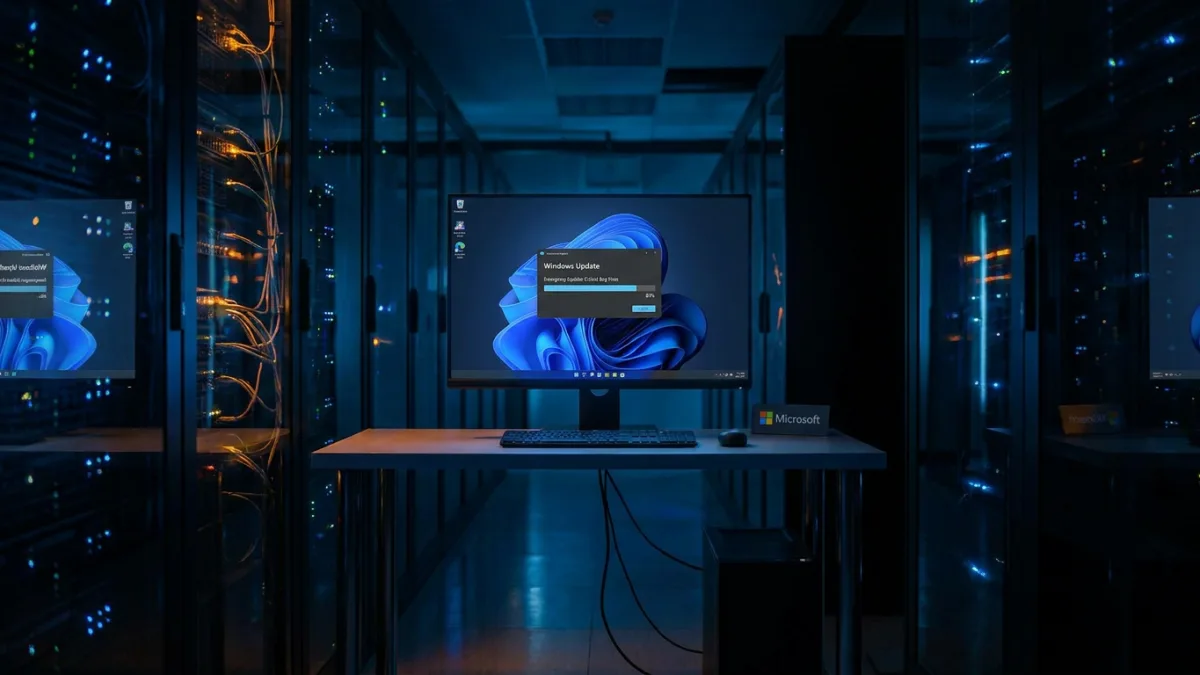
Microsoft is rolling out a Windows 11 emergency update to resolve critical bugs introduced by its record-breaking September Patch Tuesday release. The massive initial patch, which addressed nearly 1,000 flaws, inadvertently broke core functionalities for businesses, developers, and everyday users. The flawed update primarily disrupted folder shares on Hyper-V-based Linux virtual machines and caused connection failures in Remote Desktop Services sessions.
Additionally, users reported widespread issues with USB audio devices failing to function correctly after the initial installation. To mitigate the fallout, Microsoft released an out-of-band update that directly targets these three broken systems. The emergency patch applies to a broad spectrum of operating systems, covering Windows 11 versions 26H1, 25H2, and 24H2.
Microsoft has also deployed corresponding fixes for enterprise environments to ensure business continuity. These server-side patches include Windows Server 2025 and 2022, the LTSC versions of Windows 10, as well as legacy systems like Windows Server 2012 and Windows Server 2012 R2.
How to Apply the Emergency Fix
Since this is an out-of-band update, users experiencing Hyper-V, Remote Desktop, or USB audio issues should manually trigger the installation to restore functionality immediately.
- Open the Settings app and navigate to the Windows Update section.
- Click Check for updates to force the system to scan for the latest out-of-band patch.
- Download and install the update, then restart your PC to apply the fixes.
A Year of Broken Patches
Out-of-band updates were once a rare occurrence for Windows, but 2026 has seen a sharp increase in emergency interventions. In January, Microsoft was forced to issue four separate out-of-band updates following a single buggy Windows 11 patch. The instability continued into March, requiring two emergency releases to resolve installation failures and Microsoft account sign-in problems.
Furthermore, the company deployed another out-of-band fix in July to address an Intel driver bug. That specific flaw was causing severe performance degradation and battery drain on affected laptops, further frustrating the user base.
The Cost of Monolithic Updates
The sheer scale of September's 1,000-flaw update highlights a growing quality assurance problem within Microsoft's deployment pipeline. When a single Patch Tuesday requires an immediate out-of-band rescue, it erodes trust among enterprise IT administrators who rely on predictable update cycles to keep their networks secure.
The escalating frequency of these emergency patches in 2026 suggests that the Windows testing infrastructure is struggling to keep pace with the volume of security vulnerabilities. If Microsoft continues to bundle hundreds of fixes into monolithic monthly updates without stricter sandbox testing, businesses may start delaying critical security patches entirely to avoid breaking their own infrastructure.